Sunday, March 12, 2006

LSD Is Not For Me: The Intentional Fallacy, Part 2


If you've not seen Off the Charts, the documentary about song poems, you should put it on your Net Flix queue. Rodd Keith -- who fell to his death on an LA freeway in the early 70s, possibly a suicide, or drug-induced accident -- is probably the most famous practitioner of the genre. WFMU, John Zorn and Yo La Tango all honor the man's work. Keith may have meant for his mail-order collaboration songs to emulate the pop tunes of the day. Or he may have been having a laugh doing what he considered hack work to pay the bills. Doesn’t matter. What it means, I can’t say, but you can tell that it's more.

Song poems are like some accidental American huckster audio version of the Surrealist game The Exquisite Corpse in which a group of people contribute different components of a figure without looking at each other's addition. The end result is an intentionally hodge-podge bit of disjointed bricolage. Evidently Duke Ellington and his songwriting partner Billy Strayhorn would occasional practice something similar -- Duke would write the first few bars of a tune and pass it along to Strayhorn to finish, but the two weren't going for any kind of weird stitched-together effect (and the result was seamlessly smooth). Song-poems also bring to mind the Borges essay "The Enigma of Edward FitzGerald" about the trans-temporal collaboration between the 11th century "Rubaiyat" poet Omar Khayyam and FitzGerald, a 19th century English translator. The idea is that neither of the two were capable of achieving the level greatness on their own that they achieved together through a collaboration distanced by centuries and continents.


Here’s "Don’t Be a Dope," "Lost Vein of Love" and "Ravens" off of Saucers in the Sky on Roaratorio. The first is an anti-drug rant. The second is a sort of lover-mineral parable. The third sounds like some kind of lost death-folk ballad. Presumably the lyricists are three different song-poem patrons. The music is all Rodd Keith.

I Never Thought It’d Come To This


I think it was Paul Westerberg who said rock ‘n’ roll is about making mistakes. There’s something to that, as you’ll hear about one minute and 58 seconds into Louie Louie by The Kingsmen. The singer comes in too early, but the drummer covers his mistake and they press on to finish the tune. This take becomes the smash hit single. This is the beginning of the smashing and hitting associated with Louie Louie.

Then The Sonics do a version of the tune. For my money this is the definitive version of Louie Louie. It has the swinging fun of the Kingsmen version, but it adds that signature violent edge of The Sonics.

I remember an acquaintance hearing The Sonics and describing them as so “Pre-Iggy.” True, and Iggy Pop has his own history with Louie Louie. His live version is here, taken from the last gig of Iggy and the Stooges as heard on Metallic KO. This performance takes place right after Iggy was beaten bloody in a confrontation with a huge Detroit biker during the show.

Here’s what Iggy said about it in the book Please Kill Me: “We went back on and played Louie Louie. If all else fails, do Louie Louie, right? That’s what you learn playing in a fraternity band for five years. Play Louie Louie and it will always get you outta anything.”

There must be some magical protective powers to Louie Louie, because the hostile audience threw everything from wine bottles to vegetables at Iggy, but he survived the onslaught, taunting the audience after the song ends: “Thank you very much to the person who threw this glass bottle at my head. You nearly killed me but you missed again so you’ll have to keep trying next week.”

My own theory is that Iggy was given supreme protective powers because he sang the dirty lyrics to Louie Louie, which he clearly enunciates in the song. No wonder the FBI worried about this song when it first came out. The lyrics of course are not obscene in the hit version by the Kingsmen, but they were slurred, and thus they became a kind of Rorschach test for the horny and the pious. Yes, it’s quite obscene in the hands of the Iguana.

Sometimes when I hear Metallic KO I think of it as one of the many deaths of rock ‘n’ roll. The fun of Louie Louie is gone on this record. It doesn't swing. It's just brutal punishment for everyone involved. Creem magazine called it the last rock ‘n’ roll concert. But maybe not. Maybe Iggy just made a mistake by confronting savage bikers and then something great happened.

Monday, March 06, 2006

Niezidentyfikowany Obeikt Latajacy

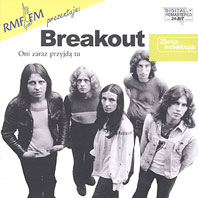
"Polish prog rock." It's not a phrase that inspires immediate confidence or unrestrained enthusiasm. High-concept suites of concentrated consonants and impossible time signatures? Not so much. But consider Cold War curiosities Breakout. Slavic funk and Eastern Bloc-rockin' beats. Consonants, and lots of'em. I think they demonstrate how sheer ambition can give even a weird, Leggo-like song like "Taki Wiatr" a certain something. It's as if a haywire translation of Fleetwood Mac yielded a Sega video game soundtrack from 1998. But in a good way!

I found this record at a stoop sale in Greenpoint, Brooklyn, in 1995. A Polish immigrant was expelling youthful indescretions from a faraway time and place. I like imagining the potato-derived-liquor parties this song got started back in Warsaw. The name of the 1976 record is "Niezidentyfikowany Obeikt Latajacy," which the online Polish-to-English translator translates as "Unidentified Flying Object." Of course! The song "Taki Wiatr" seems to mean "Strong Wind." There's definitely something unidentified and windy about the keyboard solo.


Continuing on the theme of lost oddities from my record collection: In the winter of 1992, I happened into Enterprise Records in Portland, Maine, and heard what, to my ears at the time, was the best LSD music I'd ever heard. It was The Bevis Frond. The album was "Inner Marshland," which has the best psychedelic cover art ever. After hearing a lot of psychedelic rock over the years, I've decided while many pay lip-service to drug use, few truly, deeply, madly love acid quite like Nick Saloman. And I've always loved him for that. It's hard to isolate a single sample of the Frond's music and really get it.
I've melded a couple of tracks together: A bit of trippy guitar-impersonating-a-creaky-floorboard special effect, which segues into "Minsmere Spagnum," a short piano element, which launches the unrestrained lysergic windfall of "Midievel Sienese Acid Blues."


And then the wind comes in from the Western sea
And brings with it ... acid rain.
Yeah, let it rain on me.


I'm a big fan of the double-tracked guitar solos that follow. The Lime-juicer element is about as thick and sour as it gets, but there's hardly a single hint that this music was made in the 1980s. Chalk another one up for British eccentrics puttering in the garden ... with the mushrooms.

Sunday, March 05, 2006

You Got the Wrong Intent


The lesson of The Intentional Fallacy is that we don’t have control over the ultimate meaning of our utterances. Artists, no matter the intent, can’t dictate the meaning of their work. Meaning requires interpretation and context, two ungovernables. The artistic inspiration may be lofty or crass, comical or earnest, but in the open air that all gets flipped around. It’s the problem of creation. Free will in the world.

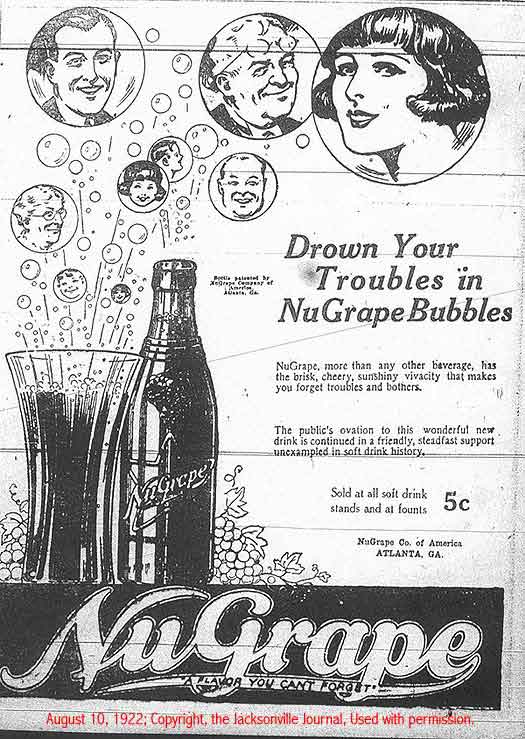
And so it is that the Nugrape Twins (heard here on American Primitive Vol II from Revenant Records) may have thought they were recording a soda jingle. No one really knows what they were thinking when they made “I Got Your Ice Cold Nugrape.” It’s possible that they were mimicking the hawking technique of a soft drink seller, or maybe they were hired to make a catchy song to sell soda. On the one hand, it’s obviously about so much more than soda pop. It’s about the capitalist blues: What you’re longing for is a product to make you happy. But it’s beyond all that, too.

Saturday, March 04, 2006

Have You Seen The Other (Guy) Baby?


He’s standing in the shadow of the genius in the band. He’s the other singer, the other songwriter. We’re talking about bands, yes, made up of distinct individuals who bring their own musical talent to the group. But usually there is the one main guy, the singer/songwriter/frontman/leader guy. The guy who gets most of the glory. For example, Guided By Voices was Robert Pollard’s band. If you just scratch the surface of the group you could say GBV = R. Pollard. But Pollard did make room for a song or two from the other guy. In the 90's the other guy was usually Tobin Sprout. Let’s here it for the other guy in GBV right here. This one’s called Atom Eyes.

The same dynamic went on in the band Pavement. It was a Stephen Malkmus production most of the time. But don’t forget about Spiral Stairs. I have to warn you I don’t know exactly who wrote what in Pavement. But let’s just say Spiral probably wrote Kennel District. It’s a song that’s been going through my head for a few months now. It’s from the densely packed album Wowee Zowee, yet it stands out like a single.

Let’s now go back in rock history to the band Big Star. Alex Chilton was the main man, but there was also the other guy, Chris Bell. I’m not a real Big Star historian, but it seems they were creative equals in the early days of the band, circa 1972. Then Chris left the group but maybe still had a lot of input on the second album. I don’t know. Alex had a musical life before and after Big Star, and it’s pretty well known. He had a hit in the 60's called The Letter. The Replacements wrote a song about him. Yeah. But check out Chris from his solo work after leaving Big Star. He is the cosmos.

Monday, February 27, 2006

Heaven Is In Your Mind


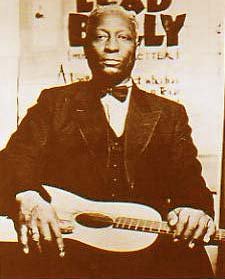
There’s no general agreement about what paradise looks like. For some it’s perfumed gardens and dozens of almond-eyed virgins. For others it’s an end to the cycles of rebirth and the wheel of suffering. Or it’s a place where nothing ever happens. Some folks go in for flowing robes or gazing into the brilliant eyes of divinity. I’m not sure where Leadbelly got his conception of heaven (from the Church of the Big Rock Candy Mountain, probably), but it’s a cosmology that could win a lot of converts. This is from a record called Leadbelly Sings Folksongs. Woody Guthrie appears as a guest, among others (not here). I won’t spoil it; let me just say this: They got a lot of pancakes up in heaven.

Sunday, February 26, 2006

From Pissed To Blissed

Are you sick from stress at work? Do you have desk rage? Do you find it difficult to concentrate on even the simplest task because you are too freaked out, pissed off and worried? When you get home from work are you unhappy with the person you see in the mirror? Are you losing sleep at night? Yes? Then try listening to this.

Do you feel better now? You probably do. But if not then I, Dr. Django, hereby prescribe the whole compilation. Here, I’ll write it on my pad for you: Fatty Fatty 1967-1970 by Clancy Eccles and Friends. Oh how you need this album and a couple of Red Stripes. You might also visit the guy mentioned in Track 12.

You’re welcome. It was my pleasure. Don’t forget your co-payment on the way out.

Saturday, February 25, 2006

In Through the Muskeg


From Chicago -- the frozen lake, the great black migration, Saul Bellow, electric blues, Wilco, sausages –- point yourself farther north. And back in time, to primeval Canada, "where the wild majestic mountains stood alone against the sun ... Long before the white man and look before the wheel, when the green dark forests were too silent to be real."

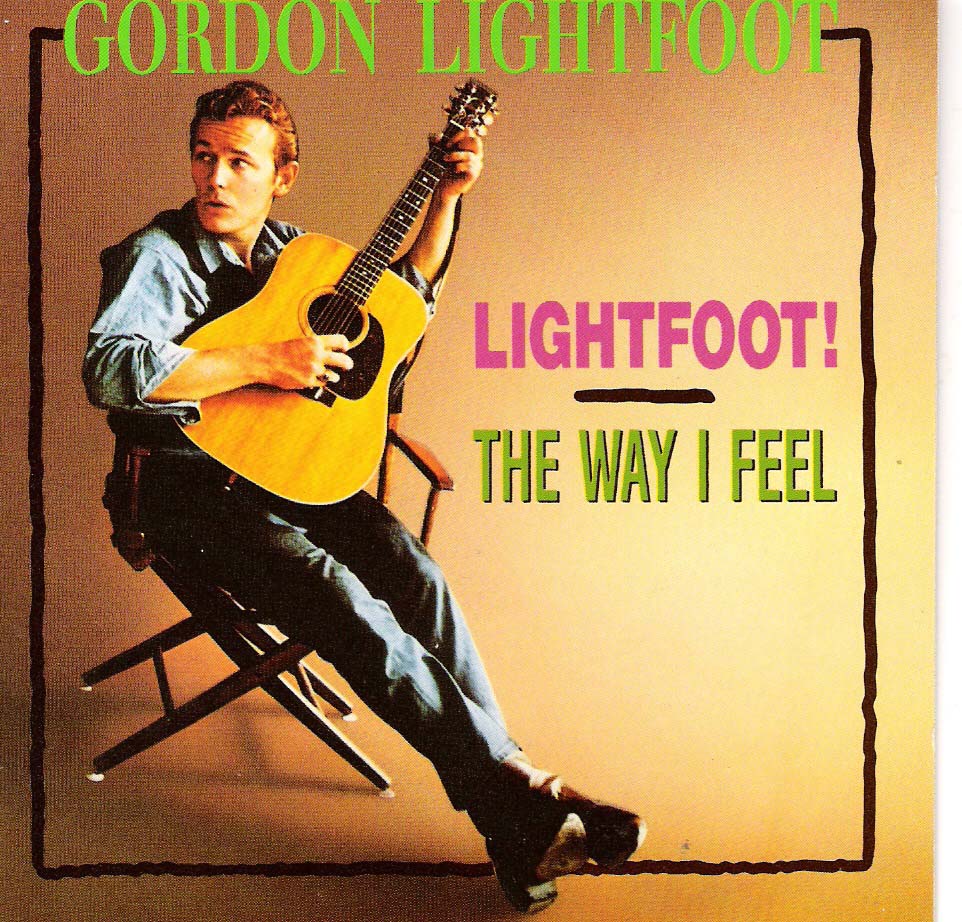
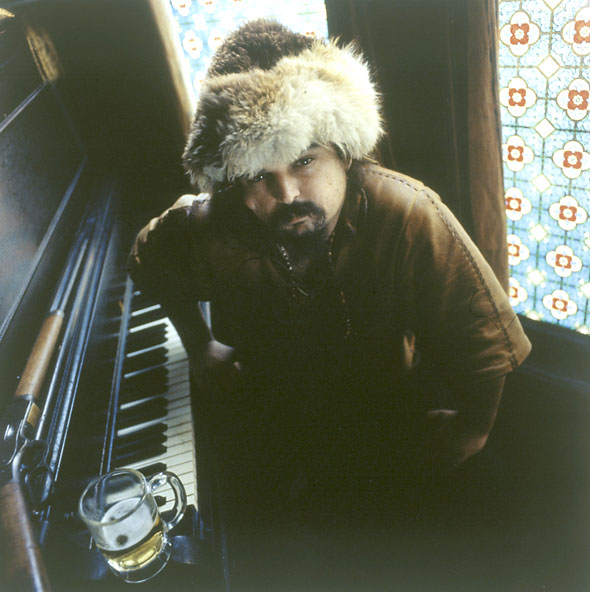
Gordon Lightfoot is, as you know, Canadian. We’ve already touched on some other marvelous Canadians here, most notably Buffy St. Marie and Joni Mitchell, and surely a post on Ian and Sylvia is in the cards. Canadians actually have sort of a strange relationship with many Canadian artists; because of the mandated content rules that require radio and television play and show a high percentage of Canadian material, many of our neighbors to the north feel like they’ve had Brian Adams, Gordon Lightfoot and Margaret Atwood shoved down their throats. And that can’t be pleasant. But Gord, it seems to me, is a dangerously undervalued import here. Have a look at the booklet to the Bob Dylan Rolling Thunder bootleg series and you can see Lightfoot jamming with the bard, dressed in a fitting fur-trader-like hat, backstage somewhere. Songs like "Sundown"and "Carefree Highway"offer a fundamentally polite Canadian twist on the got-to-ramble American male ideal. It occurs to me that Lightfoot also provides a transportation theme trifecta with the immense "Wreck of the Edmund Fitzgerald"(the implications of which are too many to try and untangle in this post), "Early Morning Rain" with its "big 707 set to go," and this next one. "Canadian Railroad Trilogy" is, among other things, a trilogy (you can sort of hear the sections). You don’t get many of them. Trilogies, I mean. It’s also a Canadian foundation myth. Another rarity. Granted, there are large intact kernels of corn embedded in the surface of this song, and it has a definite connection to the big history-telling round-up songs in "Waiting For Guffman," but greatness can also be stupid, I think.

It’s strange that America, a country so besotted with self-mythologizing, hasn’t come up with more songs about the Founding Fathers, the Revolutionary generation, etc. I know, it’s not immediately the stuff of pop songs, but you’d think someone would have tried their hand at it. The best example that comes to mind is "The Shot Heard Round the World" from the School House Rock series. Coincidentally, "The Canadian Railroad Trilogy" evokes the epic bombast of Ween, who covered "Shot Heard Round the World" on a tribute record.

One other thing to mention about "The Canadian Railroad Trilogy." First off, Canada has some of the best place names. Saskatoon, Manitoba, Winnipeg, Medicine Hat. You can’t beat that shit. Lightfoot doesn’t mention any of these, but he does include lyrics on Gaspe and muskeg.

And This is Free


I'm so happy that I finally visited Chicago.

Chi Town! Yes.

Cold, clean-lined, expansive, full of surprising architecture and unusual ethnic dining. I had a delicious Swedish breakfast one morning, a delicious Austrian one the next. The sausage-eating peoples of Europe have kept their culinary identities in tact in Chicago. The lake was icy and imposing. You can tell a lot about a town by its hipsters. Let me say that, in Chicago, they are especially attentive to sartorial detail and also polite. I saw the parking garage that appears on the cover of Wilco's Yankee Foxtrot Hotel. Interesting!

But what I really wanted to know was: What's the deal with Chicago blues? I knew only this: Blacks came up from the South seeking work. Then somehow Junior Wells happened. Then Dan Akroyd was in The Blues Brothers. The End.

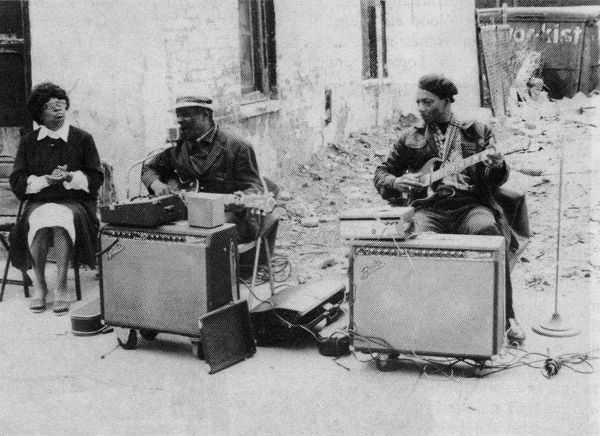
So I consider myself extraordinarily lucky to have stumbled upon a special exhibit on the blues at the Chicago Library, where I glimpsed excerpts from a 1964 documentary called And This Is Free by filmmaker Mike Shea. I was bowled over by amazing cinema verite scenes of blues and gospel musicians rocking in the city's now-defunct Maxwell Street bazaare. Raw, black-and-white field-recording-style images of casual musical nirvana on street corners. I had to go to the special 8th floor archives and view it in full. I did. It blew my mind.

Every Sunday, Chicago's Maxwell Street was a nexus of hucksters, preachers, street mystics, snake-oil salesmen, teenage rock-and-rollers and legendary blues players. Shea captured hours of itinerant bluesman Robert Nighthawk sitting in an alley, talking shit and slinging blues with aloof power, casually stinging the air with slide electric guitar, backed by just rhythm guitar and drums. The amps are on the street, plugs running into windows. A crowd of well-tailored black dudes drink beers, teeter and groove along and yell out ("Woyk widdit! Get up on it! Shake it but don' breakit!") while sexy beehived black chicks dance in mini-skirts. A smattering of white hipsters dressed like the Velvet Underground try to look like they're not terrified. It has to be seen. Has to!

I learned later it can also be heard in full: And This Is Maxwell Street contains the complete sound recordings of Shea's documentary. It's amazing. I am a believer. A believer in Chicago. A believer in the blues. Listen to "Back Off Jam" by Nighthawk for evidence of the upside of making deals with the Devil.

More: An outdoor street scene featuring singer Carrie Robinson, prim in a white church dress, wailing on "Power to Live Right" and inspiring another woman to jump, leap, shout and dance on the sidewalk, possessed of the Holy Spirit as a crowd of onlookers claps and cries. Perhaps the most moving is a brief snippet of Fannie Brewer, an obese, blind folk-gospel singer who is almost completely inert, wedged in a door front on a chair. She sings out of the side of her mouth, barely moving except for fingers plucking the guitar. "I Shall Overcome" would make Harry Smith cry.

And This is Free is out of print on VHS, but somehow the great folks at The Video Beat! have it on DVD. Just order it, you need it. You can see some images from it here.

I leave you with the one-armed harmonica genius Big John Wrencher. Woyk widdit!

Wednesday, February 22, 2006

Cosmic Country Cowboy #2

That’s Buck Wheat To You.

This golden AM gem sneaked inside my ear somewhere around 1973. And there it stayed, tucked away, forgotten, undetonated ordnance just waiting to explode. Which it did, nearly twenty five years later when I caught the tail end, the last, "EeeAas" of Brooks and Dunne’s cover. Even contemporary country couldn’t destroy it. Oh the mournful joy. He was lovesick when he wrote it. Oh the sunshine memories: a can of Schaefer beer, grasshoppers rustling in the dry grass, yodels issued from a transistor radio.

Yes, yodels and they break your heart with their plaintive beauty.

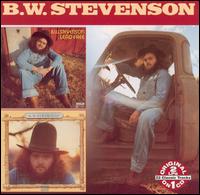
B.W. (born Louis) Stevenson’s recording career was a brief one. He gave it up in 1980 only to die destitute in a veteran’s hospital eight years later from heart surgery complications. Born in Dallas, dead 38 years later in Austin, he said of his life, "Well, I've never done anything but hitchhike, write songs and sing." That’s not entirely true. He served in the Air Force and worked a stint as a wrangler in Durango.

As long ago promised to Mr. Poncho here is B.W.’s version of Three Dog Night’s Shambala. Rustier and dustier than the original, I find B.W. easy to believe.

Saturday, February 18, 2006

A Pendant of Jerry Jeff


I remember my introduction to Jerry Jeff Walker. It was in some sort of crash pad in Fort Worth, Texas, attached to a club called The Mad Hatter. It was the early 90s, but there was an eight-track player with two Jerry Jeff tapes -- Ridin' High and Viva Turlingua. We listened to them several times over the course of the evening. I fell in love with "Red Neck Mothers," "London Homesick Blues" and "Backslider's Wine." All great songs. It was one of those times when the music fits the scene, the mood and the moment. The night got better because the owner of the club had boxes of records that he'd found at a flea market from Ornette Coleman's short-lived record label. He gave me a couple unusual albums. I got lucky.

Since then I've grown a little suspicious of Jerry Jeff. There's something too Jimmy Buffett-like about him. I suspect that he never quite got over the fact that he wasn't Kris Kristofferson or Willie Nelson. I once got into a semi-drunken conversation about country music with Seymour Stein. I mentioned Jerry Jeff, who Stein, a serious country songwriting encyclopedia, dismissed with a look of disgust and contempt. Still, I've always loved the craggy cowboy simplicity of "Nightrider's Lament" from Ridin' High. As it turns out, Jerry Jeff didn't write this one. He did't write "Red Neck Mothers" or "London Homesick Blues" either. And I've heard that there's dispute about whether he penned "Mr. Bojangles."


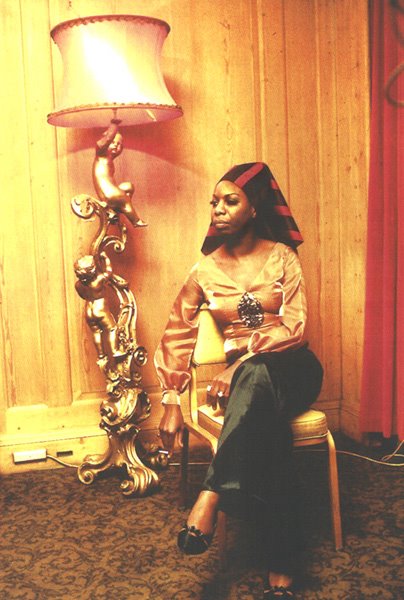
At any rate, maybe it takes some genius like Nina Simone to salvage a tune like "Mr. Bojangles." When Jerry Jeff and the Nitty Gritty Dirt Band do it, there's no real getting around the hint of racism or at least laughing derision at the down-and-out subject of the song. But Nina had an immense capacity to inject pathos into even the most surprising places, and she gives the song some surprising dignity. This is from her Here Comes the Sun record, on which covers "Just Like a Woman" and "Angel of the Morning," among others. I can't fully recommend the record, and it should be noted that while she could wring tears from all kinds of material, Simone was also known for crassly covering whatever was put in front of her (I had high hopes for her cover of Hall and Oates "Rich Girl" on her Baltimore record, but it too disappoints.)

Barracuda Attack!


Sometimes a song just jumps out at me. That’s what happened yesterday as I was driving home from work, listening to a burn disc of my latest playlist. It was a mix, so I knew all the songs were good, but DAMN this is a perfect song. I didn’t realize its greatness until the car stereo was properly cranked. The great intro, verse, chorus, production, back-up vocals and air-guitar-worthy riffs all combine to give it a special kind of momentum rarely heard. It’s my favorite song as of the last 24 hours and it’s called I Can’t Pretend by The Barracudas. I shouldn’t have to say it, but play this record loud!

Sunday, February 12, 2006

Apricot Juice and Buttered Toast

You need your headphones. You need a slowed-down pulse and a langurous attention span. You need a moment alone in the car, a seat on a park bench with the iPod, an uneventful afternoon with the shades drawn. After the party guests have left the driveway, while leaning back on the kitchen sink, a last swirl of wine in the glass, this:

"I Don't Want Him (Anymore)" by Nina Simone.

It's from Nina Simone at Town Hall, 1959. At first, it's not the right tempo for this meditative moment -- too perky, really, the ivory tickle smacking of Broadway histrionics. But stand by. Stay near. This is one of the greatest performances ever put on tape. Even on a Monday morning in the subway, all brightness and practical anxiety, this drew tears to my eyes. It's so full of unexpected poetry. And it's precisely because it begins with the flip confidence of a Broadway number, an establishing romantic posture in which Ms. Simone has given her man the sack with bravado -- I'm afraid I never loved him -- that she can now proceed to unravel for the next three minutes, lyric by lyric by lyric.

All I wanted to do was
Run my fingers through his curly locks
Mend his underwear and darn his socks
Fetch his slippers and remove his shoes
Wipe his glasses when he's read the news
Rub his forehead with a gentle touch
Mornings after when he's had a little too much
Kiss him gently when he cuddles near
And give him babies, one for every year
... so you see ...
That I don't want him, you can have him
You can have him, cuz I don't want him
Because he's not the man for me.


When the catalog of lost intimacy finally overwhelms the false bravado -- his favorite breakfast, apricot juice and buttered toast, is the final straw -- she has to let out a long, slow, painful moan, an aching loss of words where lyrics are supposed to be. It's unbearable.

If there's any question of the intensity of this performance, the ending gives it up. Freed from the final note, as if suddently aware of the spell she was under, Nina is ecstatic: Yeah! Oooh boy! Ah ha ha! Oh! Yeah!

Amazing.

Saturday, February 11, 2006

The Shire of Your Mind/ A Reprise


Any band that, like Lindesfarne, has two songs that reference sausage rolls is, by my calculations, a good band. Quod erat demonstratum. I’m thinking they’re talking about the British greasy spoon snack favorite and hangover cure, not some sort of lame rock rod euphemism. Either way, you get a sense for where their allegiances are. The Kinks wrote about tea. For Lindesfarne it was sausage rolls.

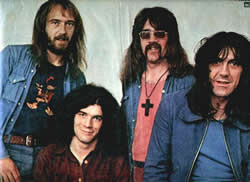
There’s a definite Middle Earth vibe to the guys in Lindesfarne. But they would have been the scuzzy hobbits who hung out on the smoking patio during lunch break. Squinty eyes. Radical facial hair. You imagine that they would bob their heads a lot and stroke their beards for just a little too long when someone told a good one. British hippies. Lindesfarne rocked the enchanted vocal harmonies, complete with wispy fog and a hint of peat smoke. Standing stones are implied, though they don’t get too Druidic, mostly because their warrior instinct has been blunted by too much doobage. Unlike that supremely annoying tattered pedophile character from Jethro Tull, Lindesfarne's derelict stance seems to be genuine. They don't need any codpieces or ratty trenchcoats to give you the creeps, even as they get all angelic. Talk of free love sounds kinds of icky coming from these guys. In another time, they might have been the type of young men whose amorous overtures consisted of an inappropriate eagerness to give backrubs. Musically, asymetric strumming patterns, fearless cow bell, and genuine North Country flavor make up for the occasional Thistle and Shamrock excesses.

But Lefty, who turned me on to Lindesfarne, has already expounded on the band [see archives for more on the sausage roll theme]. They're sort of like the Southern fiction writers of British hippie rock: for Lindesfarne it was all about place -- the Tyne (from "Fog On the Tyne") is a river, the band's name is a town, and Dingly Dell, is, I guess some bucolic spot too. The reason for this post is that I was reading Kyril Bonfiglioli's After You With That Pistol, the second of the Charlie Mortdecai "mysteries" recently (If you've never read or heard of Bonfiglioli, you really have to look into it. The Mortdecai books are like a cross between Charlie's Angels, P.G. Wodehouse, Lawrence Sterne and Charles Bukowski, really. A fat fornicating self-interupting sybaritic art-dealing drunk gonzo whose thuggish man servant, Jock, is like some James Cagney meets Jeeves, or one of the disturbed characters from "Upstairs Downstairs"). There's a section of the book in which Mortdecai is forced to attend a female assassins' college called Dingley Dell (Dickens wrote about Dingley Dell, too, in The Pickwick Papers, and there's a town in Mass. with that name, and one in Australia as well).

Dingly Dell is the band's third record, and you can already sense that they're sliding into an unfortunate phase. But "Poor Old Ireland" is both lovely and a little insane in a way. The song seems to be about the long hardships of Ireland, but there's some viral empathy at work: the universe suffers along with Ireland. You can get a re-issue of this one on disc, but I'm not sure I'd go in for the whole disc. It's spotty, and what's worse, the re-issue doesn't include one of my favorite things about it: the original cover (my copy was loaned to me in a stack of great old vinyl by the ever-provacative and musically encyclopedic Alan Bisbort). Is there any other band that's employed a hammock on a record cover? Must be, but I can't think of it, and surely no one has ever rocked the "two dudes in a hammock" variation so successfully. Extra points for the inclusion of the family dog (cropped out of this shot).

Monday, February 06, 2006

Two Whites Don't Make a Wrong

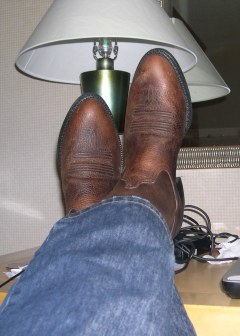
Last week I bought some cowboy boots in Bakersfield, Calif. How could I resist? It would've been wrong to not buy cowboy boots in Bakersfield, Calif. At least that's how you feel when you're riding around those arid oil fields and honky tonk tumbleweed flats, the fading 1950s neon signage for "Wool Growers Restaurant" paling in the dust-covered sun as you listen to Keith Urban on KUZZ 107.9.

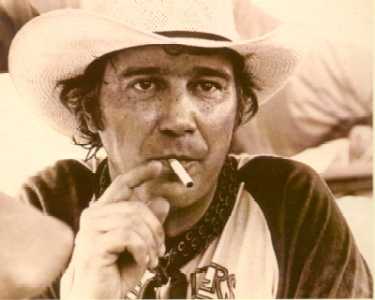
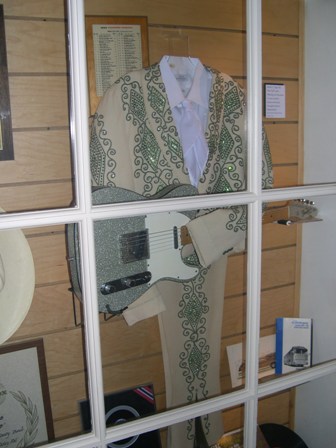
Wanna know what's funny? The boots were made in China. They look great and fit like a champ, I must say. God bless the Chinese cobblers, channeling the ghosts of the rig workers, cow punchers, the Brokebackers. They got their ears on the rail ties, listening hard. (Poor bastards probably get a nickel an hour.) Anyway, I swung by the Crystal Palace, the club cum shrine to Buck Owens, owned and operated by Buck Owens and graced with an eight-foot titanium statue of Buck Owens, all located on Buck Owens Boulevard. (Buck also owns KUZZ, fyi.) The top picture, one of Buck's Nudie suits, is there, among the rows of window boxes holding the various historical memoribilia that make Buck Owens Buck Owens. Guitars, an actual Cadillac (a white convertible, interior designed by Nudie, including old Indian coins embedded in the paneling), and just a single window dedicated to "Hee Haw," the Hillbilly TV that destroyed Buck Owens forever but created "Buck Owens."

But this is all a way of getting to a larger point. I think. One thing leads to another: a thesis, an anti-thesis, a synthesis. iPod teaches us this every day, the serendipitous algorithm that allows Green Day to segue to Tommy James in such a way that only Joan Baez can bring true resolution, emotionally, spiritually, in real-time. I can't explain it, it just is.

Let's give it a try.

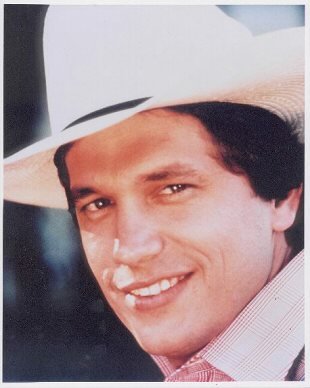
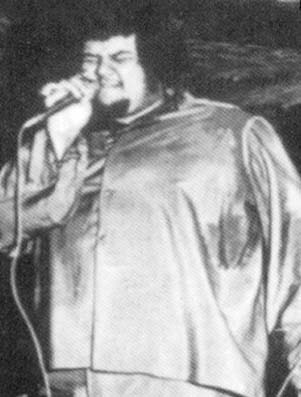
Perhaps it starts with the uncarved block, the thing in itself, the Platonic ideal. George Strait singing "Amarillo by Morning" is almost see-through (hear-through?) in its smooth lack of character, yet it sings through the bones like a white wind at dusk. I love it because it makes me think how transcendent and final it would feel to listen to this on acid while driving a white Cadillac into a West Texas sunset with a great, dear friend who is a Chinese diplomat passed out in the back seat with an empty bottle of Knob Creek cradled in his tiny hands.Next, a shadow, a meme, a reflection, the opposite of all that is certain. I found this on another blog and I'm sorry to say i forget which one, but thanks to whoever you are. I dedicate "Raising the Sparks" to Martin B., who I wish would start posting here. (Get with it, dude.) This is Michael Gira, former Swans CEO, now the main light in the Angels of Light, backed up by the mighty Akron Family. George Strait or Chinese cowboy?Finally, fission, the unexpected flash of light, a brightness that can't be looked at too directly for fear of blindness -- sunburst enlightenment. It's called Indiana, people. That's where Baby Huey & The Babysitters come from, a place where there are brothers wearing pointed toed shoes and carrying .45s. The blistering psych-soul vocals and wall of horns rap you upside the head like a set of heavenly brass knuckles. In a world of Chinese cowboy boots, a 400 lb. black man from Indiana is the only solution to the paradox of Michael Gira and George Strait wearing the same hat. Can't you see/hear what I mean? "A Change Is Gonna Come" ...

No, of course you can't.

Wednesday, February 01, 2006

Fuck you, you filthy (rich) hippie


I never really hated hippies until I moved to the southern suburbs of Los Angeles County. What was to hate, exactly? Hippies liked weed and peace and love and music. Why not dig that stuff? But something happened out here in South Bay towns like Torrance, Redondo Beach, Hermosa Beach and Manhattan Beach. The hippies got rich. They started smoking the most expensive weed (from Humboldt County). They started drinking the most expensive wine (from Napa Valley). They got the best cocaine. Which is all good. They’re pretty generous. So you go to their parties at their nice houses by the beach. You try to have a good time. Be social. But you can't. The problem is not just that they tell you exactly how expensive that glass of Cabernet or bag of skunk is. The real problem is they ALL have the following two albums, and they seem to ONLY have these two albums: The Eagles: Their Greatest Hits 1971-1975 and Legend: The Best of Bob Marley and the Wailers. These two albums seem to be blasted non-stop from their expensive stereo systems. Speakers in every room. Outdoor speakers. You cannot escape hearing Jammin’ or Tequila Sunrise for the hundred millionth time. This is a buzz kill, no matter how many glasses of red or joints you consume. If you’re lucky, you’ll hear some CSN and/or Y to break things up.

It was after one of these parties that I truly began to understand SoCal punk. I began to grasp why South Bay bands like Black Flag and the Descendents wanted to get some distance from their rather round and bald neighbors. Even though Greg Ginn is a Dead fan, you’d be hard-pressed to hear Slip It In playing during a luau party in Redondo Beach.

Instead South Bay punks and their Orange County counterparts embraced things like Budweiser, heroin, speed, sobriety, Devo, the Adolescents, Social Distortion, Agent Orange or anything, ANYTHING other than the fucking Eagles (ask the Dude about the Eagles). I’ve met a lot of old school punks from these parts, and they all hate hippies. It’s a real us-against-them kind of thing here. This was the battleground, and the war is not forgotten.

This brings me to tonight’s selection: A fine Devo cover by the OC band D.I., who were part of the Adolescents family tree. What makes this extra special for me is that I bought this album for one reason: the song Richard Hung Himself, which is featured in Penelope Spheeris’s film Suburbia. The Devo tune is just a bonus track, but it outshines most of the preceding 8 tracks.

So anyway the D.I. record is called Team Goon and it was released about 1986. Aside from the Devo and the suicidal centerpiece, Team Goon also features some pretty entertaining cold war tunes like Nuclear Funeral and Reagan Der Fuhrer: “Reagan’s our Fuhrer/We need someone newer.” Things of that nature. Boy the 80's were rough, weren’t they? We were stuck with a conservative Republican commander in chief who seemed to love waging war in foreign lands. Good thing we’re not going through anything like that nowadays. Oh wait. Shit. Where’s my Budweiser?

Tuesday, January 31, 2006

Guns, Germs and Beer

I have to be careful here. Threading the needle of history, both personal and worldly, is never harder than when you're dredging up a band as tired with cliche and sulphurous with associations as ... well, I can't even say it. Let's do like the Jews and not say it: The Gr-teful D-ad.

I realize that connotes reverence--in Judeo-Christianity, the use of words (i.e. The Word) implies ownership, as when Adam named the animals. Hence breathing the word of G-d is blasphemous. And I'd be lying if that wasn't, in some sense, appropriate here. Let me not say too much, except to recall a night when i was 19 and a tab of blue unicorn combined with the playing of "Attics of My Life" to induce a halo of silken red ribbons to languidly ripple out over the infinite matrix of the mind until they intertwined and knotted at a perfect star-point on the horizon and suddenly bloomed into a majestic, awe-inspiring realization of myself as a primitive being experiencing sentience for the very first time, as if I were the first man to open his eyes on planet earth.

Already I've said too much. Much too much.

But now, years later, with a cranky and calloused adult critical mind evolved from the foul weather of life, I think I can still say with some confidence that there's salvagable listening pleasure in certain GD music. I recently reloaded Workingman's Dead into my playlist and realized it's only through cultural bias that we don't christen this album with the patina of hip alt-country acceptability afforded Gram Parsons. OK, I'm still moved by "Uncle John's Band" and that's my cross to bear. But the music of the mighty Ron "Pigpen" McKernan holds up despite cloudy personal bias. Even with malice toward all things tie-dyed, you can get into "Easy Wind."

Maybe it's because dirt-bomb blues is a no-brainer. It's the spirit of the crustacean, the crusty, worn-out pisser laying down his own dirty law. If you added French surrealism, you'd have Captain Beefheart. The double drum attack here is also splendid, reigning in Jerry from grotesque over-grooviness. Near instrumental over-indulgence is saved by Pigpen's piss-and-vinegar spout: Gotta find a woman be good to me, won't hide my liquor try to serve me tea.

In general, I think the "Guns, Germs and Beer" vibe he cultivated (above) managed to hedge against certain GD weaknesses (Bob Weir), adding some much-needed back hair and ball sweat to the whole Baroque affair. Perhaps it's the preference for booze over LSD that gives P-pen his longevity. I don't know. That said, I still miss those ribbons, stowed up in the attic...

Sunday, January 29, 2006

Like Nature Calling


Wild Geese
You do not have to be good.
You do not have to walk on your knees
for a hundred miles through the desert, repenting.
You only have to let the soft animal of your body
love what it loves.
Tell me about despair, yours, and I will tell you mine.
Meanwhile the world goes on.
Meanwhile the sun and the clear pebbles of the rain
are moving across the landscapes,
over the prairies and the deep trees,
the mountains and the rivers. Meanwhile the wild geese,
high in the clean blue air, are heading home again.
Whoever you are, no matter how lonely,
the world offers itself to your imagination,
calls to you like the wild geese, harsh and exciting--
over and over announcing your place
in the family of things.
-- Mary Oliver

I’m not entirely sure why "Just For Love" by the Quicksilver Messenger Service makes me think of this Mary Oliver poem. It might be the line in the song: "like the wings of some high-flying bird." Somewhere in the lyric is a similar celebration of the way our longings and needs just guide us toward the right things (ideally). It might be that the soft animal of my body just happens to love some hippie music. It may be that the first line of the poem seems to speak to Quicksilver Messenger Service: they weren’t good. They didn’t have to be.

QMS were like some sort of parasite sucker fish that fed off of the great lumbering corpulent mass of the Grateful Dead, whose swelling hordes of delusional and devout fans were ever eager to find another Dead side project, offshoot or cousin band on whom they could focus their deadhead worship. They probably sold thousands of records based solely on the fact that the same artist did some of the album lettering for both bands. You can see live footage of QSM from the bonus disc of the recently re-issued Monterey Pop Festival DVD. It’s not very pretty. Meandering stoner blues boogie, with that kind of initially endearing but ultimately annoying pothead condescending aloofness. The best thing is that they’re all playing matching Gibson S.G.s (bass player included) before the S.G. became the preferred axe of Satanists who wielded much more power. The other point-earning visual touch that QMS had was the weird Native American/Futuristic/hippie/alien iconography that they had working on their record covers. Quasi-Mayan decorative banding. Internstellar transmitter appendages attached to the ends of guitar headstocks and headphones. Lefty has a great story about some acid-damaged aspiring Phish-head coming into a college philosophy class and playing this tune as evidence of deep interconnectedness in the universe. What always strikes me about this song is how the sweeping (harp, piano?) strings at the beginning are so shrill and tinny that they almost hurt. It’s a mellow, placid, pretty song, but you have to experience pain in order appreciate the rest.

Tuesday, January 24, 2006

Get Gills Again


Dub makes such efficient use of what’s at hand. It’s like making soup out of your leftover vegetable scraps and bones or patching up your jeans when holes show up in the knees: The practicality might yield some tasty food or some hip fashion, but the idea is initially a pragmatic one. When Jamaican record producers and soundsystem DJs figured out that they could take rhythm tracks from existing songs and recycle them - drop the vocals and the guitar, mess with the effects, let somebody do a little extemporized toasting over top of it - and basically get two records out of one, it must have been a supreme moment in the history of hustling. Not that dub’s genesis was all crass, Lee Perry and King Tubby were probably smoking shamanistic amounts of weed, and the canabinoids must have really opened up their ears. Who needs singing, horns or guitars when you’ve got the heavy beats, the heartbeat bass lines and the funhouse echoes? Similarly, there's an advanced aesthetic of absence to dub. The music moves with the phantom sense of the sounds that are missing. Big, potent negative space. Or a cymbal accent can all of a sudden occupy center stage, and everything else can vanish while the metal crash dissipates off into nothing.

Dub became hugely popular in England, among DJs, producers, tea heads and musicians. At some point, and I don’t know when the exact moment was, people started making dub as the main product. I think of African Headcharge as being at the start of that trend. Dub for dub’s sake. It's a bit like the musical equivalent of a Pottery Barn faux antiquing kit. Old weathered furniture is cool -- why not mass produce stuff to look that way?

I think Nietsche would have found the creation of dub as a sole end product to be decadent. It signals a corrupt sense of taste. This, afterall, is a musical genre in which one can solo on the bendy metallic pan-lid sound of the noisemaker known as the flexatone.

Without the melodic logic to the deep structure and the sideman's restaint of the orignal backing tracks, dub got spongy and outrageous. Without a basic minimalist aesthetic, the music could start sounding like a bongo-heavy version of whale songs, churning reverberations and whoozy effects. But in the case of African Headcharge there was more to it. If Jamaican reggae got its Africanisms from marroon drumming traditions. Dub in the U.K. drew on the post-colonial African diaspora.

Picking up on the theme of the Joni Mitchell/Burundi post, African Headcharge -- the dub vehicle for producer and label mastermind (On U Sound and Soul Jazz) Adrian Sherwood and Ghanian drummer Bonjo -- often dropped dub rhythm tracks behind looped bits of field recordings of African chants. It's similar to the Eno/Byrne My Life in the Bush of Ghosts record (which AHC mocked in tribute with one of their first records, My Life in a Hole in the Ground), but without the vestigal post punk traces.

I got turned on to African Headcharge by a guy named Gary Allen (Alan?). He was a dancer/designer who worked for Billy Idol at one point back in the mid-80s when I was 15 or so. I’ve still not been able to find the tunes that he put on a tape for me, but Environmental Studies is close enough. I love that there are tracks called "Beriberi" and High Protein Snack" on it. This is a track called "Breeding Space." This is music that -- along with the Eno/Byrne, Jon Hassell, Butthole Surfers, Tom Cora and Captain Beefheart -- I often employed for the explicit purpose of blowing people's minds. Parts of it now remind a little of Ornette Coleman's "Dancing in Your Head," and there are definite echoes of Augustus Pablo.
As another de-evolutionary specimen I offer Mushroom's "Tin Foil Hat" from their two-CD Glazed Popems. Mushroom are a Bay Area kraut-prog-avant-funk outfit. Most of their material sounds electric Miles-inispired, but this track has a defiantly meandering quality to it.
This is also music that, whether it knows it, is thoroughly pessimistic about the future. If the whole world is going to hell, why don't we just crawl back into the ocean and redevelop gills? You tell me.

Saturday, January 21, 2006

Popcorn Country

One of the great innovations Nashville borrowed from Hollywood was the massive studio orchestra as cinematic prop. It's akin to the Technicolor soundstages used in the movie adaptation of Oklahoma! -- yes, the sky is clearly fake and doesn't really extend forever and a day, only about 20 feet and it's made of wood and paint. But then here comes the star, an earnest country guy or gal whose casual grace and charisma soars, nearly popping a button on the sequined Western shirt as the rhinestoned lungs send a triumphant note beyond the skies (They're real, those skies! Real!), or curl into a heart-piercing quiver that can't be faked any more than you can fake sobriety after a case of Lone Star. It's that old-fashioned Nashville combo of cornpone tragedy and never-ending faith in the song that suspends disbelief entirely, such that a 16-piece string section augmenting a song about a lonely lineman isn't entirely ridiculous.

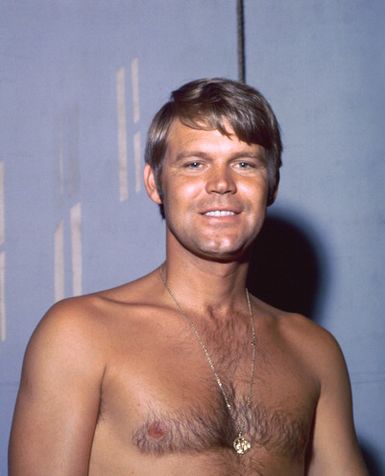
Patsy Cline was an early adopter, but Glen Campbell perfected the form, with the help of Jimmy Webb's lyrics, which were really imagistic movie scripts draped over jazz chords that approximated country songs. "Houston (I'm Comin' to See You)" isn't one you come across as often. It was actually penned by David Paich, founding member of Toto, who was an LA studio guy at the time (1974). The narrator imagines Houston glittering from an airplane at night, flying in from San Fran after a year away from his woman following some untold dispute. Think I'll send her a postcard, so she can meet my plane. When those strings start up, the whole thing pops in 36-millimeter widescreen.

Another fave is "Turn Around, Look At Me," a song of quivering, tear-stained triumphalism that seems, as far as I can tell, to be about stalking. It's almost an attempt at telepathy through wrenching internal melodrama.

As the cinema aspect evolved, George Jones pushed the creepy possibilities to the limit with "Radio Lover." It plays like a 3:26-minute Alfred Hitcock film, setting up a plot about a radio DJ who spins songs of heartache and cheatin' while thinking of his lovely new wife who listens from home. The power to pre-tape leads to a devastating ending with an inferred violence that is intensely vivid. Listen to how the meaning of the love lyrics turns to cold menace. Goodnight, angel, sleep tight, darling, close your pretty brown eyes.

There's an aspect of it that's very told-'round-the-fire-at-night that connects this to old-school folklore, a kind of countri-urban myth torn from the headlines. It's basically an episode of CSI as conceived by The Possum.

Postscript: After examing the lyrics to "Houston" more closely, Dewey and I noticed an interesting problem in the lyrics. It seems the narrator is thinking of writing a postcard to an estranged lady friend so she'll meet him at the airport in Houston. But he also speaks on the telephone with the lady. I'm just calling to tell you I'm leaving today. So why doesn't he just ask her to pick him up at the airport while he's got her on the horn? There's no way a postcard can make it in just a few hours!

Alternate interpretations welcome.

Sunday, January 15, 2006

Burundi, Canada, Scotland, Etc.


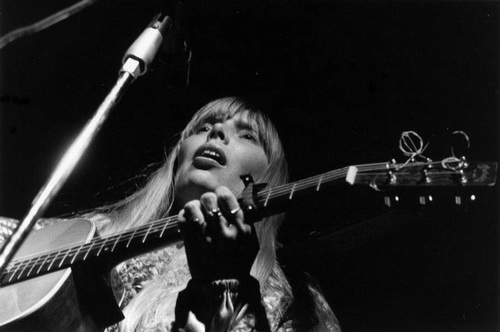
Joni Mitchell is rarely heaped in with the names of Western musical safarists who’ve delved into African music for influence, inspiration, collaboration and outright lifting. But as can clearly be heard on "The Jungle Line" from 1975’s The Hissing of Summer Lawns, she was among the first Western pop stars to blatantly swipe an African backing track. It’s not quite a sample. Here she simply plays along with a recording of court drumming from Burundi. Sort of the same way that Daniel Johnston would later make up lyrics and melodies to sing along with old big band instrumentals. The song is about the French artist Henri Rousseau, who did his own safari bit. It’s an inspired borrowing. Much more so than anything Moby ever did. I’ve never really made peace with The Hissing of Summer Lawns. It has some of the same jazz-ish L.A. studio session dudes as Court and Spark, but it’s not quite as romantic or made for Sunday mornings.


Ethnomusicology students can go on at length about the borrowings of Paul Simon and Peter Gabriel, the questionable arrangements for royalty payments made by groups like Deep Forest who sample field recordings of traditional music and often fail to pay the proper performers, because of the difficulty of finding out who appeared on a field recording in the rain forests of New Guinea or in the jungles of Camaroon. And say you get the names right, how do you cut the check and find the guy 20 years later? It proves a big challenge. Then there’s the problem of assuming that there’s no known author who deserves credit for songs sung deep in the forest. Whoever’s singing it gets credit, but maybe he learned it from a guy in a neighboring village. Maybe that guy wrote it. Semesters are devoted to such griping.

As everybody knows, Paul Simon famously worked with several South African groups, and he’s probably most responsible for the American success of Zulu choral groups like Ladysmith Black Mambazo. Peter Gabriel brought Senegalese singer Youssou N'Dour to the attention of non-African audiences.

But borrowing, quoting, transforming and transmuting other people’s ideas and it’s the nature of musical inspiration. I was happy to read in The Guardian recently that tropicalista Gilberto Gil, now Brazil’s minister of culture, is speaking out about how counterproductive copyright laws really are and how they ultimately stifle creativity.

Ideally the borrowings and musical ricochets and reverberations never stop. Joni Mitchell wasn’t the only one to riff off the Burundis. Deep Forest took what I consider to be one of the most beautiful recordings I’ve ever heard, a track called "Akazehe with Two Young Girls" from a Radio France/Ocora record of traditional music from Burundi (which is far superior to the Nonesuch World Explorer re-issue of their Burundi disc), and they bollocksed it up with the techno bilge. I’m pretty sure that Adam and the Ants did a tune that borrows the martial-sounding patterns of Burundi court drumming, too. I’ve never read any mention of the connection, but whenever I hear Tom Waits singing it makes me think of the this track of Burundian "whisper singing" also heard on the Ocora record. And those who’ve been converted (via the success of Konono #1) the glories of heavy-duty thumb-piano heroics might want to check out the tracks of three-part sanza (Burundi’s version of the mbira).


If, in someone’s mind, Joni Mitchell did damage to the musical legacy of Burundi, you can say she got hers when Counting Crows covered "Big Yellow Taxi" (Bob Dylan’s version didn’t do her any favors either.) But before Counting Crows had their way with Joni, the Scottish rockers Nazareth did a mighty tribute to her with their version of "This Flight Tonight." It’s got all the best flavors of AC/DC and Motorhead, but they’re Scottish, and it’s a Joni Mitchell tune.

Saturday, January 14, 2006

Please bend your mind this way...


My box runneth over. It’s my Rhino box set called “Children of Nuggets” with 100 songs from the less-celebrated second psychedelic era: 1976 to 1996. This thing is cool. It seems like about 95 songs belong in the good/great category, with only a few skippables among the 4 discs. I could spend all day on this music, but for now I’ll just try to break it down into 5 major (and majorly arbitrary) categories:

1) British psychedelic rock. I like the way the party starts with this tune by The Dukes Of Stratosphear (actually XTC in disguise). Also in this category are the energetically named Biff, Bang, Pow!, The Soft Boys, That Petrol Emotion and the tough-guy noir of the Godfathers. Let’s not forget Teenage Fanclub, Primal Scream and the surprisingly sensitive Dentists.

2) Australian bands. I believe it was the novelist Richard Ford who said some of the best Americans are Canadians. I’d have to add some of the best American bands are Australian. Check out the Stems doing She’s Fine. The Lime Spiders take it back to the garage and I probably don’t have to tell you about the Hoodoo Gurus. The Church also drop some paisley on us.

3) Speaking of paisley, dig LA’s legendary Paisley Underground. It was made up of bands like the Salvation Army, the 3 O’Clock, the Long Ryders, the Dream Syndicate, the Rain Parade and before they added the “les” to the end of their name they were just the Bangs. Enjoy The Salvation Army here.

4) Peter Case. He was in the Nerves, as I wrote about previously. Then he was in the mighty Plimsouls. There are 2 great Plimsouls tracks included in the box, and an impossibly obscure Nerves track. Case is a category of one. Here’s a Plimsouls tune.

5) The rest. You want the psychedelic sounds of Milwaukee? Or Baltimore? You want the power pop of the Posies? Maybe some early Screaming Trees? How about some drugged-out New Jersey garage rock by the Swingin’ Neckbreakers? Hmm, let’s just end with the Chills, from the Dunedin scene in New Zealand. Too bad I only do Benadryl these days.

I Need a Branch Away From Here

I'd come across the name Rab Noakes in connection with two Driftwood favorites, Lindisfarne and Stealers Wheel, so I decided to buy a solo album.

The self-titled Rab Noakes from 1972 seemed a place to start -- if only I'd known that there's a Rab Noakes from 1980 as well. The supposedly all-knowing AllMusic Guide mistakenly conflated the two and the Australian record dealer on eBay sent me this one and not the much cooler-looking (and likely, -sounding) one, which I've yet to acquire.

If you get a lemon, make lemonade, they say. That's clearly an underlying theme here at The Driftwood Singers Present. So even though the production suffers terribly from the brittle synth/sax/conga combo that plagued so many albums of the era -- and even though Dewey says it sounds like the theme song to a TV show -- I've decided that "I Can't Get Enough of You" is a great song. Indeed, if one were so inclined, you could say the Scottish accent and the jaunty pop tempo foreshadow the last Belle & Sebastian album. And when the backup singers come in at the end, I'm pretty much sold, aren't you?

Another tune, "Call It A Day," is also quite nice, a willowy folk number and nicely not screwed up by studio spit-and-shine.

I originally heard Rab on No. 1 in Belgium -- a much better song called "Branch," from the 1974's Red Pump Special. I'm really only posting this as an excuse to relay fourth-rate trivia, which is that "Rabbie" taught Lindisfarne frontman Alan Hull the guitar tuning that led to "Clear White Light," the 1970 fog-soaked psych tune that everyone knows I'm overly obsessed with. (Primarily because I'm experiencing premature mid-life crisis and the song makes me wanna start my own Harmonic Convergence cult on some remote farm in Vermont.)

Thursday, January 12, 2006

They Ain’t Got No Landing Gear

And now, for a defense of fascist theocracy. Thoroughly pious, these guys probably would have signed on. Besides the Louvins’ divine vocal harmonies, what I love about this song is the coupling of the transportation theme with tricky questions of theology. It’s a simple matter of asking yourself how you expect to get to the kingdom of heaven. Cars, boats and planes aren’t gonna do it. Charlie and Ira provide a little doctrinal teaser – mixing and matching some of the preferred means of salvation, the brothers say that “through grace, by faith, if you’re made whole, he’ll meet you in the clouds.” It’s very conditional, but there is hope. Somewhere between Flannery O’Connor and Dante. Some get a bit uncomfortable when it comes to the Louvins’ country gospel. People will assume heavy irony if you try to drop “Satan is Real” on them. Sufi trance, Voodoo beats, or Buddhist chanting might not pose a problem, but white southern Christianity is where many draw the line. “He’ll Meet You in the Clouds” comes from Keep Your Eyes on Jesus. None of the tunes appear on the outstanding When I Stop Dreaming, and I’m not sure how easy it is to get them on disc without splurging for the complete Bear mega box set.

I put the Louvins up there with Duke Ellington and Bach, I know that sounds perverse, but whatever. You can hear the link from Sacred Harp singing to the Delmore Brothers and the Blue Sky Boys up through Elvis, the Everly Brothers and even the Beach Boys (The lovely Beach Boys tune posted by Django West was what spurred me to share this one). These are the guys who wrote the lyric:

"Do you fear this man's invention that they call atomic power?
Are we all in great confusion? Do we know the time or hour
when a terrible explosion will rain down upon our land,
leaving horrible destruction blotting out the works of man?
Are you ready for the great atomic power?"


from "The Great Atomic Power"

or "Satan's jewelled crown, I've worn it so long."

or "Others find pleasure in things I despise. I like the Christian life."

or, more simply, "That word broadminded is spelled S-I-N."

There's an apocalyptic beauty, both thoroughly judgmental and poisoned with self-loathing.
I know he was stuggling to hit those stratospheric high notes, but in the picture above I think the look in Ira's eye plainly shows that he was wrestling some serious demons.

When I lived in Asheville, North Carolina, we used to joke about the area being a “power center” because of its popularity with New Age seekers, crystal mongers and other fringe pilgrims, but the Louvins are from Sand Mountain in northern Alabama, a real power center. It was a prime spot for Sacred Harp singing, Sun Ra spent some time up in Huntsville (where NASA has a facility and where the locals say there’s a good bit of UFO-type weirdness). The northwestern part of the state is a rock and soul ground zero, with the Muscle Shoals connection, links to the Stones, Ike and Tina, Aretha, Isaac Hayes, dig. The Louvins opened for Elvis on one of his early headlining tours, and there are frightening stories about an irate Ira trying to strangle the King because he was playing black music. Ira died in a car wreck. You can see his mandolin at the Country Music Hall of Fame.

Wednesday, January 11, 2006

You want to spank me?

Fire up your broadband pipes.

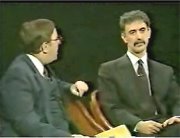
This video has got to be seen to be believed. It's an episode of CNN's Crossfire from 1986 featuring Frank Zappa as pundit. He dukes it out with, among others, Robert Novak. The subject is censorship of rock music and videos and the raucous exchanges that ensue make The O'Reilly Factor look like The NewsHour with Jim Lehrer. Here's a nice taste:

Zappa: You want to spank me?

John Lofton, Washington Times: No, I’m not into spanking.

Mr. Zappa, extraordinarily prescient and well spoken (and well-tailored), makes the observation that "the biggest threat to America today is not communism; it's moving America towards a fascist theocracy and everything that has happened during the Reagan administration is steering us right down that pipe." To which Mr. Novak replies:

Novak: Mr. Zappa, do you really think, I mean, all kidding aside, in this country, with the permissiveness, that we are moving toward a fascist theocracy?

Zappa: You bet we are, buddy.

There are dozens of nuggets like this, including a hilarious discussion of the video for Van Halen's "Hot for Teacher." Mucho hosannahs to Crooks and Liars, which got this from iFilm. The video is quite long, so sit tight while it loads.

PS> Why don't you visit the Frank Zappa website?

Monday, January 09, 2006

Would I?

Last night we were drinking with the man who played the lead in the original Broadway production of "Hair" and another guy who knew dozens and dozens of jokes learned in late night bars and diners in the 1970s. Jokes! Sometimes you forget.

But then you remember: you're either one of those fortunates who recall jokes or you are not. Or maybe you know only a few, as I do, memorized feverishly and with labored intensity when you were 13 years old and now only one or two remain ingrained and also effective with adult audiences. The one or two that are not about masturbation. Here's one the jokeman told last night, late*:

There's a fellow who has a really bad, fake wooden eye. He's missing an eye and the wooden one is lodged in his socket in such a way that everyone notices how fake and terrible and made of wood it is. He's a pariah with a wooden eye.

Then one night he goes to a dance and he's feeling very lonely and alienated and bad when he spies a woman who has a horrible, horrible hair lip. He figures: What the hell, maybe she'll accept me for my wooden eye. So he approaches her.

"Would you like to dance?" he asks her.

"Would I?!" she says excitedly.

To which he replies, furiously: "Hairlip!"

Anyway, Woody Allen. His new film Match Point isn't really a comedy per se but it sticks with you like no other Woody flick in quite a while. Woody taught us the art of the pained and knowing chuckle, the intellectual gimp under duress who lets you feel superior twice -- once because you're better than him and again because you're not, you're just like him, which means you're quite sophisticated, aren't you? But Match Point is grim in an entirely new way, a joke told by a drunk at the bar who has told a series of jokes but whose last one takes a weird u-turn into a terrible confession that only a therapist should really hear about -- a therapist who will be subpeoned in a criminal murder trial. The smile goes south. Hair lip!

Then there's "Pets," a neurotic comic bit that is truly and wholey a "bit." But it's still very funny, both as a sample of his Catskills existentialist comedy style and as a snatch of 1960/70s Upper West Side cocktail party atmosphere. This is from the 1979 album Woody Allen: Standup Comic. Listen to that voice -- it's so fey! You'd hardly predict how much intellectual gravitas this kind of material would earn him. But to this day I read portions from the New York Review of Books and reflexively hear that faux-academic voice Woody uses in Without Feathers and Side Effects -- a voice of grandiose absurdity, mocking the authority of the intellectual elite. Go ahead, try it out:

He in no way wanted to be compared, he said, to the Tolstoy of Yasnaya Polyana, the Goethe of Olympus, or the Thomas Mann who linked genius to decadence, and he had no use for Alfred Jarry's metaphysical dandyism or Anatole France's affected mastery. He claimed that he didn't even wish to be known as a Polish writer, but simply as Gombrowicz.**

Ha!

Anyway, I imagine a 1970s Woody Allen (khakis, white sneakers) in a music video for XTC's 1978 tune "Statue of Liberty." Listen, I think you'll see him, too. It's a photo negative of King Kong: A tiny man in love with a giant green woman.

This song was deemed indecent by the British government and banned from the radio.

* This post powered by Knob Creek.
** "Salvation Through Laughter," Charles Simic, NYRoB, Jan. 12, 2006

Sunday, January 08, 2006

Okie Dada

As I’ve taken the liberty of informing every single person I know or have casually conversed with in the past two weeks, I “read” Jon Krakauer’s Into the Wild after Christmas (actually I listened to a book on tape of it on one long solo roadtrip from North Carolina to Massachusetts on Dec. 26). In short, the book is about the ultimate pack-it-in paradigm – a 20-something guy who hitched his way up to Alaska and in late spring of 1992 then walked out into the wilderness around Fairbanks with something like a sleeping bag, a machete, a gun, a toothbrush, a bunch of paperbacks of Russian literature and a 20-pound bag of rice. You walk away feeling conflicted about the guy, Jason McAndless. Dude was bad ass, but he was also obviously an egomaniac who, in some ways, had it coming when he perished alone in an abandoned bus, malnourished from trying to survive on weird roots and seeds. Well, the book gets deep into the specifics and by the end, one isn’t so sure if it was hubris, festering resentment toward his father, suicidal tendencies or bad luck that did McAndless in, but along the way Krakauer explores the charms and dangers of retreating from civilization.

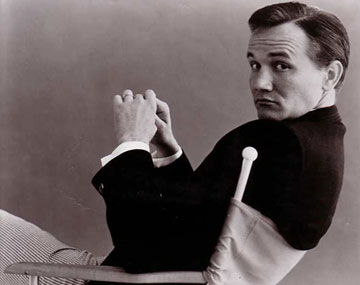
Along with his worship of Tolstoy, McAndless was also evidently a big fan of Roger Miller (and I don’t mean Mission of Burma), in particular of the hobo tramp classic, “King of the Road,” the lyrics to which McAndless would scrawl in graffiti and letters he left at various spots. (Incidentally, one of the more moving exhibits at the Country Music Hall of Fame is the scrap of paper on which Miller originally penned the words to the song.) To my ears, Miller -- who, no surprise, was from Oklahoma -- was a real genius, a scat-singing Dadaist country crooner who could mine the deep veins of nonsense while still telling compelling stories (check out the Robin Hood cartoon movie to which he provided narration and musical numbers). You can hear "King of the Road" by turning on the oldies station. “My Uncle Used to Love Me” is a little less likely to show up there. This tune is as raw as Iggy Pop and as perversely weird as just about anything. "England Swings" puts me iin mind of Jerry Jeff Walker's "London Homesick Blues," and makes me wonder if there are other great country tunes about Britannia.

Friday, January 06, 2006

The Cools vs. The Squares

Warning: For the past two weeks I have been doing nothing but drinking whiskey, listening to my “Rhythm & Booze” compilation, delta blues and any recordings produced by Dr. Dre. And I just had me a vision, my people. I looked back into the past, and I looked to the East and the North and especially the South. Now I’m ready to write. I’m crazy. Here I go:

Since at least the 1930's, a war has been waged in popular music. This is the battle between The Cool People and the Squares. It’s true. Think about Skip James and Robert Johnson. They sang crazy, sometimes disjointed lyrics about these topics in the 1930's: the devil, guns, cars, booze, sex and juke joints. They sing about these things because they are Cool. You have a good time by engaging in any combination of one or more of the above. All these things are potentially dangerous, which is where the fun is. This is what makes perpetually interesting content for popular music. In Terraplane Blues, Robert Johnson sings simultaneously about a woman and a car: “I'm on'h'ist your hood, mama/I'm bound to check your oil...And when I mash down on your little starter/then your spark plug will give me fire.”

Fighting against the blues singers were the prohibitionists and the preachers. They were Squares, baby, all of them. Strictly L7. They tried to take the fun away and replace it with righteousness. It was war. Fast forward to 1981 for a second and listen to Jeffrey Lee Pierce channel Robert Johnson in Gun Club’s version of Preaching The Blues: “I’m gonna be a Baptist preacher/So I won’t have to work.” Jeffrey knew the deal. As Gun Club drummer Terry Graham wrote, “what Jeff liked about obscure American culture were the constant references to sex, death booze, drugs violence, the road, sex (sic), random acts of self-destruction and non-stop loneliness.”

Things continued along these lines until the 50's, when the stakes were suddenly raised. By now the guys singing about chicks, cars, whiskey, etc. were rockabilly artists and R&B artists. The cars were faster and more beautiful. They were Somethin’ Else, in the words of Eddie Cochran. Young white suburban kids began to dig what was Cool. Rock-n-roll was born, Daddio. Preachers were threatened by its devilish beat. Sermons were screamed about the evils of rock-n-roll. Records were smashed. Radio stations were censored. Television cameras were angled to cover up the naughty action. Young White America was becoming Cool. Now the Squares were really angry.

Here’s how Gary Stewart of Rhino Records put it in his essay for the “Loud, Fast & Out Of Control” box set: “It was music that was made for teenagers and scared the hell out of adults; it was taboo-shattering music about-gasp-sex and racial commingling. That’s why records were burned, censorship laws were passed and some lives were ruined. Because this was the devil’s music, and it was threatening the status quo.”

Filmmaker David Lynch would borrow a lot from this era. For example, Willem Dafoe’s character Bobby Peru in the film Wild At Heart quotes this Joe Turner line: “I’m like a one-eyed cat peepin’ in a seafood store...” Very naughty. Lynch understood the funny and shocking content of 50's rock. This is a long way from Happy Days.

The struggle went on like this for a few years. But then things got really fucked up. These suburban white kids put away their Eddie Cochran records and went off to college. Now we all know school is for Squares, baby. There at college the kids fell under the influence of a new crypto variation on the Square: The Folk Singer. Ah, folk singers. They play music so they’re cool, right? So well meaning and nice too. So caring in their politics. They sang what Greil Marcus calls “pageants of righteousness.” Yes, they did good things. They are do-gooders. I’m sure I would agree with their politics. But what I want to hear in Washington and what I want to hear on the jukebox are two very different things. The problem is, a lot of the folkies have no business making music because they are Squares in disguise. They pretended to go back to the “pure” folk and blues traditions of the 30's and update the struggles of the common man in a new early 60's civil rights struggle. But the thing is, a lot of those folk singers back in the 30's were actually just singing about whiskey and the devil. The folk movement tried to use the Cool for their own well-meaning political agenda.

And of course it didn’t work. Who honestly and un-ironically likes The Kingston Trio? Pete Seeger? Come on. It’s just too holy, too pure and too Square. At this point I should mention Bob Dylan. Dylan himself had a rock-n-roll band in high school. Then he too went off to college and got into folk and blues. However, as Marcus points out in Invisible Republic, Dylan actually understood the crazy, non-sensical, mysterious and very impure origins of real folk music. He knew about the music that didn’t help anyone’s political cause. That’s why he didn’t stay a pure folk artist for very long. He used the folk scene to get by for awhile, but then he returned to the side of the Cool when he went electric and got weird. Check him out by 1965, rocking the polka dots and Fro. He’s Cool again, returning to his high school rock-n-roll essence.
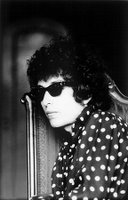


Sadly, by the late 60s rock-n-roll itself was taken over by the do-gooders. Sure, Jefferson Airplane sang about drugs, which are totally Cool. But rock-n-roll became about Stopping The War and overtly fighting Racism and all these other good causes.

Still, there were a few real rock-n-rollers who kept the Cool flame burning in the 70's and 80's. Meet the Cramps. They more than any other group understood what is Cool. They have an album called “Bad Music For Bad People,” a title that boils down the definition of Cool music to its essence.

Also you had bands like Black Sabbath and Motley Crue singing about good times and the devil, with varying quality. The Squares hated them, yes, but their music didn’t always do justice to the Cools who came before them. The Supersuckers rose up in the 90s, and resolved to sing exclusively about liquor, drugs, sex, gambling and killing. And it was good. Then the war changed venues again. Rock was off the hook.

Record exec to Eminem, on the topic of his new album: “I can’t sell this fucking record...You know why Dre’s record was so successful? He’s rapping about big-screen TVs, blunts, 40's and bitches. You’re rapping about homosexuals and Vicodin!”

In the 00's you have the very same battle going on in rap music. What are Dr. Dre, Snoop Dogg and 50 Cent and so many others rapping about? Sex, ecstasy, Chronic,
rum, gin, knives and guns. It's that familiar song that’s been around for at least 70 years. The Squares haven’t given up either. When 50 makes a movie it’s the Squares who say he can’t have a gun in his hand in the promotional billboard.

Yeah, well that’s my crazy drunken rant. I could go on, but you get it. Thanks for listening. I’m almost sober now. I best be going. Tune in next week when I reconsider my trash-talking of Pete Seeger while reflecting on the new Kevin Federline album.
Monday, January 02, 2006

Eels and Eel Broth

This may be the saddest, most devastating song ever. Don't be fooled by the vaporous vocal sound. The wife sometimes forbids me from playing "Lord Rendall" around the house because it’s such a vein-opener (it and "Young But Daily Growing" from Dylan’s Genuine Basement Tapes). Not sure how many other suicide ballads there are, but I think it’s a genre that deserves more attention (I guess you only get to write one). This one comes with a nice "fuck you"at the end (Spite has always seemed like the best reason to end it all). Let all the wan, wannabe-consumptive, light-deprived, sad sacks take note. This is how the big Elizabethan boys do it.

Upon first hearing Antony and the Johnsons, Antony’s peculiar voice reminded me of a weird cross between Nina Simone and counter-tenor Alfred Deller. I get the feeling that people who know a lot about singing and "early music"now find the once beloved Deller Consort to be a little laughable. I know singers who frown on countertenors in general. I’m still a sucker for it, though when the recorders come out later on the record there’s a whiff of Renaissance fair-SCA to the whole thing. This is from an album called The Wraggle Taggle Gipsies on Vanguard. If my memory is correct, I got this at thrift store in Fort Lauderdale. The pops and hiss prove it.

Dust Off Your Crumhorn

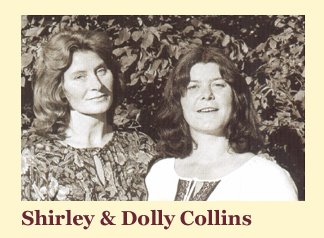
On the subject of dreariness, I first heard Shirley and Dolly Collins from a post on ‘Buked and Scorned. Here they are doing "Young Girl Cut Down in Her Prime." The Collins Sisters make Fairport Convention sound like the Archies. "The Oxford Girl" is one of those ur murder ballads (she’s "Knoxville Girl"’s grandmother, get your songcatcher out). These comes from 1970's excellently bleak and icy Love, Death and the Lady. You can just imagine Jimmy Page and Robert Plant wetting their Druidic frocks over these.

Quoting everyone from Thomas Carlyle, to John Stuart Mill and Aristotle, on the event of what I guess is the national day of faux introspection, a couple of editorials in the NY Times recently cautioned against the quest for happiness. Evidently when you try to be happy, it makes you miserable. So -- work with the homeopathic logic here -- maybe these miserable tunes will cheer you up.

Resolution #9


Deliver unto the people the music of Bill Fox.

Yes! Last night I was digging into When the Sun Goes Down: The Secret History of Rock and Roll, a massive collection of pre-rock gospel and folk recordings, when I tripped upon "Mary of the Wild Moor" by the Blue Sky Boys. It was recorded in 1940 by the Bolick bros., Bill and Earl, whose sweet hillbilly harmonies presage the Louvin Bros. I soon recalled that Bill Fox, the mysterious and illusive folk-rock genius, covered this on 1998's Transit Byzantium. His version adds a weird Motown bass line, hand-claps and a harmonica. He was probably riffing on the Dylan version. Johnny Cash covered it, too. The song goes back to the British Isles. It was copyrighted by an American in the 19th Century and the sheet music is beautiful.

It's hard to know why Bill Fox didn't emerge as one of his generation's great songwriters, but we hear tell of personal dilemmas that set him back and sidelined him from the music business altogether. Mental and emotional fragility infuse his songs, which are often the sound of idealism dog-paddling to stay above the cynical waters of modern life, as on "Down to Babylon."

You know all roads lead to Babylon
My dying leads to death
Right now I'm moving in between
And I'm trying to catch my breath.


In that space, he seemed all too aware of the transitory nature of pop, ever and tragically in sway to a deeper personal and historical root. He pretty much says it all in "Thinking of You."

'Do I want to do a 7-inch?'
Somebody asks me from the Deacon's bench
And I tell him, 'Pick any track, you know that it's yours...'


Before he went folk and before he went down and out, Fox was building pristine pop pyramids to the sky in the late 80s indie pop band The Mice. "Guarding You" is found on For Almost Ever Scooter, a compilation issued last year by Scat Records. You can hear the raw, quivering hope. I've said it before and I'll say it again: Cleveland, Cleveland, Cleveland. City of outmoded yet weirdly futuristic dreams.

Speaking of which. Earlier I proclaimed my adoration for "Mountain Greenery," the Rogers and Hart number. I came to it through the Bing Crosby version, which I figure is definitive, knowing Bing. In spirit and outlook, this song is instructive and inspirational. A blueprint for people who suffer from Grass-is-always-greener-ism, which is a chronic disease for some of us. Without unpacking too much of its personal meaning for me and Dewey, let's just say it's a call to arms if you live in the dirty city toiling for impossible happinesses. It's also a vision of spring, of things to come, of great, green hope. It's the closest Bing came to being a hippie, maybe. Did i mention I hate winter? I do! Therefore: We resolve to look past it and into the wild blue future that lies just beyond. This is essential for any headin' up the country soundtrack. We'll get there!

[See a previous post on Bill Fox here.]