Tuesday, May 23, 2006

Uber-Onanists


On the surface of it, there are a lot of bad things about “Prodigal Son” by the Amboy Dukes. For starters, you’ve got Ted Nugent -- pre-Tarzan suits, pre-“Wang-Dang Sweet Poontang,” pre-bow-hunter, pre-Damn Yankees (did anyone listen to the recent installment of the Bob Dylan satellite radio show in which he played baseball-themed songs, and, before introducing a song from the Broadway show Damn Yankees, Dylan said “And I don’t mean that band that Ted Nugent started with those guys from Styx”?!!). Then there’s the hard-to-ignore Carlos Santana guitar tone – it’s not looking good. Add to that the extended uber-Onanist drum and organ solos, and, well, it’s damning, frankly. I’ll admit, this song doesn’t need to be 8 minutes and 40 seconds, but few do. What redeems it for me is the totally retardo rubato at the beginning. That and the fact that I have very fond memories of the first time I heard it. We were in van, somewhere near Hampton, Virginia; yes, there was weed, and my friend Chris had made a mixed tape that started with this track. It was also the first time I heard Blind Willie Johnson’s “God Don’t Ever Change,” which came on right after it, and I’ll forever thing of the two songs together. It’s one of the beauties of the now-gone mixed-tape era that completely unrelated tunes could get yoked one to the other in your mind – indelible album sequencing.

The Amboy Dukes evidently got their name from a famous book about gangs in Brooklyn. I learned this when I read Pete Hamill’s lame memoir The Drinking Life. Hamill, a bit of a self-satisfied windbag like Nugent, was also inspired by the book.

Maybe I should go to postasecret.com for this but, I actually sort of like that Damn Yankees tune. You’ve got to watch the video – the dumb sunglasses, vests with nothing underneath, the bad bangs, the sleeveless T-shirts, the Nuge, the totally unrelated Bonnie and Clyde storyline. Matthew Barney couldn’t do this shit.


And, after you do that, I’ve got something else for you – it’s so volatile I can’t even say what it is, just click.

I know it’s wrong, but I’m okay with that.

Ok. To atone for that, here's some righteous Blue Cheer off of their second record, OutsideInside. This is big, grave medicine. The sound of the kick drum alone is enough to hurt your kidneys. I honestly can't fathom how this music can be this heavy. It's like some sort Copernican Revolution, you have to reconfigure your understanding of everything to make sense of it.

Blue Cheer -- "Sun Cycles"

Sunday, May 21, 2006

Cycles of Circular Motion


Not too long ago I was feeling sort of expansive at the record shop and I picked up a Steve Miller Band record called Number 5 as well as a copy of Shadowfax’s Dreams of Children. Obviously, this was a big mistake. I had remembered sort of grooving to the faux-world rhythms on the Shadowfax record in high school, but there’s a lot of pinched-sounding soprano sax and fretless bass, the kind that when you hear it you imagine the self-satisfied bass player (who looks like a Department of Environmental Protection soil scientist) sort of puffing out his cheeks and bending his knees a bit as he plays. So, I’m not ready to reconsider Shadowfax. Not yet. And the Steve Miller Band record proved to be the worst extended boogie rock, presaging the Dave Matthews Band in its self-deluded ideas of what’s funky.

Every time I start to totally write off SMB though I’m reminded of a time I was at Sluggo’s in Pensacola, Florida (not sure if still exists, it was one of the best rock clubs in the country, run by really cool characters who made Pensacola -- with its mix of rabid anti-abortionists and jarheads, vestigial sunny Florida vacation vortex and the weird decrepit bayou culture of the panhandle which makes the place more like New Orleans than Tampa –- seem like a cultural capitol. Pensacola is a busy shipping port and I once played a game of pool with a Russian sailor at Sluggo’s, he couldn’t really speak English, and he may have been looking for a prostitute, it wasn’t clear, but I passed on an offer to go and hang out on his ship with him, which could have ended in a powerful vodka drunk and/or my entry into white slavery). Anway, on a bathroom stall wall at Sluggo’s someone had written:

You treat me like I was your ocean
You swim in my blood when it's warm
My cycles of circular motion
Protect you and keep you from harm

It was one of those sleep-deprived, hung-over-soon-to-be-drunk moments. And it seemed brilliant (ironic) at the time. Steve Miller, perhaps more than anyone, conjures the 8-track tape era for me. Columbia Record Club deals where you get 10 for a penny or something. Bob Welch, Elton John, ELO, Boston, Fleetwood Mac. That practically does it. Well, like Fleetwood Mac and ELO at least, there was a pre-mega success Steve Miller Band. He tried to do his part for the psychedelic army.

It was while flipping through the book “I Want to Take You Higher” – a big coffee-table deal about the psychedelic era that I saw a mention of early SMB. A track called “Song For Our Ancestors” of his second record, Sailor, was included in the book’s “Top 100 Psychedelic Songs” list (#41). “Song of Our Ancestors” is pretty cool and admirably atmospheric, but I prefer the next track, “Dear Mary.” Yes, it’s a rip-off of both “Whiter Shade of Pale” and “Penny Lane,” which doesn’t bode well. And yes, Boz Scaggs is involved. It occurs to me that, if you had never heard "The Joker," "Fly Like an Eagle," "Jungle Love" and "Big Ol' Jet Airliner," they would actually sound great. Like "Brown Eyed Girl," "Born on the Bayou" and "Sweet Home Alabama" and most Motown hits, these songs have been ruined by too much use. They're like some Leonardo Da Vinci manuscript that was exhibited in a bright gallery space until the light-sensitive material basically disappeared. We can't hear them anymore.


As a come down off of that, here’s some Paul Pena. Much of this record is a lot like Band of Gypsies-era Hendrix or even solo Buddy Miles with a hint of B-grade Shuggie Otis, the Meters or maybe Sly and the Family Stone. Coincidentally, the same day that I picked up Sailor, I also scored a copy of Paul Pena’s first record. Pena, who passed away last year, was the subject of the excellent documentary Genghis Blues, about his embrace of Tuvan throat-singing and a trip the blind musician made to Tuva to enter in a music competition. In the movie, it’s mentioned that Pena wrote “Big Ol’ Jet Airliner,” which Steve Miller later had a hit with. I assumed it was on this record, but evidently it was from an unfinished or at least unreleased second record. Here's a sort of extended soul gospel vamp called "The River." It's not without its chaff, but the bombast of a choir is always its own reward. A spoken-word interlude worthy of Baby Huey is also worth listening for.


Steve Miller Band -- "Dear Mary"


Paul Pena - "The River"

Sunday, May 14, 2006

Those That Refuse It Are Few


The Perm and the Skullet has a bunch of excellent Johnny Cash/Bob Dylan outtakes from the Nashville Skyline sessions. You’ll want to go hear these. Among the tracks is "Old Mountain Dew," a rendition of a tune credited to Bascom Lamar Lunsford.

BLL, as some of you will know, was from Western North Carolina, Asheville way. I remember taking a sort of ethnic/folk music class at Warren Wilson College where we learned "Swannanoa Town" – another tune by Lunsford. Most people know him through the incredible "I Wish I Was a Mole in the Ground" as heard on the Anthology of American Folk Music. Lunsford is one of those huge figures in American old time music. His story gives the lie to many of the popular ideas about old-time musicians in the south.

He wasn’t some hick with a spooky surreal apocalyptic vision sprouted from the hardships of farm living and a steady diet of Sunday sermons, though that would be cool, too. Lunsford, like A.P. Carter, if I’m not mistaken, worked briefly as a traveling fruit tree salesman. Like Carter, Lunsford’s travels around the countryside provided him with a chance to seek out, gather and collect old songs. He was an untrained musicologist who kept track of stories about the old songs and paid close attention to who played what, and what instrumental styles were common in what regions. Lunsford was also a lawyer, and you can hear on the recordings that he made for the Library of Congress that he was erudite and spoke with a cultured air. He wore sharp suits and a cool-o eyeglasses. He could have passed for a Bauhaus architect. Lunsford also started a regional folk music and mountain culture festival.

Here are a few of my favorite tracks from the Library of Congress sessions. Like the Carter Family, BLL performed a mix of old tunes that had their roots in Scotch-Irish traditional music, Elizabethan balladry, African-American blues, Cival War era parlor songs, and whatever else the folks in Buncombe County were inclined to play for one another when they gathered for some music. Here is "The Mermaid Song" (with a special nod to Dewey Dell), "In the Shadow of the Pines," and "Swannanoa Tunnel." If you’ve ever been to Swannanoa, it’s sort of startling to find such a speck on the map showing up in a song.

Somewhere on the disc he says that he’s recorded something like 300 songs or so for the library. I’d love to hear them all.

Bascom Lamar Lunsford - "The Mermaid Song"

Bascom Lamar Lunsford - "In the Shadows of the Pines"

Bascom Lamar Lunsford - "Swannanoa Tunnel"

There’s a Buffy St. Marie version of a few BLL tunes, I may have to transfer from vinyl and inflict on you all. Stay tuned.

Saturday, May 13, 2006

A Brief Footnote Regarding The Haze


This is just a quick one to add to Mr. P's post about Lee Hazlewood. It's from my vinyl copy of Dean Martin's Greatest Hits, Vol. 1, which I picked up in a thrift store about 11 years ago in Chico, California. The composer is Lee Hazlewood.

Dean Martin-Houston

Enjoy the Dino.

All Samples Cleared:


I remember once seeing the eclectic jazz clarinetist Don Byron on MTV. He was performing with rapper Biz Markie at the Knitting Factory, I think. Whoever it was doing the interview made some comment about Byron having recorded the music of Duke Ellington, Raymond Scott, Lester Young, having played klezmer and whatever else, implying that working with Biz was somehow not in keeping with Byron’s past. To which Byron said he put Biz Markie up there with Stravinsky.

You may remember back in the ‘90s that Biz had one of his record I Need A Haircut basically recalled because he had illegally used a sample of English singer Gilbert O’Sullivan’s “Along Again, Naturally” in a song that the Biz, perhaps unwisely called “Alone Again.”


I Need A Haircut is my favorite Biz record. The song “Romeo an Juliet,” what I bet is a sample lifted from the Nino Rota soundtrack to the Zeffirelli film, encourages anyone who’s not familiar with the story of the two star-crossed lovers to go see the movie (It’s much better than the Dire Straits version). It also includes “I Told You,” which makes excellent use of a Donovan sample from the song “Get Thy Bearings” off of The Hurdy Gurdy Man.

Biz Markie - “Alone Again”


Biz Markie - “Romeo and Juliet”


Biz Markie - “I Told You”


Donovan - "Get Thy Bearings”


Igor Stravinsky - “Third Tableau” from Les Noce (The Wedding),
performed by Pokrovsky Ensemble

Friday, May 12, 2006

You Can Be Beautiful Too


A few years back I wrote a small piece about overrated and underrated artists. I was feeling particularly contrarian and I went on about how Gram Parsons wasn’t really as great as everyone wanted to believe – sure he wrote several near-perfect songs, but because of his self-destruction and early demise he never realized his potential. I had recently interviewed Chris Hillman and he was clearly a bit tired of the Saint Gram thing. Hillman seemed to feel that the worship of GP was a perfect example of enshrined hippie excess.
Around the office a few people made fun of me because they had never heard of Gram Parsons (so how could he be overrated?). Taking an easy shot, I also wrote about how lame and bloated most of Eric Clapton’s music is. I expected hate mail for that one. But none came.

For the underrated section, one of the groups I picked was Nazareth. The other was the Bee Gees.

I was basically saying that the early Bee Gees were as good as the Beatles, and that their disco era success had sort of sucked attention away from all the lovely early stuff. A few weeks later, we got a hand-written letter thanking us for championing the oft-neglected Bee Gees, and yes they were geniuses and pop visionaries. People have strong feelings about the Bee Gees. There’s a now-defunct web site that was devoted to people’s poetry about how the Bee Gees music had changed their lives.
Jefferson Airplane don’t have one of them I bet.

Here are two from the brothers’ wonderful Odessa. The Bee Gees knew how to drop a seafaring riff now and again, and a little military or technological history (see "Trafalgar" and "Edison") wasn’t off limits either. Here they seem to be celebrating a certain kind of domesticity ("Marley Purt") and offering a little Celebrity Make-Over tips to the young ladies.

Send us a poem if it changes your life.

"Marley Purt Drive" – the Bee Gees

"Melody Fair" – the Bee Gees

Wednesday, May 10, 2006

Swamp Music


This is just going to have to be one of my would-be high-concept posts that ends up still-born, half-assed. But that’s cool. I was going to do a series of swamp-theme songs, ideally swamp songs involving murders. This was mainly just an excuse to foist Warrant’s "Uncle Tom’s Cabin" on anyone daring enough to go there with me. But then, no, when I think about "Uncle Tom’s Cabin," I’m not even totally sure there was actually a swamp involved, though the video seems swampy in my memory. And when I think about "Uncle Tom’s Cabin" I’m reminded of my other high-concept- sure-to-be-half-realized about doing something on songs that misappropriate famous pieces of literature (preferably American lit.) for rock use. Uncle Tom’s Cabin, as you know, is an anti-slavery novel by Harriet Beacher Stowe. Warrant’s "Uncle Tom’s Cabin" is a song about, I don’t know, corrupt cops and murder. Get the idea? From there I could only really come up with one other one: Metallica’s "For Whom the Bell Tolls," which I’m pretty sure is unrelated to the Hemingway book. There must be more. "Mody Dick" sort of makes the cut, but we really need one more solid to run with the theme. I’m sure it will come.

So that’s why you’re not listening to Warrant right now.

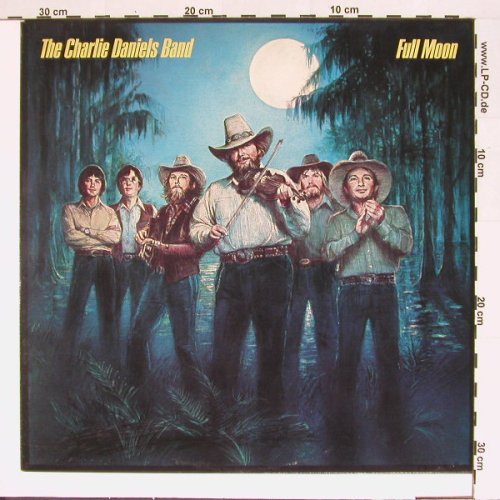
To the matter at hand. Let me just advise all of you Charlies Daniels doubters out there. Go get your copy of My Morning Jacket’s It Still Moves and pick just about any track off of it. Or pretend you’re listening to the Drive-By Truckers. How much difference is there? The other, less pleasant, connection is to the Edgar Winter Band. "Wooley Swamp" actually shares some DNA with "Frankenstein." And so there it is – Charlie Daniels Band perched at the intersection between wanky bloated blues-boogie albino art rock and southern-fried jingo jams, dixie dreggs.
"Legend of the Woolie Swamp" – Charlie Daniels Band

And to clear the swamp muck off your palate, Swamp Dogg and Duke Ellington.
"Total Destruction of Your Minds" – Swamp Dogg

"Chloe (Song of the Swamp)" – Duke Ellington and his orchestra

Tuesday, May 09, 2006

Satanic Airways


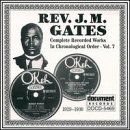
When he died in the 1940s, the Rev. J.M.. Gates had what was described as the largest-ever funeral of anyone in Atlanta’s sizeable African-American community. It was only when MLK was killed in the 60s that the record was broken. It’s said that among old-time and race music record collectors in the 50s and 60s, Harry Smith types, that J.M. Gates records were sort of like the chaff that you had to sift through in order to find the real odd gems. Everyone had Gates records. It’s hard to fathom now, but his recordings – sermons, theological skits and rough-and-raw group singing – were some of the best selling 78s for the labels that released them. I once interviewed Chris Strachwitz, founder of Arhoolie Records, and I remember talking with him about recordings of preachers. When I mentioned that I liked Rev. J.M. Gates, Strachwitz was kind of dismissive, equating it with top 40, which seems pretty unlikely when you listen to him. But it's sort of true.

If I'm not mistaken, Gates was "discovered" by Polk Brockman, who also made some of the very first, if not the first, old time and country recordings. In the 20s and 30s, record labels were mystified by the black market, but they realized a big seller when they had one, and they just stuck with what worked, and as a result, you can hear multiple versions of Gates’ signature "Death’s Black Train" among his complete recordings, since Gates had more recording sessions than material. As a matter of fact, in his autobiography Malcolm X refers to recollections of listening to recordings of "Death's Black Train," undoubtedly one of the Gates versions. Part of the appeal must have been that you could get a jolt of sanctity without having to get dressed up and go all the way to church.

Blues scholars often point to Robert Johnson and certain other players as being among the first generation of artists who were learning as much from listening to recordings as they were by hanging out and picking up riffs by watching other players. It's the point at which local styles exploded and could go national. Suddenly you had guys from Georgia or Chicago playing a blues style that was very specific to a small area in the Mississippi Delta. The 100th Monkey phenomenon, only without the mystery. Jazz dudes will go on at length about listening to Coleman Hawkins' solo on "Body and Solo," picking it apart, marveling at it - something you couldn't do before the days of the record. I've always speculated about the extent to which Gates' popular recordings affected the sermonizing and testifying styles of preachers all over the country.

I love Gates' little froggy croak and the seemingly off-the-cuff slapstick banter he gets going with his "congregation" (a crew of three or four regular characters who would moan, offer well-placed rhythmic assent or shout "sing it!" and "well!" as needed, often repeating the last word of Gates' phrase for emphasis -- I particularly enjoy when one of the deacons gets all worked up in "The Flood of Alabama" after Gates delivers a line about the prisons being overcrowded and the congregation yells out "overcrowded!"). More than that though, I especially dig his almost universal suspicion. You name it and Gates' is not down with it. Wigs, bad. Chain stores, bad. Corn liquor, very bad. But more than anything, Gates distrusts rapid transport, and he sees it as a metaphor for the devil's ways -- he'll give you something quick and convenient, but he'll steal your soul. Gates has tracks railing against automobiles. And you don't want to get him started on flying machines.

Gates was big seller. But loads of other preachers ended up on records, trying to connect with glory while positioned in front of equipment with a technician standing there telling them when they've run out of time. You've got three minutes.

"I've Got a Ride to the Tree of Life" -- Sister Sallie Sanders

"Liar" Rev Isaiah Shelton

"I Am the Living Bread" - Sister Gertrude Morgan

"Devil in a Flying Machine" -- Rev. J. M.Gates

"Will the Coffin Be Your Santa Claus?" -- Rev. J.M. Gates

"I Wish I Could Sing" - Bongo Joe (sort of a secular preacher, on Arhoolie)

Monday, May 08, 2006

Swedish Haze


OK. I’ve been postponing this one in hopes of finding my Dino, Desi and Billy record to add to the mix. But, after rummaging through two boxes of neglected vinyl stored away in the guest room, I’ve decided that I must have tossed it or lost it. The theme is Lee Hazlewood. Mustache man. Producer. Music scout. Song-writer. Singer. Hazlewood produced Dino, Desi and Billy, but we can do without it. There are enough other doozies to cook through without Hazelwood’s foray into the world of the proto boy band.

He wrote “These Boots Are Made For Walking.” LH also signed and produced Gram Parson’s pre-country project The International Submarine Band. He had big success with the twang-irrific sounds of Duane Eddy, the Guitar Man. And LH also put out the music of the mysterious Arthur, whose full name was Arthur Lee Harper (not to be confused with the Love frontman). The Haze Master also penned a book about his relations with the Sinatra Family. You can buy it on his web site.


There’s plenty of kitsch value on many of these recordings, but LH is a brilliant producer and songwriter. There’s backwards guitar to rival the Beatles and Hendrix on “Sand,” one of many duets with Nancy. After parting ways with Nancy, Hazlewood moved, where else?, to Sweden. Hence the record Swedish Cowboy which includes the so-silly-it’s-almost-creepy free-love comedown of “Easy and Me.” Hazlewood’s croaky bottomless baritone has an accidental chocolaty quality to it. Some people mention James Earl Jones, but there's also a bit of Fred Flintstone in there too. Understanding Lee Hazlewood is difficult. He's part hokey huckster, and part hipster, sort of like if they had cast Jack Klugman to play in the hippie/cop/detectiveTV series based on Easy Rider.

He was never afraid of overdoing it with production. Or with liner notes, as I've mentioned in the earlier post on Arthur, where Hazlewood gets all oxymoronic and synesthesiac -- "a mind that listens to pictures ... a man who will someday be a child again."

LH has plenty of people championing him. On a 2002 tour of England, Jarvis Cocker and Friends were the openers. A tribute album includes Lambchop and Evan Dando.

Nancy Sinatra - "The City Never Sleeps At Night"


Lee Hazlewood - "Easy and Me"


Lee Hazlewood -- "Run, Boy, Run"


The International Submarine Band -- "Sum Up Broke"


Arthur - To come, perhaps.

Sunday, May 07, 2006

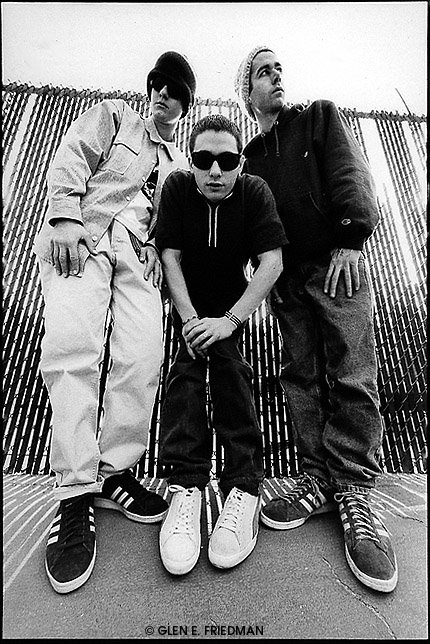
The Moral Rise And Musical Decline Of The Beastie Boys


An inverse relationship is a mathematical relationship in which one variable decreases as another rises. For example, there is an inverse relationship between education and unemployment. That is to say that as public education increases, the rate of unemployment decreases. What I submit to you today is this: As the Beastie Boys experienced an increase in morality, they experienced a decrease in quality musical output. So there is an inverse relationship between their morality and their music. Morality is defined as dealing with what is right and what is wrong. So in 1986, when the Beastie Boys released Licensed To Ill, they expressed a low morality in the eyes of many people as they were wrong to revel in the following: binge drinking, pornography, smoking cigarettes, robbing people of their jewelry, taking drugs, shooting people and using women just for sex or household chores.

It was also an incredibly good album. Producer Rick Rubin and the Beasties made the perfect blend of classic rock and hip hop.

I was in high school when this album came out, and I remember thinking the Beastie Boys were our Sex Pistols of the 80‚’s. Like the Pistols, the Beasties toured the South, much to the distress of the Red Staters. I remember reading in the local newspaper that there was a lot of controversy about the tour, which included a huge inflatable cock and lots of sprayed beer. It was some real Malcolm McLaren-style marketing genius to send the Boys to places like Corpus Christi, TX, with a huge bouncing cock and cans of Budweiser, playing this new urban music and advocating all types of gonzo behavior.

So then the Beasties calmed down a little and made the great album Paul’s Boutique in 1989. They still talked about guns, stealing and drugs, but they seemed to get some distance from the pure advocacy of these things by using more pop culture references. So the track High Plains Drifter becomes more like the movie it name checks, where the rappers can take on the persona of a bad guy in a film and not come off like they're bragging about what they do in the real world. Also, the overt sexism is done away with, and it‚’s replaced by a more pleasant fascination and celebration of women.

Then Check Your Head came out in 1992. For me this is their best album, and their last great album. This was the pivot point, where the music was still great, but it also reflected the Buddhist beliefs of Adam Yauch. Here the Beasties meditate and wish for peace between the races in a very stony mix. Somebody said this is the album where they stopped drinking cheap beer and started smoking expensive weed.

Ill Communication came around in 1994. You’ll hear some great tracks on this one, but it seems to run too long. On the upside it sounds like a sequel to Check Your Head. The morality increases here, with songs about destroying handguns, respecting women and respecting the environment. Around this time Adam Yauch writes in Grand Royal magazine that he doesn’t smoke weed anymore.

Then in 1998 Hello Nasty was released. They tried. There’s a good track or two, but mostly it’s too long. Lefty gave me his copy, as he didn‚’t want to deal with the record. I’ve listened to it a few times. I think it’s around this time that the Beasties try to convince Prodigy not to play ‚“Smack My Bitch Up” at a benefit show. Prodigy refuses. A few years later, right after 9/11, the Beasties go on MTV to tell people to calm down and not retaliate against Middle Eastern people on the street. At this point the Beasties are now activists for peace and understanding, willing to use their celebrity status for the good of humankind. It’s been many years since they’ve made a great record.

Then in 2004 To The 5 Boroughs comes out. Another decent try. This time, more minimal, more old school. But aside from a pretty good single, the record just doesn’t work. Even their longtime advocates at Spin magazine are mocking them by this point. I remember opening Spin and seeing a photo of Mike D on stage pointing two index fingers out to the crowd. The caption reads: ‚“Mike D points to the two people who liked To The 5 Boroughs.‚” Ouch.

What this all means I don't know exactly. Good intentions often lead to bad music, but I still haven’t given up on the Boys. At least they didn‚’t write We Are The World.

Beastie Boys - High Plains Drifter

Beastie Boys - Something's Got To Give

Beastie Boys - Sure Shot

Tuesday, May 02, 2006

The Dearest Land Outside of Heaven


Sammi Smith, who died last year at the age of 61, is known primarily for her definitive version of the Kris Kristofferson classic “Help Me Make It Through The Night.” In their book Heartaches By the Number: Country Music’s 500 Greatest Singles, the writers Bill Friskics-Warren and David Cantwell rank Smith’s rendition of it as the number one country single of all time. What’s strange, then, is that Smith only places two other songs in their top 500. In a genre where artists often cranked out records, more than one a year, Smith maybe wasn’t quite as prolific, consistent or solid as some of her peers. And though she was a part of the Outlaw movement, she certainly never reached the same level of celebrity as other country greats like Patsy Cline, Loretta Lynn or Tammy Wynette. What Sammi Smith could do was to fuse a some sultry soul with all the down-and-out heartache. “Kentucky” came in at number 275 out of 500. Here she’s aided by some studio cats with Muscle Shoals pedigrees. Aside from being one of the great state-title songs, “Kentucky” is sort of like a cross between “Me and Bobby McGee” and Bread’s “Guitar Man” – wandering from town to town, only singing in crappy bars instead of hitchhiking and wearing bandanas and shit. It probably has more in common with Dusty in Memphis than with Coal Miner’s Daughter.


I’ll take this opportunity to share some other good songs about The Hospitality State. The Louvins tune is actually a cover of a Blue Sky Boys song. Oddly enough, the Louvins version shows up on their record Tragic Songs of Real Life. I’m not sure what the tragedy is here.


Sammi Smith – “Kentucky”

The Louvin Brothers – “Kentucky”

My Morning Jacket – “Nashville to Kentucky”

Sunday, April 30, 2006

Throw Your Troubles To The Moon Trolls


Gene Clark was player-hated by his fellow bandmembers in The Byrds. According to legend, the jealousy came about because he was richer, better-looking, more prolific and more talented than the rest of the boys in the band, at least in their early days. He wrote most of their original songs and B-sides, and when you have a hit single with Bob Dylan's song on the A-side, it means the songwriting royalties go to Bob and Gene. Hence Gene drove Porshes around LA while David Crosby and Roger McGuinn did not. Some say Gene had a better voice than Roger, yet Roger took a lot of lead vocals anyway. McGuinn exploited Gene's fear of flying in a Lear Jet, asking the pilot to do tricks during the flight, thereby terrorizing Gene. Crosby wouldn't even let him play guitar on stage, just tambourine. But Gene pushed on, writing great songs one after the other. His best songs came after breakups with girlfriends, songs like Feel A Whole Lot Better. He also was primarily responsible for my favorite rock and roll song of all time, 8 Miles High, most of which he wrote after hanging out with Brian Jones one night. Just look for any Byrds CD reissues with bonus tracks. Check who wrote the song and if it's a Gene Clark composition then it's a winner.

Understandably, Gene quit The Byrds and moved on to do his first solo album. It's a great record. Check out the psychedelic lyrics while you listen to So You Say You Lost Your Baby:

Throw your troubles to the moon trolls
To swallow up like stormy dreams.
Gene Clark, if you'll forgive the John Madden phrasing here, was the Real Deal. I know a lot of cult figures may not live up to the hipster hype, but I'm here to tell you Gene Clark was for real. He was simply a great singer and songwriter, and there are loads of songs to prove it. Check out the American Dreamer compilation from Australia for a good summary. Or if you're willing to stay with Gene's problematic 70's masterpiece (which was literally trashed by David Geffen at Asylum upon completion) you will realize why the record is called No Other.

Saturday, April 29, 2006

In the Rooms of her Ice Water Mansions


This, like the Holy Sons, is another piece of surprise goodness from the people at Awful Bliss Records. It comes from a two-CD compilation called Songs For Another Place. One disc is mostly Italian artists, several of whom sound shockingly like Tom Waits. The other disc has your North Americans on it (I have to confess to not being too taken by the Italian indie rock). The Great Lake Swimmers are also released on Misra Records, one of those labels that consistently puts out great music -- see South San Gabriel, Mendoza Line and Centro-Matic.

It starts with some seething, lonesome, amp squall, but “Song For the Angels” by the Great Lake Swimmers quickly turns into one of those spare, spare, lovely/bleak guy-with-acoustic-guitar songs, with vocal harmonies like some almost-invisible gray wash of watercolor. Chinese ink brush painting depicting an empty galaxy.

The song is a mix of metaphysical despair and uplift. The dread and transcendence of ego obliteration.
“I know that I am just a grain of sand meeting water at the land,” singer/songwriter Tony Dekker sings. A speck-like part of something huge about to be washed away by something even greater.

"Song or the Angels," with its lines about electricity, outer space, pulses, charges, stars, physical change is also what you might call science folk.

Pick your free-flowing Driftwood stream to drop this beautiful frail dry reed into. The song is slight. With a let-me-fade-into-the-vast-cosmos reluctance, it almost asks not to be sung at all. And, I doubt it needs to be said, but the Great Lake Swimmers are Canadian.

"Song for the Angels" --
The Great Lake Swimmers

Friday, April 28, 2006

Fuckin A


I'm happy to report the new Neil Young album is actually great. Phew!

LISTEN HERE.

Monday, April 24, 2006

Space Is The Place


Despite my knee-jerk resistance to Jeff Tweedy's well-marketed anti-marketing aesthetic, the truth is that where I have demand, Wilco has supply. I want to resist the manicured indie-ironic chic they've perfected, I do, but then I hear Wilco's live cover of Charles Wright's "Comment (If Men Were Truly Brothers)" and I'm sold. It's transcendent.

I've long felt there's something disconertingly arid and tasteful about Wilco. But just as I'm edging away, Tweedy lunges out with enough believably ragged glory to break through. His morning-after crud voice is the stone continually thrown at his own well-built glass house. What makes this song work is heart. And love. And peace. But also ... space.

S. P. A. C. E.

Somewhere between the soundboard and the song, between the sun-baked Gibson and the tasteful organ, there's something magical about how Tweedy clears the air and lets a song breathe free. The instruments are clean, defined, each standing apart like modernist furniture, enhancing the negative space. The stage sounds so well-swept! When a kinky jazz riff or piano tinkle is placed, it's as if it's displayed on a clean, white bookcase. Tweedy has somehow fused gritty '70s soul with Architecture Digest.

I guess I actually like it arid.

Similarly, Jerry Garcia made excellent use of space in his cover of Dylan's "Senor (Tales of Yankee Power)," a sensationally brooding performance. The brilliance is in the loping pace, the stonerific expanses he lets open between notes, each instrument treading quietly through the canyon, as if on an old mule, saddle-bagged, with Don Quixote leading, slumped in his saddle and stewing on something tragic. A silent osprey overhead. The dull plodding of hooves echoing up the sheer face of the equalizer. Is that iron cross still hanging from around your neck?

The guitar riff at minute 5:41 - 5:48 should be framed and hung in the Museum of Modern Art: "Gypsy With a Broken Flag."

A band that has become positively addicted to the power of space and spacing: Spoon. This song - "I Turn My Camera On" - came up in my mix today and seemed to prove everything I was thinking. Here the bass pulse and the snap drum open an existential expanse that you could slap just about anything on and create vivid landscape. It's a one-trick pony (the same one Jerry's riding?) that just doesn't seem to give out.

Love As Laughter's "Pulsar Radio" makes my point quite literally. It's unafraid to slow its heart rate, breathe easy, unfurl all the natural majesty that is just free for the taking, if you'll let it be. You hear the stars at night and the coming out of the galaxies.

Indeed.

Saturday, April 22, 2006

Bad Plus


We watched The Squid and the Whale the other day. The song that runs during the closing credits sort of evoked Lindesfarne. It turned out to be a Loudon Wainwright tune, which reminded me that I'd been meaning to post this tune, "School Days." It's a great song about being young and full of yourself, and then a little older and full of yourself, and still older and even more full of yourself.
I first heard a version of this song on the McGarrigle Sisters The McGarrigle Hour disc from a few years back. It's a very NPR kind of affair with all kinds of people, including Rufus and Martha Wainwright, making guest appearances. I'm sure none of you will be surprised to learn that Emmylou Harris shows up for some harmony vocals. But when doesn't she? I was initially planning to post a series of songs about different states. There can't be many songs about Delaware, and you have to wonder what Sufjan Stevens will do when he has to write a whole record about the place. Doesn't even really seem to warrant statehood to me, but maybe that's an ill-considered thing to say. I'm sure he'll at least cover this one. I noticed that Lee Friedlander took the photos of Loudon on the record jacket. This record is yet another one from the ever-growing stash that Alan Bisbort keeps dropping off at the office. I already liked LW for being the father of Martha and Rufus and for his appearances in the show "Undecided," but my affection cemented when I learned that he had a record called "Attempted Mustache."
"School Days" - Loudon Wainwright III


The connection to this Aztec Two-Step song. (... Yeah, that's right. Aztec Two-Step. Do you have a problem with that?) is the sort of Beat/poetic aesthetic. Wainwright plugs Keats and Blake. This song is about Jack Kerouac's "On the Road." That was another possible theme -- songs about Jack Kerouac and the Beats. But I couldn't think of anything besides that 10,000 Maniacs song and this. My first editor gave me this record when he found out I was an old-dumb-music obsessive (Aztec Two-Step definitely qualifies). He, my editor, also turned me on to the Left Banke and Music Machine (post to come). So, on the whole, he was pretty solid with his recommendations. I don't even think he was endorsing the Aztec Two-Step, just trying to pass off some old vinyl. Yeah, the opening conga action is borderline autistic, and songs about Jack Kerouac are possibly more, you know, terrible, than the actual writing of Jack Kerouac. But still.
"Persecution and Restoration" -- Aztec Two-Step


These last two are also from the Alan Bisbort stash. I had such high hopes for the Amazing Blondel when I first read about them -- period instuments, bad bald-mullets, soft-rock meets British folk revival, a nightmare mash-up. But I couldn't extract anything too compelling from the two-disc set featuring Inspiration and Mulgrave Street. But this song has a great tooting horn arrangement underneath it all, there's also a righteous baritone solo and a weird soft-serve do-wop vocal outro.
"Standing By My Window" -- Amazing Blondel

With this Dion track it feels like we’re in a death match with James Taylor and all of the forces of soft, effete, allegedly sensitive, but secretly demonic and callous, post-hippie consciousness that line up behind him. The Berkshires, all that. But what saves this is that it's not JT, it's Dion. One-time street-corner crooner, one-time junkie, one-time wannabe protest singer, one-time born-again whatever. Now I think he's got a blues record out. Dion has such a beautiful voice. You can hear the "My Friend Martin" phrasing creeping in. He did a Melanie cover, which shows good judgement.
"Running Close Behind You" -- Dion

I realize what unifies all this. If you average it out, it's basically 1972.

Friday, April 21, 2006

The Best Bad Song of All Time


SCENE: The public swimming pool. Lowell, Ohio. Summer, 1982.

The FM station out of Parkersburg, West Virginia, had this on heavy rotation, crackling out of the Sanyo transistor that sat on the edge of my towel. Gnawing on a Bit 'O Honey from the concession stand, I'd basked in the sun, drip-drying after a few rounds of Marco Polo. The smell of chlorine, wet concrete. Coltish teenage girls congregating in bikinis. Dudes doing the cannonball. Probably 95 degrees out.

With "I Love You," by Climax Blues Band (right), the DJ was bringing the tempo down after, say, the jaunty oompa-loompa of the Oak Ridge Boys' "Elvira." The first low ripples of the electric piano sort of quiet the pool, blue skies shimmering overhead. A cloud passes over. An airplane in the distance. It's, what, 3:30? Check the waterproof Casio.

And then that guitar solo hit. The first stirrings of something, not sure what. The perfect lilting note, the arc of it, how it ascended, then ascended again. Woop-doo-woooooop! woop-doo-woooop! And that was it. As if the solo suddenly became a pink animated laser cutting cursive letters in air, sparks shooting off it like an arc weld and revealing a Technicolor fantasia near the deep end: Coltish teenage girls congregating in bikinis!

Since then I never looked back
It's almost like livin' a dream
Ooh I got you


I was 11 years old. After that, I don't remember hearing the song again. They don't even have it at my local karaoke bar. It's like it evaporated - poof. But like a boomerang, it returns, making me woozy in that VH1 Classics kind of way. But now nostalgia strains against reality, the burnt cursive rusting away, those coltish teenagers of yore all cossetted in their BBQ-fattened suburban enclaves somewhere far away. The song's about a twentysomething longhair who gets reformed by some lovely gal he meets (in AA?).

You picked me up from off the floor and gave me a smile
You said you're much too young, your life ain't begun, let's walk for awhile ...


There's something very Christ-like about this moment. You kind of wonder if she carried him along the beach and there were only one set of footprints. Anyway, now this song is a recommended number on Romanceclass.com, where you can "learn to love." Even the online encyclopedia Wikipedia calls this "arguably the best love song written." I should probably be embarrassed to admit it, but that's about right. Air Supply Nirvana. I admit it's prompted a slow dance or two with Dewey Dell. I do thank her for helping me not become a besotted bum. She doesn't even make me cut my hair!

Tuesday, April 18, 2006

My Bloated Broadway Post


First, just recoil in horror and get it over with.

Second, please know there's a reward at the end of this. And it will set you free.

Ok. There. Now ... on to my favorite movie musical!

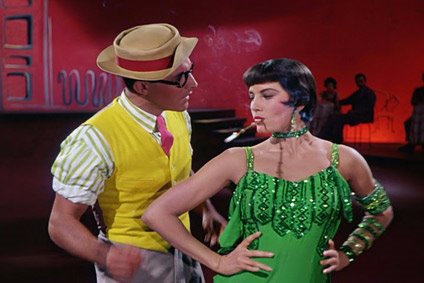
Let me declare from the outset, with annoying conviction and self-righteous authority, that "Singin' in the Rain" is probably a high watermark of our civilization. If you've never seen it, then I envy you for getting to see it for the first time. A lot of haters might assume it's phoney-baloney pap, but it's not. Gene Kelly was a god among men (see "An American in Paris," especially this number). The added bonus for people who think they're too cool or emotionally jammed up for "Singin'": Watching it will make you realize how false, empty, talentless and post-All-Things-Good the age you're stuck in truly is, which is something you can revel in later, like a cynical ass smoking a French cigarette and sneering at everything. Meanwhile, you can suck on this.

All of which is to say: Last night I had the great fortune of meeting Stanley Donen, the 82-year-old choreographer who directed the dance sequences in "Singin' in the Rain." A gorgeous sight to behold: dressed all in black, a deep tan, Robert Evans-style 70s sunburst shades, a medallion around his neck. On his arm was Elaine May, the comedienne and movie director -- Stanley's live-in "roomate," I was told by a source. I didn't inquire further.

This was at a staged reading of a play by Larry Gelbart, the guy who adapted M*A*S*H for TV. If I were penning a gossip column for Golden Agers, I'd also have to note the attendance of Arthur Penn, the 84-year-old director of "Bonnie and Clyde," to whom I was also introduced. What I love about people like Penn is how casually awe-inspiring their biographies are: "Penn made his feature debut with a Western, The Left Handed Gun (1958). A re-telling of the Billy the Kid legend, it was notable for its sharp portrayal of the outlaw (played by Paul Newman) as a psychologically troubled youth (it’s telling that the role was originally intended for the archetypal troubled teen James Dean)."

New York City being a place of great serendipity -- and a place that wears its history more in the memory of its citizens than its architecture, which is always getting torn down for shinier stuff -- you sometimes encounter huge stars from bygone times just walking about without anyone noticing. It's a disorienting experience, a momentary shift in the time-space continuum. You find yourself ... retro-starstruck. There he is! Just standing there! The guy who told Gene Kelly to do this!

And this!


A couple of years ago, I also met Betty Comden, one half of the songwriting team (with Adolph Green) who wrote all the music to "Singin' in the Rain," plus scads of other legendary MGM musicals. There she was! What a Glorious Feeling! I'm Happy Again!

More antique namedropping: I also once had breakfast with Betsy Blair, Gene Kelly's first wife, interviewing her for a newspaper story. We met at the Plaza Hotel, where she told me about parlor games they used to play with Humphrey Bogart and Lauren Bacall in their Hollywood manse. We walked out front to the Pulitzer Fountain, she lit a cigarette and showed me where Gene Kelly proposed marriage to her in 1940. They'd met during a Broadway production when she was a 15-year-old showgirl. Later she got in with European socialists and was blacklisted in Hollywood during the hunt for communists. Hard to believe this smile could be considered a threat to national security:

Yeah, so maybe it wasn't such a great time back then and maybe we're really, really blessed that all we have to contend with is a misbegotten war, a little wiretapping and Matthew McConaughey.

Which brings me to your reward for reading my bloated Broadway production: A track from the retro-metal outfit Early Man. This fetching number is called "Death is the Answer."

Saturday, April 15, 2006

More Canadians


I thought Caribou’s Milk of Human Kindness was one of the best records of 2005.
It’s further proof of the animal-name/Canadian-band axiom, and so I thought it I’d just tag it on to the Ladyhawk post. You have to go in for the laptop auteur approach. You also have to get past the did-I-hear-this-on-VW-ad-? factor. And don’t really go searching for fully realized songs; Caribou is more about atmosphere and texture. It kept reminding me of the Silver Apples, and then I realized that was because there’s a Silver Apples sample somewhere in there. Also reminds me, vocally, of the Left Banke. Wayne Coyne of the Flaming Lips pointed out in the most recent Mojo that Caribou seems to be vastly under appreciated. Caribou is Dan Snaith, who recently completed a PhD in math. Snaith used to record under the equally awesomely Canadian name Manitoba, but he was threatened with a law suit by litigious geezer punk Handsome Dick Manitoba.

Caribou - “Hello Hammerheads”

Friday, April 14, 2006

Birdland


As I said, I might be on some sort of mid-90s nostalgia kick. I’ve been dusting off a few old Pavement records recently and deciding that I hadn’t moved on to the next phase after all. I even found myself enjoying a Silverchair video not too long ago. So much for adulthood. All that might explain why I’m obsessed with the forthcoming self-titled debut from East Vancouver’s Ladyhawk. The vocals have that catch-in-your throat quality, breaking just as they reach emotional rubbed-rawness. It’s just drums-bass-guitar rock. If it didn’t sound so dumb, one might call it grunge. Dumb to call it that I mean. But whereas grunge always seemed sort of callow, there’s a definite depth and maturity to Ladyhawk, especially to the vocals, which sound a lot like Richard Thompson or even Husker Du. Rage tempered by world-weariness, or maybe the other way round. Labelmates Okkervil River come to mind. Ladyhawk evidently has something to do with fellow Vancouver-izers, the kraut-rock stoner geniuses of Black Mountain. They're also all onto this whole zoological naming convention (you know, horses, tigers, wolves, bears). And there's a Neil Young thing going on, too. You know how Neil sometimes drops in a weird, I-didn't-know-that-was-a-chord chord. Close inspection of the CD art reveals a cover of Neil's futuristic-roboto masterwork Trans, tucked in amongst the distintinctly Pacific Northwestern flora and undergrowth. So the Canadians are still showing us how it's done.

Unfortunately, I'm not sure if this song packs the same play-it-a-thousand-times-in-a-row punch when it's pulled away from the record.

Ladyhawk - "Dugout"

Wednesday, April 12, 2006

The Ceiling's Crying


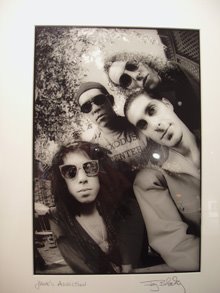
It rains here. Despite what we have seen on Baywatch and The OC and on postcards, it rains in Southern California. Makers of film noir know this, and so do Jane's Addiction, who do My Time on their debut LP, recorded live in Los Angeles circa 1987.

I remember being blown away by this album back in high school, even as I asked myself why this "Jane" chick was singing like the spawn of Janis Joplin and Axl Rose. Ah, to be young and musically opinionated. I still love the freewheeling quality of this tune, especially the harmonica, acoustic guitar and the lyrics:

listen to the sound
of the gutters runnin'

wash this dirty town
all fronts and no backs
give me my time
let me be
outside
under the ceiling
crying.


Soon we would learn much more about Perry Farrell, and I never compared him to Janis or Axl again. He was no longer like the name he gave himself, peripheral, but front-and-center ringleader of Lollapalooza and the emerging Alt Nation.

Or was that just 90's media hype? I don't know. I've never met the guy but I can tell you he still stands out among Laker fans in the Staples Center. Also, just for the record (and just for the sake of doing some LA-style name-dropping), I did meet the real Jane once. It was about 5 years ago at a party in Echo Park. She was really cool. I think we talked about garage bands of the mid-60's or something. She was doing fine, much better than the portrayal in Jane Says.

Here are some more rain songs. They aren't LA rain songs. I'll have to look into more LA rain songs. Only MacArthur Park comes to mind right now, that and November Rain. Yeah. Anyway these are what I'm using to build my rain mix for 2006. These are for anyone who likes the rain around here. It's supposed to be back Friday.

Happy When It Rains by The Jesus & Mary Chain
Rain by The Beatles
Rainy Day In June by The Kinks

And big ups to my friend Rolldog who got me thinking of this album again!

Tuesday, April 11, 2006

Folk Off

Wun! Toe! Thray! Fo!

That's how Bruce Springsteen starts off his new album, We Shall Overcome: The Pete Seeger Sessions: a cornpone, Okie-by-way-of-early-Dylan countdown. "Old Man Tucker" is a banjo-driven jaunt, galloping along like a jallopy in a Cohen Brothers remake of The Grapes of Wrath, or a cut from a Broadway musical -- Nebraska!

If that sounds jaded, I'm actually won over by the thought of reanimating the Seeger/Guthrie American folk geneology. Having seen Springsteen during the 2004 "Vote for Change" tour, having heard his heart-wrenching 12-string acoustic version of "The Star Spangled Banner" seguing into "Born in the USA" and been entirely moved by it (these samples are from Cleveland, Oct. 2, 2004), I fully sympathize with the need to overcome. What remained of the tattered identity of the American left was destroyed by that election. Over the years, people have largely abandoned the idea of a "folk" music as a vehicle for anything other than chin-scratching pop criticism. If anybody could reconnect the spinal cord -- the vertebrae of the Woody Guthrie, Pete Seeger, Bob Dylan lineage, which straightened Old Weird America into leftist history -- it would have to be Springsteen, right? Who else?


And let's not forget the power of that lineage. I was recently traveling through the rolling hills of the Catskills on a sunny Sunday afternoon, listening to Seeger's "This Land Is Your Land" and found myself genuinely choked up, thinking: We really forgot about this. It IS our land! What happened to America? We forgot about this large-hearted Whitmanian idea of America, one that wraps its cosmic arms around the common peeps and brings down the hammer on the rich and corrupt. Just listen to Woody Guthrie's "Jesus Christ," which is almost shockingly candid in how it appropriates Jesus for an anti-authority world-view, a place where bankers, landlords, soldiers and cops are inherently anti-Jesus.


Poor working people, they follered him around,
Sung and shouted gay;
Cops and the soldiers, they nailed him in the air,
And they nailed Jesus Christ in his grave.

Well the people held their breath when they heard about his death,
Everybody wondered why;
It was the landlord and the soldiers that he hired
That nailed Jesus Christ in the sky.

This song was made in New York City
Of rich men, preachers and slaves
Yes, if Jesus was to preach like he preached in Galillee,
They would lay Jesus Christ in his grave.


I love this stuff, even if that view of the Messiah has never really taken off. And to judge by this article in the Washington Post, the supposedly reconstituted religious left in America won't be a force anytime soon. "People who say they are frequent churchgoers vote Republican by a ratio of about 2 to 1."

With that established, back to Springsteen. If you squint a little and try to forget that he's not really from Oklahoma, these Seeger covers aren't terrible. I think his version of "Jacob's Ladder" is pretty compelling. But there's something more curatorial than true about them. They're forced. Or maybe the whole idea is forced. I've always known that Springsteen's a performer, unafraid to siphon Broadway pizzazz through the tube of the Holland Tunnel and transform New Jersey into his mytho-poetic Camelot. Or Nebraska into a grim, black and white independent movie starring Bruce Springsteen. I kind of love him for precisely that reason.

But in this case, we need him to take off the pancake makeup so we know he's not just playacting. Unless he intends to go around the country holding free folk rallies, teaching these songs to The People, selflessly dedicating his time and energies to preserving traditional song through education and musical proselytizing, he's just tipping his hat from afar -- or worse, coopting worn-out lefty idioms to make a self-righteous political point.

I can hear a counterargument out there: If you really dig into the history, you find that Woody Guthrie and Dylan also put on fake Okie accents and managed to make great, rousing folk anthems that people could latch onto. Yes, but I would argue that the use of the Okie accent as the lingua franca of American folk doesn't ring true any more. What Springsteen really needs to do is pay attention to who exactly the folk really are nowadays. He needs to start sing'em in Spanish.

Uno! Dos! Tres! Quatro!

Sunday, April 09, 2006

Milk Cow Blues


Lone Pigeon is Gordon Anderson, a former member of the Beta Band who retired to his home in Scotland to work on this project. This is from the record Schoozzmeeii, a record that a colleague of mine said walks the fine line between brilliant and idiotic. “Brown Cow” is the track I keep returning to. It’s a great example of the truth that what you say matters less than how you say it.

Lone Pigeon - "Brown Cow"

Friday, April 07, 2006

Gnostic Gospels


How many misanthropic shut-in four-track geniuses are there? Sometimes the supply seems frighteningly limitless. I didn’t know anything about Holy Sons until I got a package from Awful Bliss Records. Holy Sons gives me a little early-mid-90s nostalgia, for the days when self-loathing, deep despond, spiraling despair, and giddy nonsense were sanctioned. Take away the occasionally jazzy drumming, the slowed-down loops of spoken word snippets, the wafer-thin programmed beats, and you might have a Palace Brothers record. The same things keep coming to mind when I listen to this – Steve Miller, Bob Welch, Grandaddy, Little Wings, Beck. Holy Sons is Emil Amos; evidently he appears on a Bread tribute record that came out last year (gotta hear that one). That’s about all I know. I read that he used to live in Chapel Hill. Dig the Max Roach/Buddy Rich cover art rip off.

Holy Sons - "Gnostic Device"

Thursday, April 06, 2006

Rockville Rocket


As someone who’s lived and/or worked in Connecticut for eight years now (and someone who lived and worked for a stretch in the Garden State), I’ve always felt that the CT was basically Jersey without the stigma. Bridgeport, New Haven and Hartford can compete with Patterson, Trenton and Newark any time. Bring it on. But, along with the stigma, CT is missing out on a whole lot more – namely, the likes of the Misfits, Bon Jovi and the Boss. Few states have such an empty slate in terms of pop and rock history (spare me the notes about the Wildweeds, or how John Mayer is from Fairfield). The Nutmeg State has only one inductee in the Rock and Roll Hall of Fame, and he died this week. Gene Pitney was the Rockville Rocket. I’ve seen some pretty painful recent concert footage of Pitney on PBS fund-drives.

This track is from “Just For You,” Pitney’s third album, on the of which he stands a few steps up on a ladder. He’s got the collar of his pink shirt coming over the neck of his red sweater and he’s draping his checked jacket over his shoulder. They don’t make covers like this anymore. What’s he doing up there anyway?

The tune is called “Mecca.” I wish that Edward Said were alive. He’d have something to say about it.


.

Tuesday, April 04, 2006

Graham Gouldman, Professional Songwriter


I still remember being 16 years old and buying my Rhino compilation of The Yardbirds. I love this record, especially the songs written by hired gun songwriter Graham Gouldman: Heart Full Of Soul and the controversial For Your Love. Legend has it the latter was too much of a sellout pop song for bandmember Eric Clapton, who left the band in part because of this tune. But for me it's just another great hook-tastic song by Gouldman. Plus it has harpsichord. I've never heard a bad pop song featuring harpsichord. But that's another post.

Graham was also hired to write some tunes for the Hollies, like Bus Stop. Another beautiful piece of mid-60's pop. I've loved this song since I was 10 years old and I first heard it on oldies radio.

Gouldman went on to write more songs and became part of 10cc and then a solo artist. I can't say I've followed his career much after the Sixties. These 3 songs are still enough for me. Of course there are more GG gems from this era, like Evil Hearted You and Look Through Any Window, but this will do for now.

Sunday, April 02, 2006

Thy Neighbor’s Wife


Before there was R. Kelly and "Trapped in the Closet," there was Roger Hatcher and "Caught Making Love." I think it was God who said "Thou shalt not commit adultery." Still, it’s an ever- popular subject, and one that shows up in a million different ways in song. Roger Hatcher’s main claim to fame is that he was the cousin, or something, of Edwin Starr. But what makes Hatcher’s "Caught Making Love" so great is the unadorned honest simplicity of the situation. Hatcher doesn’t need to resort to any elaborate metaphor – there’s no sneaking in the henhouse, no new mule in the stable, no Sam the grinder. Sounds of female ecstasy -- heavy breathing, moaning, screaming – included.

Saturday, April 01, 2006

Heavy With Child


You stack up the evidence: flutes; fairy tale content; high-calorie but low-nutrition sax; evocations of CSN, America, the Eagles, Loggins and Messina, even the occasional hint of the Doobie Brothers. The case doesn’t look good for Firefall. The quality of mercy may be strained in this instance. The band occupies territory on the frightening borderland between soft rock Americana, latin-jazz-tinged fusion bombast (someone in the band likes Carlos Santana’s guitar tone), and possibly a fringe of showboaty L.A. studiocat-ville.

Get out your rock pedigrees though. There’s some lineage connecting these guys to The Flying Burrito Brothers (but the same is true of Manasas) and Spirit (whatever).

Firefall - "Cinderella"

War of the Worlds
I'm just gonna have to clear the decks here. All I have to say about this next track is this: H.G. Wells, Sir Richard Burton, Justin Hayward (frontman of the Moody Blues) and Phil Linott (Thin Lizzy). There's a track on here called "The Red Weed," which I kind of wanted to share with you, but I had to go with "Thunder Child" instead. I knew a band in Charlotte, NC in the '90s called Come On Thunder Child. I always thought it was a brilliant name, but never knew the reference.

Friday, March 31, 2006

BLOW! YOUR! FACE! OUT!

Hold on, this song has a little introduction to it. It's ain't supposed to be sad though you might feel it that way. It's a song about desperation. Every now and then we do get desperate.

This is a song about L-O-V-E. And if you abuse it yr goin to lose it and if you lose it yr goin to abuse it and if you abuse it you ain't going to be able to choose it cuz you ain't going to have it further on down the line and things ain't gonna to be so fine and yr gonna to be sitting there on your little machine tryin' to look and keep it clean and you're going to be home playin' bingo all night all alone and that's why you're sittin there by the telephone and you know that she ain't goin to CALL you!

So you put on the TV and you're watchin' Johnny Carson segue-wayin' right into the Tomorrow Show but that don't got the go so you turn it off ya turn on the radio, the radio don't seem to get the click so you say, "Hey Man, I can't lickety split!" You start to open up a little book and there's somethin' there you got to overlook and you say, "BABY, you know there's somethin on my mind! You say "Baby there's somethin' on my mind - I know that you're home and I know you ain't all alone!" So you start walkin' over to her house and you get over to her house and you walk over to her door and you start poundin' on her door and you say, "Open up the door bitch! This is Wooba Gooba with the green teeth, let me in!"

Well, she opens up the door and then you just kinda walk up to her and say
"Baby," (say Baby!) you look up way up at her green mascara and you say "Oh my darling, you know her and me was at the party as friends - do not believe what they say. That's only gossip that they tellin ya down the wisecracker line!"

You say, "DARLING! Take your big curls and squeeze them down, Ratumba" - what's the name of that chick with the long hair? (Rapunzel!) - I say, "Hey Rapunzel!" Heh heh... "Hey Reputa the beautah! Reputa the Beautah! Hey Reputa the Beautah, flip me down your hair and let me climb up to the ladder of your love! Because this is the Wooba Gooba sayin to ya, Love comes once and when it comes you better grab it fast cuz sometimes the love you grab aint gonn' last and I believe I MUSTA! You know I think I MUSTA! You know baby I think I MUSTA! You know I think I MUSTA!
I musta got LOOOOOST!"

"Where Did Our Love Go?"


"Looking for Love/Houseparty"

Monday, March 27, 2006

He Is the Walrus


“Is David Crosby still alive?,” asked one of my co-workers recently. It was an interesting question. One with several possible answers. Depends on how you look at it really.

There’s a lot of malign psychic energy directed at this guy, so the fact that he’s technically still kicking is sort of a marvel. Silken-voiced harmonizer. Manatee man. Balding, organ-failing rotund hippie. Weapon-toting addict. Joni Mitchell producer. Ex-Byrd. High-profile sperm donor. In my mind, DC has blurred with the Dennis Hopper character from Easy Rider.

"Laughing" is from 1971's “If I Could Only Remember My Name,” a record that - like Slouching Toward Bethelehem, the Manson Murders, Altamont - really marks the dark come-down after the '60s. An air of damage pervades. The record is a true all-star affair, with Jerry Garcia most of the Dead (minus Bob Weir), members of Santana, Neil Young, members of Jefferson Airplane, Graham Nash, Steven Stills, Joni Mitchell and others joining in.

It reminds me of another veteran of the dreamy Cali hippie scene, someone who would have fit right in at the party: Skip Spence, of Moby Grape (and the Airplane, briefly). It also brings to mind Gary Higgins' Red Hash, one more grim wake-up from the 1960s.

Sometimes the spirit slumbers.

David Crosby - "Laughing"

Skip Spence - "Little Hands"

Gary Higgins - "Telegraph Towers"

Sunday, March 26, 2006

Joni Mitchell, Badass


Just when I thought I’d had my fill of acoustic guitars and deep feelings, this song comes on my iPod. It’s Joni Mitchell singing For The Roses. She probably wrote this song about a fellow canyon-dweller like Graham Nash, but to me it seems like it could have been written years later about Kurt Cobain:

Remember the days when you used to sit
And make up your tunes for love
And pour your simple sorrow
To the soundhole and your knee
And now you're seen
On giant screens
And at parties for the press
And for people who have slices of you
From the company

There’s more to say about this. For example, Joni’s friend and colleague (and the subject of Joni’s song Free Man In Paris) David Geffen ran the company that had a slice of Kurt. Makes me want to use the I-word. But we’ll not dwell on that here.

Also please understand I don’t want to praise Joni for being a sensitive hippie goddess or any of that. Instead I just want to say how much I love Joni for being a badass. She was the most talented of her ilk in the early 70's. She had a way with alternate tunings, fresh instrumentation and unmistakable singing and lyrics. Her music and words were simply better than anyone’s in her style of music. Legend has it she intimidated Led Zeppelin, for god’s sake. They wrote Going To California about her. Later in the decade she got restless musically and moved on, as Mr. Poncho illustrated for us in an earlier post. For some reason I think of the rapper Jay-Z when I think of Joni, and I think it’s because they were both on the top of their respective games for a time, and everyone knew it.

When Jesus Calls


Buck Owens was a great singer. He had this way of swooping, dipping, puffing out a syllable, adding a wiggle to a long vowel sound, arching the pitch and then dropping it right at the end of line. It always seemed to me that he was mimicking the slow swell of the pedal steel. And then there were those vocal harmonies – a mix of Nashville, Mexico and Dust Bowl.
Owens wasn’t a genius songwriter. People who complain about song lyrics being too stupid (a specious complaint) won’t appreciate Buck. But with his vocal instrument, the sweet harmonies and the righteous backing of the Buckaroos, Buck Owens’ simple lyrics worked just fine.
This is from "Dust On Mother’s Bible" (not to be confused with the Blue Sky Boys’ "Dust on the Bible"), which was Owens sole record of country gospel, re-issued a few years back in Sundazed.
Buck Owens and his Buckaroos - "When Jesus Calls All His Children In" (recorded in 1965).

Thursday, March 23, 2006

Rock Phenomenology


I want to take you to a place you've never allowed yourself to really be before. You've gone there, but you never gave your ears full permission.

Part of the point of this site, it’s always seemed to me, has been the passionate defense of the indefensible. It’s sort of like being one of those ACLU lawyers who go to court for the right of the KKK to hold a march. Only it's music. And it's really not important. Still, it’s the tough cases that put your beliefs to the test. Here are two. But before even mentioning the names, I think some rock phenomenology is in order. These names have been damaged by the accreted scorn and derision heaped on them over the years. Try and empty your mind of all the associations you might have. Strip away the layers of presupposition, the prejudice, and remember: something can be wrong while still retaining a truth value.

Journey - "Stone in Love"
(If you're actually downloading these, the links are a little different this time.)
I saw a little bit of Journey live on VH-1 Classics a while back. It was devastating. So many great songs. So many troubling thoughts. Visionary hair violations. Steve Perry has mamary glands (I hear he's Portuguese, which is cool). The sleeveless shirts (SP was fond of one with leopard-skin print). The high-rumped tight jeans. SP’s inimitable stutter-step stage run, almost tripping sideways, the male Victoria Principle look. Neil Schonn rocked the Les Paul with a whammy bar, and on this track he had a little arena-rock move where he'd play those opening chords, and in the short gap between notes he'd hold his picking hand up high in salute. Dear god it was majestic. I recommend burning a copy of this one and playing it on your stereo - no dinky futuristic earphones, or crap computer speakers.

Bad Company -"Silver Blue and Gold"
A little more of a slow burner. This one deserves your love and admiration because it contains the line "My rainbow is overdue."

Unfortunately, both of these songs suffer from what I call the "Fleetwood Mac 'Chains' Disease." It's an ailment of excess musical vampage at the end of a tune. A kind of windbaggery usually instigated by a frustrated member of the rhythm section; it's also known as "the bass player's big moment." When it stops feeling good, you can stop paying attention.

Monday, March 20, 2006

The Most Giving Man in Rock


How cool, how sexual, how winsome, how loving can one imaginary best friend be? Marc Bolan plays the bliss with the blues.
LIFE'S A GAS, ONE INCH ROCK
When he turns it on he makes you want to strut and laugh, sharp as the dark park: TENEMENT LADY, SOLID GOLD EASY ACTION
He opens up and aims the rays of the sun at you til you close your eyes and feel the warm glow of life on your forehead, o god, life is good: LIFE IS STRANGE, HIGHWAY KNEES
He can break your heart as he sits at your feet, having his way with his guitar: ELECTRIC SLIM & THE FACTORY HEN, ELEMENTAL CHILD
He fills in the space between all of us with his intimate, infinite love: BROKEN HEARTED BLUES, JEEPSTER
Cuz he's got the universe reclining in his hair.

Thursday, March 16, 2006

Shlameel, Shlamazel, Hasenfeffer Incorporated

As I've spent the entire week bed-ridden with a severe flu, idle upon the couch, emptying my nose of unspeakables and fighting off fevers (yesterday's temp: 103), the highest intellectual pursuit for which I've been capable is obvious: TV.

The thing about night sweats, chills and fevers is you start experiencing weird psychic phenomenon, hallucinatory dreams, bizarre fixations. The thing about watching TV for three days straight is...exactly the same.

So I've been watching a whole helluva lot of "Laverne & Shirley." It's taken me 30-odd years to realize this was just a vaudeville show. Yesterday, Lenny and Squiggy went duck hunting with hand-puppets for decoys - ha! Granted I'm biased by the precision nostalgia this particular show captures for me. I think the theme song is maybe the best one ever written for TV. That's saying a lot considering "Welcome Back, Kotter," "WKRP in Cincinnati" and "Good Times." But having watched the show for the last few days on TV Land, I noticed how the song sounds really upbeat and ennervating at the beginning of the show ("I'm happy! This is fun! Yay!"), then brings you to tragic tears at the end because you're so frickin' sad that the show is over ("NO! NO! DON'T BE OVER! DON'T FADE OUT! OH GOD!"). It's a perfect happy-sad song. Is that just the fever talking? Dunno. "Making our Dreams Come True" was written by Norman Gimbel and Charles Fox, sung by Cyndi Grecco, who apparently is known for little else. As far as I'm concerned, she's golden.

Anyway, this "Laverne & Shirley" fan fiction site made me feel like i'm not alone in the world. But am I delusional enough to buy this? Answer: Maybe! The samples on this site are encouraging.

Earlier this week I noticed that some DNA from the "Dallas" theme song had made its way into a song by a Montreal postrock trio called Torngat. "Alberta Song" is a beautiful instrumental with a plush French horn melody starting at minute 1:03 that immediately conjures images of J.R. Ewing. Not sure this serious French-Canadian ensemble is prepared to concede this. But there is a French "Dallas" fan site detailing "La Saga des Ewing." That said, listen to the original and imagine removing the wah-wah guitar and piercing synth note -- interesting!

Then there's this Decemberist song "Los Angeles, I'm Yours," which at minute 2:08 begins to take on a distinct 1980s TV theme song riff -- in the spirit of "Dallas," although I've not yet pinpointed the exact reference. But I want to! Can anyone target it? It's something about the harmonica or recorder or whatever it is. Then the cascading string section. Hmmm...fevers...

Wednesday, March 15, 2006

The Nihilist In The Back Seat


Max: So that’s the reason?
Vincent: That’s the “why.” There’s no reason. There’s no good reason, there’s no bad reason to live or to die.
Max: Then what are you?
Vincent: Indifferent. Get with it. Millions of galaxies of hundreds of millions of stars and a speck on one in a blink. That’s us. Lost in space.


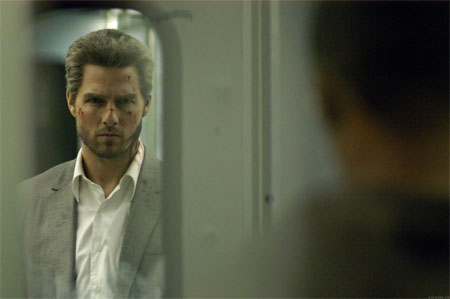
Can I say a word or two in praise of Michael Mann? Set aside your feelings about Miami Vice and Heat. Collateral is a great film. It’s philosophical conflict as an action movie. I doubt any other film will ever use the latent menace of Tom Cruise as well. Aside from working out competing philosophies (one too dark, one too dreamy, as Mrs. West pointed out to me) Collateral has a great look and feel to it, with the signature Mann blend of music and mood. It’s a dark new take on Los Angeles isolation.

Speaking of music from the film, listen to Groove Armada do Hands of Time here. Put it on your iPod and ride around LA on the MTA trains alone, lost in space.