The internet is really just a device for pursuing one’s desires -- a faster, cheaper and easier way of getting what one wants. But often we don’t really know what we want. Or, rather, we don’t actually want what we want. Or, once we get what we want, we realize that we now want something completely different, something to cleanse our mouths of the lingering taste of the last satisfied longing. The supersession of symptoms. Dante knew all about it. Following your desire could, if all the conditions were right, lead you to the divine, but it was just as likely to get you chained to the burning lake, shouldering boulders for eternity, buried to your chest in molten lead, buffeted by the assailing winds because of an ever-changing heart.
So, if, like me, you ever think that your heart is telling you to go and track down that semi-obscure record of Carl Sandburg singing Flat Rock Ballads. Think on it some more. Or listen to these tracks first.
Sandburg, as you know, was a poet (“The fog comes/on little cat feet”), a Lincoln biographer, and a song-collecting folk archivist (“The American Songbag”). He was also, it turns out, a film critic.
In a recent New York Times review of a new anthology of early American film writing, Clive James said this about the man from Flat Rock:“Sandburg is unreadable today only because of the way he wrote. His prose was bad poetry, like his poetry.”
Durn. That’s cold.
Well, Sandburg was known to pick up a guitar now and again, too (Bob Dylan famously paid a visit to Sandburg at Flat Rock back in 1964 – Sandburg had never heard of Dylan). I had this record, or my friend Chris had this record when we were housemates, and I remember being struck by the weirdness of two tracks – “Eating Goober Peas” and “The Doughnut Man.” (I was surprised to learn when interviewing the former Del Fuego and current children’s music sensation Dan Zanes, who was about to release a record of songs culled from the “American Songbag,”that Zanes had never heard of the “Flat Rock Ballads” record, so I figured it was fairly rare. And a Froogle search proved me right.) I’ve since learned that “Eating Goober Peas” was actually a song allegedly sung by Confederate soldiers during the Civil War (goober peas are peanuts, which served is rations for the troops); the song was also popularized by Burl Ives, and it’s practically like “Row, Row, Row Your Boat” or “Twinkle, Twinkle Little Star” to some people. Whatever, I went to public school.
I used to drive past the exit for Flat Rock on I-26 probably once a month for several years, making trips between Asheville and Charlotte. I’d see the brown state-issued sign for the Carl Sandburg home. But I don’t get to make that trip these days. I decided I had to re-acquire Flat Rock Ballads. So, I got on the internelle and got it. Ten bucks, plus shipping, from a bookstore in Baltimore. As I recall, I parted with the record when I swapped it for a record of Wallace Stevens reading his poems. Or Chris traded, or something. As it turns out, I work in Hartford now, where Stevens lived and worked, and I drive past the places where he walked at lunch time or on his way to the office at the insurance firm.
When I had way too much free time and ample coffee-fueled creative urges, I used to make tape loops of snippets of Stevens reading, and I’d overdub some fake atonal chugging metal riffs played on a de-tuned acoustic guitar, mimicking the phrasing, rhythms and slight changes in pitch from the repeated poetry fragments. It was both a bad and brilliant idea. Kind of funny, kind of interesting and kind of like something an actual insane person would do.
I always loved “The Idea of Order at Key West.” It’s a poem, like many of Stevens’, about the reality of the imagination, of creativity, about how the world we make in our heads, in our songs, is as much a part of the world as the sea and the sun and the sky that inspire us. If you’ve got Audacity, I recommend nabbing a little bit of “It may be that in all her phrases stirred/The grinding water and the gasping wind” and making a loop. It keeps getting better, more darkly musical with each repetition.
I’d been planning to use the theme of “legumes” to unify this whole post. Peanuts are legumes, after all. Beans are legumes. That was to be the logic behind including Charlie Parker doing “Salt Peanuts” and Beans Hambone and El Morrow’s majestically weird “Beans” (also included is “Jimbo Jambo Land” by Shorty Godwin, both from the excellent two-disc set Good For What Ails You, a collection of music from the medicine shows on Old Hat records.) I’m sure there’s a whole record’s worth of legume songs. We’ll leave it to Bob Dylan and the folks at Theme Time Radio to explore.
Carl Sandburg – “Eating Goober Peas”
Carl Sanburg - “The Doughnut Man”
Wallace Stevens – “The Idea of Order at Key West
Beans Hambone and El Morrow - “Beans”
Shorty Godwin - “Jimbo Jambo Land”
Charlie Parker – “Salted Peanuts”
Sunday, July 02, 2006


Saturday, July 01, 2006
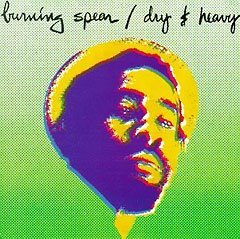
Giving Good Weight - More Reggae
As with most reggae, if you’re not sure what the song’s about, it’s always safe to assume that the subject is weed. That’s how it is with Burning Spear’s "Dry and Heavy." Probably something to do with weighing a bag of dope. Or maybe it’s about the weather. But then there’s a part about "school days." And another line sounds like "some of them have an electric ion." The lyrics really are a Rasta Rorschach – sometimes I think he’s singing something about a "tugboat," too. Who knows what to make of that? It’s all top-secret Marcus Garvey code-talking. It may be so eternally rewarding because of the chronic inscrutability.
Check for the aggressive asymmetric cowbell assault at the beginning, the doughy, extruded horn toots and the outsider-art vocal harmonies. The more I listen to the little snare roll that starts the track the more am I incapacitated by its brilliance.
Burning Spear -- "Dry and Heavy"
The Days of Wine and Vinyl
 I sometimes like to pretend that a song recorded 30-odd years ago was actually recorded in the last six months. Given that so many freak folksters and retro-whozits sound so authentically like people you might have heard in 1972, the reverse can also be true, right? For instance: What if Bobby Charles were a 19-year-old indie folkster who posted "Small Town Talk" on MySpace five minutes ago? You'd probably be pretty impressed! You might also believe it. Something about the way the organ pulses and shadows the vocal melody almost sounds like the Beta Band to me.
The musical time-space illusion is doubly interesting considering Bobby Charles wasn't some runaway 60s moonbeam by the time he recorded this. He'd been rocking for 17 years, having penned the golden oldie "See You Later, Alligator," which became a hit for Bill Haley back in '58. But then the groovy times came and Bobby drifted invariably to Woodstock, New York, where he got in with the Band, specifically Rick Danko. Let's just say he spent some time in the hammock out back and whatever wasn't packed in tight when he arrived got packed in nice and tight. "Small Town Talk" was co-written by Danko with Dr. John on the organ and it has all the urgency of a sloth with a bong in its paws. I got this off a Warner Records compilation called The Days of Wine and Vinyl, a showcase of artists on the label and its smaller subsidiaries. This one is from the Bearsville label, which must have been for all the wandering rustics who showed up on Danko's door mat.
From this same comp, you can also try the MySpace mind trick with America's "Head and Heart." Again, the minimilist organ/guitar element gives it a quasi-modern sound, but the vocals are probably too 70s AM sweet and "Horse with No Name"-like to keep up the illusion for long. For some reason, none of the neo-folkies likes to sing quite as prettily as anybody in the 1968 to 1972 period. Why is that? It's like crystalline male harmonies are somehow bogus now. Or maybe just too much effort.
There's a few other gems off this compilation, each of interest for different reasons. I've promised to hold off on any expository blogging on Bonnie Raitt -- that's Dewey Dell territory -- but this tune, "Too Long at the Fair," should be absorbed and appreciated as a teaser to more sweet SoCal country-blues to come. Dewey, do your magic.
"Virginia Plain" is a sensational Roxy Music song, first heard by me on the soundtrack to the wrist-slashingly tragic Lars Von Trier film, Breaking the Waves. The whole thing quivers like a gay jelly fish with Elvis's severed hand inside it. I'm not sure why that image came to mind, but there it is. (Sorry for the sloppy editing at the end, that's 3 seconds of slide guitar by Norman Greenbaum, the "Spirit in the Sky" guy.)
Finally, this early David Bowie song, "Can't Help Thinking About Me," has a peculiar Kinks quality to it, perhaps because of the story-like lyrics, the sad tale of a guy who "blackened the family name." He never says what said name-blackening incident is -- drugs? gayness? playing drug-and-gay-promoting rock music on the Village Green? -- but he's getting booted into the cold, cruel world of glam rocking. You'd never ever mistake a guy who's feeling guilty about thinking about himself with anybody on MySpace, so don't bother pretending this isn't from the 1966.
Friday, June 30, 2006
Pride and Shame
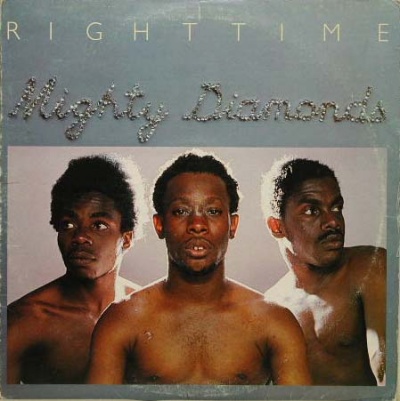
I first heard the reggae vocal trio The Mighty Diamonds on a dub record called Planet Mars Dub, which has some compelling cover art of stereo speakers flying like UFOs through the sky and visiting some red planet Rastafarians -- space travel via ganja rocketry, I guess. A consortium of producers known as The Icebreakers use the Diamonds' sweet harmonic cooing as a just another layer in the sonic palette, which turns out to be a strange and wonderful choice. Listen to "Dub With Garvey," at how they ignore the actual lyrical content and just let odd vocal fragments come echoing through the smokey haze.
And what gorgeous vocal fragments! So I was thrilled last week to find the first Mighty Diamonds LP, Right Time, from 1976. If you loved the soulful zealotry of the first Wailers album, you'll love these guys, all jacked up on Jah and reefer, sweetening every syllable with Motown. On the title track, "Right Time," Robbie Shakespeare's talking bass keeps murmuring subliminal profundity as a counterpoint to all the high harmonies. The blissed-out Biblical prophecies are skunkified by the bottom end; it's the riddim land that was Promised.
The Diamonds are wearing green fatigues and red berets on the back of the album, complete with the requisite army-issued spliff. The apocoalyptic religious stuff is interesting, yes, but the vocals really bloom when they focus on more worldly pursuits, namely girls. "Shame and Pride" gives lead singer Donald "Tabby" Shaw his moment to wax Delphonic about his school yard sweetheart, drawing out some extra honey in the falsetto. I imagine this courtship happening in some underfunded British-run primary school in Kingston where they wore white shirts and ties but no shoes.
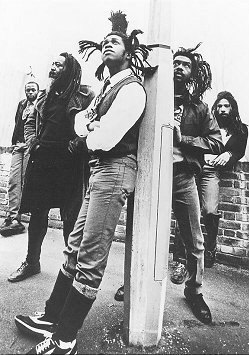 Which reminds me of a little of the outfit worn in this photo. I love the leg warmers! I can never tell if I love Steele Pulse's "Roller Skates" because it's qualitatively good or because I allowed it into my life during an emotionally vulnerable time in high school. The synthesizers must have seemed like a good idea back then, but they weren't. And using one in place of a bass is nearly heretical. That said, the whole storyline of this song is so patently absurd we've already entered a funhouse world in which a rich guy smoking a cigar in a limo decides to pull over and steal a boom box from a Rasta man on roller skates. Even as allegory for oppression, this is just retarded, the kind of crap you'd come up with if you were really, really ... high. But I want to believe the whole is greater than the sum of its parts here. Plus, you can have a lot of fun imagining the early 80s music video for this song as you listen. As you imagineer this thing, I would suggest similar production values to this .38 Special video for "Back Where You Belong."
Alas, I can't not mention "Steppin' Out" . There's some kind of J.C. Penney TV commercial flair to this song that really makes me question my own judgment. Open Sesame, here comes Rastaman! He sounds like he's wearing a Dr. Seuss hat and has gold teeth. What's funny is both of these songs are on the 1984 record called Earth Crisis, with the forbidding cover painting of a world gone mad with Reagan, the Pope and nukes. Merciful Fate could have used this album cover. Well, these guys were able to hold two opposing ideas in their heads at the same time, which is probably why they're still kicking it, hooking up with Damian "Jr. Gong" Marley and playing Bonnaroo.
 By the way, let's not forget the hair. Splendid.
Tuesday, June 27, 2006
Pack-It-In Paradigm, Pt. 2: Way of the Hippie
 The sun finally came back after three days of intense rain, the creeks and rivers having swelled their banks and washed out nearby route 212 for a spell. Apparently some of the locals were holed up at the Bear Cafe last night till midnight, drinking beers at the bar, waiting for the cops to open up the road again so they could drive home. That's what the aging hippie in the Hawaiian shirt said at the organic food stand this morning, while getting his java and New York Times.
Yes, we finally did it. We packed it in, as we'd hoped we would. For all of June, we've lived far from the employment-industrial complex of New York, near the village of Woodstock, where three long-ago days of rain-drenched hippie music have left in their wake a strip of incense-fumagated tie-dye shops and a smattering of weatherbeaten 60s dudes (now in their 60s) who live in the woods out of backpacks and occasionally stand on the side of 212 mumbling their own mysterious monologues, poking at dead birds with their walking sticks. They just stare at you when you wave.
The neighborhoods tucked back in the woods resemble those in Marin County, little 1920s bungalows with homegrown additions added in the 1970s (retrofitted glass domes, triangular windows), giving them the look of adult tree houses or hippie forts where some long-forgotten acid test or another took place. Christmas lights are popular year-round adornments. It's also what you'd expect, Volvos and overpriced organic food, silver-haired witchy women in purple peasant dresses and Guatamalan vests. But you also meet guys like Bill, our neighbor, a former Manhattanite in his late 50s who left for the rural life eight years ago. Last night he was walking his dog in the rain, smoking a hand-rolled cigaratte and watching our flooded local brook gush and gurgle like a Grand rapid. As we'd stopped to chat from our car, his smile was as warm and welcoming as any you'll find anywhere, his beatific face taking on a vaguely Native-American tincture. "We left and we never looked back," he says, flicking his ash, water drizzling down his matted hair. "Come back soon." He seemed to mean it.
Question: Could time spent in the woods crack our citified veneer and reveal the dirty hippie within? Rigorously-obtained data tells us it can. In the last month, I've barely bathed. I no longer wear underwear. I've grown a passable beard. Our calendars clear as the sky, we just sit here, gazing at the woods, listening to birds, breathing. We read books. We drink wine. We play guitar. We sing:
Gillian Welch's "Summer Evening"
"Paul's Song" by M. Ward
The Louvin Brothers' "The Christian Life"
Bobby D.'s "Oh Sister"
We play Bonnie Prince Billy's "A Beast for Thee" on the car stereo because the guitar part is too hard for me.
At night, we watch the wild smear of stars materialize in the big top overhead. You forget about those in the city -- and I mean totally and completely forget. Here, you breathe them back in like the homiest hometown you've ever returned to. Here's a recording of the babbling brook we hear while lying in the grass looking at them. Imagine fireflies dotting the darkness under the overhanging trees (also: adjust your volume DOWN at first).
Some days, we drive down remote dirt roads and find bright orange salamanders wriggling in creek beds. We watch the white-tailed deer and its spotted fawn nibbling in the back yard, wonder at the excitable finch pecking at our window like it wants to come in, chase the squirrel off the bird feeder every morning. You can sure as hell get used to it. (Above, that's a picture of a sleeping deer on the lawn here, as seen through a spider web in the window.)
 We go hiking in the woods, down long, winding trails, where whole primeval ampitheatres of forest open up like mystical, open-air meditation chambers, one after another, one dark and dense, another light and airy, some wet, some dry, endlessly unfolding as you walk and breathe, eventually setting the internal sun dial you forgot you had back to zero: the beginning, the end.
On a Sunday, a young fella hiking back down the trail from Mt. Tremper wearing a bright tie-dye, his eye-lids pink, mouth bent in a stoned grin, tells us he saw a black bear up there "standing not fifteen feet away from me." It ran away, he says, but we do a lot of loud clapping on the way up, for good measure. It starts raining hard on our way down, and we gingerly hop-scotch the wet rocks, our clothes heavy, hair matted, sheets of water pouring off the dark canopies above in a steady, wet roar. When we get to our car, we're waterlogged and primitive, grinning like idiots. We dump our clothes in the trunk and drive home naked. Once there, Dewey Dell starts a crackling fire, I pour a glass of Kentucky bourbon (Bulleit, highly recommended) and I fall asleep reading Cormac McCarthy.
Later, I learn the three guitar chords to "Light Green Leaves" by Little Wings (C-G-Fmajor7) and we sing the interlocking lyrics together.
Light green leaves
(Beneath your windshield wipers whip around)
From the trees
(You comb your hair and walk back into town)
Traffic breathes
(The same breath that I breathe when I'm around)
And it seems
(We best enjoy them before they turn brown).
Light green leaves
(Like feathers on a bird that's standing still)
From the trees
(They flock upon the branches and they wilt)
Never leave
(As long as they're alive when they are found)
And it seems
(They're hanging in the trees but soon fall down).
Light green leaves ...
Tomorrow, it's back to the city, where surely the inner sun dial will crank back to ten and all thing's peaceful and mystified will be sobered by the daily warp and woof of the capital markets. I'll always have Kyle Field to keep me in the mystic loop. And fear not, my fronds, I've also got souvenirs, including a pile of LPs I've picked up in the sticks, some of which can surely summon the old spirit. I've even got an album of Peyote Songs by a peculiar offshoot of the Sioux tribe, recorded live during a mystical psychedelic rite. There's also some early ZZ Top I'm excited to lay on the people. Where there is vinyl, there is hope, I hope. Now I just need my turntable, a razor and a bar of soap.
Sunday, June 25, 2006
Rolling Down Hill
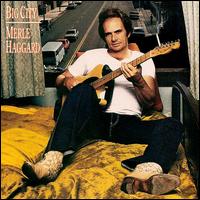
I’ve always been a fan of the Jeremiad. The Golden Ages are long gone. Everything’s in decline. It’s clear. Why not come out and admit it? There’s no one better at bemoaning the state of things than Merle Haggard. And no song encapsulates Merle’s the-world-has-gone-to-hell outlook better than “Are the Good Times Really Over?”
The first time I heard it I was driving my 83 Honda Accord up the mountain toward Asheville, North Carolina on I-26. The car didn’t have a tape deck, and only the AM radio worked. This limited your options. But you’d get some good syndicated oldies stuff – “Hubbard’s Cupboard” from Chicago; they’d play the Association and Herb Alpert and Sinatra and Glen Campbell all together. And every once in a while you’d hear some wonderfully apocalyptic preaching, some good church singing and decent country.
Listen for the ominous, fog-horn low-notes; Merle’s tooth-baring pronunciation of “Chevy” (shivy); the cheap word play; the implication that microwaves, Elvis, the Beatles and Nixon all brought ruin to America.
Seeing the record sleeve on a footrest, my wife said “Did you buy a Warren Beatty record? Because if you did, we’re gonna have to have a talk.”
Merle Haggard – “Are the Good Times Really Over?”
Friday, June 23, 2006
The Manichaean Candidates
From All The King’s Men. Willie Stark, the corrupt (but essentially good) governor is addressing Adam Stanton, the young idealistic patrician doctor.
“You can’t inherit [plain, simple goodness] from anybody. You got to make it, Doc. If you want it. And you got to make it out of badness. Badness. And you know why, Doc?” He raised his bulk up in the broken-down wreck of an overstuffed chair he was in, and leaned, forward, his hands on his knees, elbows cocked out, his head out-thrust and the hair coming down to his eyes, and stared into Adam’s face. “Out of badness,” he repeated. “And you know why? Because there isn’t anything else to make it out of.”
I heeeeaared that.
Here are two bands that took the badness and made good.
It’s not exactly overwhelming praise to say that a record reminds you of the Grateful Dead’s “Blues For Allah,” an album that marked the Dead’s studio slide into delusional disco, symphonic frippery, distended suites and a generally soggy sound. Still, that’s what the Court and Spark’s “Hearts” reminds me of. There are the same meandering baked quasi-fusionistic soundtrack-worthy instrumentals. But, like “Blues For Allah” (and way more frequently) occasional moments of brilliance force you to stop shaking your head in bemused derision. The Court and Spark are songwriters of the MFA school; there are clever narrative nuggets, odd bits of dialogue, and a general feeling of smarts at work. “Let’s Get High” is a good example. Check out the sort of subverted reggae of the keyboard pulse and the Jacques Cousteau guitar effects. I also love that you can always count on the weed heads to know when and when not to use the accusative case.
And then there’s Priestess. Entirely unrelated except that I think both of their records came out in the past month or so. And somehow, too, they transmute an essential wrong (pop metal) into good. After listening to the new Wolfmother, Ladyhawk and this, a coworker commented that there was some sort of “White Goddess” thing going on with bands these days. Priestess is from Montreal and they have got persuasively catchy and explosive pop-metal choruses. They make me think of the Darkness, minus the codpieces, the bad teeth and the irony. “Two Kids” won me over because there’s a slight “River’s Edge” and “Uncle Tom’s Cabin” factor to it. The singer can do Diamond Dave and the band can do Motorhead.
The Court and Spark – “Let’s Get High”
The Court and Spark on MySpace
Priestess – “Two Kids”
Priestess on MySpace
Tuesday, June 13, 2006
The Real vs. the Possible, Part 1: The Other Neil

Neil Young is a player who has recently made his impression felt once again, in a familiar though not ineffective manner. “I’m as predictable as a Holiday Inn” was a favorite quote from his 2005 Time interview. In the meantime, I’ve been fleshing out my collection with recordings I had missed for one reason or another. Though the heated fight to get Reprise Records to release Time Fades Away as a CD rages on, the 'used bin' at a major online dealer was admittedly a good place to get some of my other cavities filled (several months ago, after a few clicks, I caught up with 6 or 7 awesome N.Y. discs for about $45 all told).
Though I haven’t bothered to track it down, Neil supposedly once appeared on a National Lampoon list of “Ten People Dolphins are Definitely Smarter Than.” This collegiate jab notwithstanding, (and as milk-and-cookies as it sounds) musically I often feel like the Neil version of a kindergarten platitude: everything I needed to know about music I learned from Neil Young. How to rock, how to love, how one may indeed stretch limited technique to create grand expressions, that country music is cool, that it’s o.k. to change your mind about things, and so much more.
There are a lot of ostensibly independent-minded hippie geeks out there that share my general sentiment for the Old Man, but who have imposed a literal, historical set of expectations on their idol. This divide came to my attention when I caught comments on a popular Neil fan blog to the effect that the album Prairie Wind was “Neil Young Lite.” Sad for me to think I have anything emotionally-in-common with the Crusties that just want another Zuma, another Tonight’s the Night, another After the Goldrush, basically another bit of the collective wax that has fixed The True Neil into his proper place in the heavens. What would be the point for the living artist or the active listener? Granted, Neil can be counted on to strike the rock’n’roll anvil every 5 years or so—if only because it feels so damn good. But wouldn’t you be similarly compelled if you had a band like Crazy Horse?
When you’re twelve, the morse code rock of “Cowgirl in the Sand” and “Cinnamon Girl” are enough. A true musical archetype is a difficult thing to form, especially in a world cluttered with mere entertainment, and Neil managed to achieve one at a tender age. But my admiration over the long haul of witnessing his meandering and varied career has more to do with Neil’s ability to blindly lunge into new or atypical territory with no intention of answering to an existing body of work (remember this was the guy David Geffen sued for $1M for producing ‘uncharacteristic material’ in the mid-80s).
While many artists struggle with a dichotomy between the “reality” (either really real or simply subscribed to) of their own sensibilities and the other possibilities they see and imagine, Neil is able to bring some of these roads-not-taken back to us as listenable artifacts without losing a perceptible artistic self in the process. The contrast between Neil and pal Bob Dylan in this regard is stark, in that the latter has, by his own covert admissions, spent the same 40 years striving to really become the artistic personage he only imagined or projected during his years of creative adolescence.
Some of the Canadian's 'possibilities' can first come across as mediocre ideas, or even weak performances. But give Mr. Disappointment (from 2002's Are You Passionate?) half a dozen listens in different settings or states of mind. The session, for those unfamiliar, teams Neil up with old pals Booker T and Duck Dunn (of MG's fame) to do a fried-out R & B record that works like a plate of Memphis ribs and a couple of beers. This bizarre take on the hallowed subgenre of spoken lyric songs and the overall texture of the mix form a singular musical place that starts out kind of cornball, to say the least. The fumbling guitar lines between verses say all they need to (perhaps: that in life’s travails, some of us are disappointed, some gratified), and there’s something about the voice of Disappointment that reminds me a little of Tricky Dick himself (another legendary Neil Young spiritual nemesis), a resemblance helping to drive home a bittersweet feeling that would be hard to convey on a less intuitive level.
From another place entirely comes Misfits, a tune which the original Rolling Stone review of 1985’s Old Ways called “as strange as a meteor falling on the farm.” I guess the Crusties might get away with saying this song is simply another parable ala “After the Goldrush” or “Ride My Llama,” but yes, that’s Waylon Jennings on BVs, and probably the only song on any purportedly ‘country’ album ever recorded that mentions either a space station or Mohammad Ali (word to Mr. Poncho for the boxing riffs, although I'm not sure if there's a genuine sports metaphor here). I keep trying to imagine a song stylist that could make a living delivering tunes of this sort, one after another (I am thinking here of the Johnny Cash interview on NPR’s Fresh Air in which Cash explained “I’m not a singer, I’m a song stylist”). Roy Orbison may have been the only rocker to have actually given it a fighting chance in his own more elegant style. But "Misfits" is a masterpiece of a genre that doesn’t exist to my knowledge, other than in the minds of the believers. Gotta love the strings. For a moment, the possible prevails over the known facts—Crosby, Stills and who?
My last example was actually released as a promotional CD single for the 1996 album Broken Arrow, and definitely falls into the lower-than-porpoise intelligence category. I am trying to imagine the DJ intro: "Neil and those Crazy Horse boys are really setting the airwaves on fire with this one, a hoppin' little number called This Town!" Ponytailed, paunchy, and strangely preadolescent, the track evokes a sense of place that I feel I can personally can relate to, living in an asphalt-dominated ‘New South’ city, but only paints around the edges of a discernable picture. This could be a garage band’s first recording but, as it happens, comes here from a 30-year veteran and Rock Hall of Famer. A younger man might care to give a few more concrete details . . .
The lesson of Neil Young in these and other instances is that sincerity in the pursuit can take an artist a long way toward realizing possibilities beyond the creative visage set forth in hallmark moments. Whether it is agility of mind, faith in the subconscious, or barrels of homegrown doobage, something is present that allows the seeker to forget himself long enough to make work that reaches toward an as-yet-undefined strain of self.
Meanwhile, the position of many critics and fans takes as given that we all know who The Real Neil is by the moments that forged the legend in the first place. Yet with the pins in different spots, the map could change entirely. In art and life, ‘the real’ is sometimes simply a collection of that series or set of possibilities we repeatedly prefer over others. Our moments of forgetting these preferences may be, for some of us, our few fleeting glimpses of true freedom.
Saturday, June 10, 2006
I Did Wot I 'Ad Ta Do!

It’s not a good idea to blog about work. But let’s say for the sake of argument that if I recently quit my job of 7 years I might be feeling a little reflective. I might be relieved not to have to look at the big piles of work on my desk. I might miss the camaraderie. I might be proud of the fact that I walked in the door expecting a 3 week data entry gig as a temp and I walked out with a new career in hand. I might be happy my new job pays better. If I did leave my job, I might offer you these songs on the topic of leavings and endings:
Before They Make Me Run – Steve Earle/Supersuckers
Please Don’t Talk About Me When I’m Gone – Abbey Lincoln
Goodbye.
Wednesday, June 07, 2006
Leopold Bloom's Skittish Approach
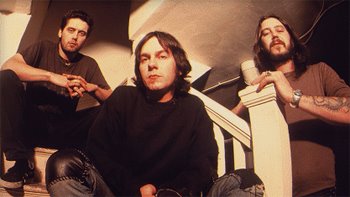
 Cemetery tunes are ornery to execute, and often aren’t as difficult to digest as they should be, but even a cursory listen to Sunn O)))’s "Candlegoat” from their 2005 release, Black One, should do the death trick for us nicely. Lyrics from Mayhem are quoted as a summons: Mayhem's singer Euronymous was killed in 1993 by Varg Vikernes of Burzum. Low-end manifestations in this piece are likely to invoke uneasy funereal postures and the incoherence of mortality. At the least they’ll inspire intestinal loosening. The gaseous intro to “Candlegoat” is faux ambient when sonic waves begin to alter the chemistry of the listening space and black wooly worms as long as hairbrushes appear outside the door. If you find yourself taking the ritual seriously, make sure your loved ones are out of town and any hatchets are locked away in the garage or woodshed. However, in actual swine life, you know these guys would be fun to eat corn dogs with while watching Barry Lyndon, and this is probably superb music to fly a small engine plane to as you soar above a fried desert landscape, hollering into the wind the law of Austin Osman Spare, looking for “that party” at a Caliph’s palace. Choronzon awaits.
 Next we encounter the devilish Serbian trumpets of Boban Marković Orkestar doing "Vlasinka", from 2000’s Srce Cigansko (Heart of Gypsy). I think the underlying thump juice on this tune is as unbelievably organ shifting as Sunn O))), but swarthy fuckers getting ready to embark on a midnight vodka run (deer blades in belts) while their gals pile out of the house onto the porch to watch them go, waving silk handkerchiefs, is the Shiznit. Don’t drink too much coffee!
This cut will definitely inspire grafts of wood needed to sculpt human stumps, and it refuses to allow a handhold to escape the cliffs of sedentary thought...from 1930-1933, Harry Partch recorded the text from Shigeyoshi Obata: The Works of Li Po, the Chinese Poet, and who knows how many celestial trains he had to ride before he finished. As a composer, Partch catapulted microtonal branches after early emanations (also laden with the Book of Psalms). “A Dream” is taken from The Seventeen Lyrics of Li Po, released in 1995 on Tzadik, and was recorded on February 29, 1932. All is One on the climb to the mountains of the sky: “How can I stoop obsequiously and serve the Mighty Ones? It stifles my soul.” Shadoobie. I often pander to the slopes of my raising on the Appalachian starvation diet.
“For Today I Am a Boy” is from Antony and the Johnsons’ 2005 album I Am a Bird Now and suffices for the song we knew we needed when life was blessed with goodness and there was nowhere to turn but the skies, and mortal rains didn’t come like we thought they should. What is delicate is in us all and favors no one: Molly.
Hasil Adkins is the maestro of rocking thighs, and we only need to sample one of his early grumplets to ascertain how jelly things can go. For summertime moves, “Teeny Weenie Waddy Kiss” is from his mid-50s LP Out to Hunch and will get any Southern girl you know to confess belief in some ulterior and baneful type of ‘crunk’—just don’t get her too privy to his tunes about cut-off heads. A good buddy of mine always tells a story about Hasil waiting out in his car until it was his time to go on stage, so stacked up on the winds of fate that nothing mattered to him. With patience be blessed.
 While we thumb back through Ulysses (June 16!), in the elder regions there is this scrap of mental porridge (Psychic TV): “Base Metal (remix).” Let us cable Leopold the Jew as we thunkingstock our days. We can be all cock-a-hoop about our modern craze for sound. And then there’s also Pollard’s way, the fever of the routine, our snake that hides: “How’s My Drinking.” If we weren’t guided somehow who would forgive us anyway? What is the word of days that might transmogrify our beings? Feeling, I tell you.
And finally we reach the end of this garble wheel, the black action that we started, but with a warrior’s amplifier set in our hearts. High on Fire recorded Blessed Black Wings very yesterday but I have poured over “Brothers in the Wind.” As it pertains to our burnt norbs, the energy is palpable as a battleaxe turd. For lost brothers we are now able, through an axis of perpetual slaughter, to contact and beat them to death with our lamb love...on and on and on and on. Played in decibels reserved for an evening of blue inebriation, it’s almost summer. Ain't James Joyce coming for some golf shirts, sumbitch? Tighten up.
Tuesday, June 06, 2006
Sweet Scientists
Where would we be without the sporting metaphor? No photo finish, no fumbles, no hitting one out of the park, no playing against the clock, no stiff-arming. The appreciation of competive sports is -- similar to the appreciation of cigars, fly fishing, internal combustion engines, and Civil War history -- some sort of deeply male activity. And there's probably no sport more thoroughly fouled up with testosterone stink than boxing. As it happens, boxing also seems to be where we get the most sporting metaphors -- against the ropes, saved by the bell, sucker punch, below the belt, down for the count, and, of course, the knockout.
David Remnick has written a couple of excellent pieces on boxing for the New Yorker. I was reading the Mike Tyson piece from Reporting, Remnick's new book of collected writings from the magazine. In it he mentions that during his prison time Tyson had become something of a history buff. Hannibal was one of the figures Tyson took an interest in. "He rode elephants through Cartilage," Tyson told Remnick. There's also a great explanation by one of Tyson's trainers of the whole Roman, bread and circus component of boxing.
"People are full of shit. They want to see something dark," Tyson's former trainer Teddy Atlas told Remnick. "People want to feel close to it and in on it, but, of course, only from the distance of their suburban homes. They want to have the benfeit of comfort m security, safety, respect, and at the same time the privilege of watching something out of contril - even promote it being out of control -- as long as we ca be secure the we're not accountable for it. With Tyson, the dark thing was always the aniticipation that someone was going to get knocked out. ... But we wanted to believe that the monster was also a nice kid. We wanted to believe that Mike Tyson was an American story: the kid who grows up in the horrible ghetto and the converts that dark power into a good cause, into boxing. But then the story takes a turn. The dark side overwhelms him. He's cynical, he's out of control. And now the story is even better. It's like a double feature now, like you're getting Heidi and Godzilla at the same time."
He's right. We want to see some motherfuckers thrown to the lions. We want blood to flow. We think of life as combat and struggle. Destructive, explosive violence -- even better if it's controlled in a ring -- somehow confirms our ideas about the nature of things. But brute force isn't always the way to win -- poetry, finesse and endurence all come into play. I guess the same is true with rock and pop: volatile emotions are let loose -- briefly, for, say, 2 minutes and 45 seconds -- and then resolved, harnessed, put back in the bottle. Distortion, electricity, operatic singing, martial drum beats, it's all a kind of chaos that gets controlled by form. The compositional emulation of the male orgasm, set to wax.
Taking inspiration from Bob Dylan's Theme Time Radio show, which you can hear at White Man Stew, I've put together a little thematic sampling of pugilistic musical favorites.
I think it was Greil Marcus who famously asked "What is this shit?" about Dylan's monumentally offputting Self Portrait record, from which the following track comes. Obviously, including Dylan's transcendantly horrendous version of the Paul Simon song "The Boxer" serves two purposes: It justifies not including the Simon and Garfunkle version and it also allows for exclusion of Dylan's most famous boxing song, "The Hurricane," a great song, but one that you can hear elsewhere, occasionally on classic rock radio or even better, in the scene in Dazed in Confused where Mathew McConoughey's character delivers the famous lines "high school girls -- I love 'em -- I keep getting older, and they keep staying the same age."
Dylan's version of "The Boxer" is really a marvel -- you can almost see the executives at Columbia Records listening to this stuff as their heads smolder and then finally explode. Dylan has never been very good at harmonizing -- listen to some of his stuff with Joan Baez (not entirely his fault) or listen to "Girl From the North Country". Here, he ups the ante by harmonizing with himself. One of his vocal tracks loosely follows the original melody while the other wanders, darts and ducks, maddeningly. It's almost like he's just pissing in the wind and calling everyone over to take a look at his soaked trousers. Then again, there's the other possibility that
it's some sort of veiled put down of Paul Simon. Unlikely, I know, but I remember when Lefty and I saw the two on a double bill at Madison Square Garden in the summer of 2000; though they sort of honored each other a bit, from the stage Dylan seemed to exude a contempt.
Obviously, a batch of boxing music probably should include the theme music from Rocky (but you all know that one), and I thought about putting the Stones "One Hit to the Body" -- from Dirty Work, the final frontier of Stones appreciation -- but I figured that was just an assault/love song, of which there are many. Next is "The Upset," by Paul Kelly, from the masterful Numero Group's masterful Eccentric Soul series which does some deep excavation of obscure regional soul labels and oddball vintage vanity vinyl pressings.
I've already foisted some of the Rev. J.M. Gates here before. This is a sermon/rant about the Brown Bomber. Tunes about Joe Louis are a part of their own subgenre of boxing tunes. Louis was so monumental a figure in the 1940s that many blues and jazz singers sang about him (he was among the most famous black men of the decade). Rounder Records released a compilation devoted to songs about Joe Louis in 2001. What I love about this track is the response of the congregation. Every time Gates pauses, one of his Deacons says "That's right!" It's like clockwork. It might sound funny, but it's also very much an extention of something that you read about regarding the jelis or griots or West Africa. When jelis speak there's often someone on hand who says the word "namu" (which means "truth") after each small phrase. The person even has a name which translates to "the one who says namu." The namu sayer has a crucial position, because it's an affirmation of the power of sacred speech. Somewhere, I have a great example of a "namu sayer"on a recording of a jeli singing along with some Guinean drumming. Fittingly, the rhythm is one of the many that are a part of the family of rhythms known as "dununba" -- or "the dance of the strong men." ("Konowulen II," featured here, is a dununba, though not the one with a "namu sayer," though some of the same principles of call and response are evident, and it kicks ample ass). Dununbas were traditionally performed as a part of ritualized violence in the form of a dance where men would dance in a circle and lash each other's backs as a means of demonstrating endurance and resolving conflict. Namu.
Bob Dylan - "The Boxer"
Paul Kelly -- "The Upset"
Rev. J.M. Gates -- "Joe Louis' Wrist and His Fist"
Famadou Konate -- "Konowulen II"


Sunday, June 04, 2006
Fight the Power
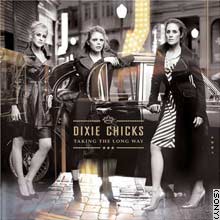

It was easy to like the Dixie Chicks even before they got vilified by Red State America for being ashamed of shrubya Bush. Now that 75 percent of the country is also ashamed of the POTUS, maybe it’s not so bold for the Chicks to make a record that’s basically one big "fuck you" to country music conservatives and Bush. Still, of all the Neil Youngs, Bruce Springsteens, Dan Berns and Steven Colberts out there fighting the power, the DC’s are the ones who aren’t preaching to the choir (It hurts a little to hear them rip Lubbock, Texas a new one). That said, their latest is thoroughly cushioned with bland-o-country-rock pop powder puffs, and they now have much more in common with Sheryl Crow and Tom Petty than they do with Reba McEntire and Toby Keith, but there are a couple righteous radio mega singles. I’m particularly fond of "Voice Inside My Head," which isn’t really about the Bush-bashing incident (but it does employ fake sitar – take that!, Hot New Country), and which somehow manages, improbable as it is, to sound like Aimee Mann and Wilson Phillips.
"Voice Inside My Head" – The Dixie Chicks
Saturday, June 03, 2006
Crossing Over
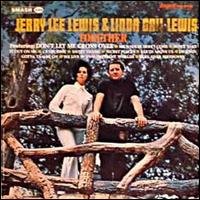
Country, as you know, is all about cheating. Few songs approach the subject of infidelity with such a legalistic interpretation as "Don’t Let Me Cross Over," done here by Jerry Lee Lewis and his sister Linda Gail Lewis. Jerry Lee adds a nice gospel touch on the piano, which seems to fit with the inverted sacred imagery of the song. From the title you might guess that this song has something to do with reaching that distant shore, passing on, crossing the great divide, going to the roundup in the sky, dying, but it’s actually about getting the most out of being unfaithful without being punished for breaking the rules, milking a little something on the side without getting caught. It’s "love’s cheating line" that they don’t want to cross. The paradise of intemperate passion is just on the other side of the line. One step closer would be "heaven divine," but the lovers are trying to exercise some restraint. You get the feeling they may have already undone a few buttons though.
"Don’t Let Me Cross Over" – Jerry Lee Lewis and Linda Gail Lewis
Monday, May 29, 2006
Rude Boy R.I.P.
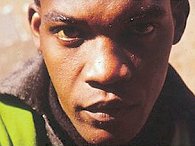
Desmond Dekker died last week. In his honor, here’s a great DD tune. It’s not really a reggae or ska song, more like soul with a shimmy. Listen to the lovely descending guitar line, the tinkly piano, the ultra-minimal horn arrangement, the brilliant backing vocals.
Desmond Dekker– "The Tips of My Fingers"
Sunday, May 28, 2006
Country, Rock, Judgment and Eric Burdon
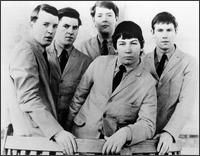 I recently posted some Steve Earle on the other blog I write for, and it got me thinking once again about country music lyrics, judgment and Eric Burdon. These connections have been in my head for awhile, but I'’ve never laid them out in essay form, partially because I haven'’t fully formed the arguments. But if my World Lit professor was correct, the word essay comes from the French word meaning attempt. So here'’s my attempt, in outline form. Leave a comment if you'’d like to help flesh it out or dispute it. I just need to eject this tape from my head. It's getting a little warped:
Country music lyrics seem driven by judgment. Judgment of others, of self, of life on earth. Or if you're Johnny Cash or Merle Haggard, judgment by the American justice system. Here are some examples, in pure and hybrid form:

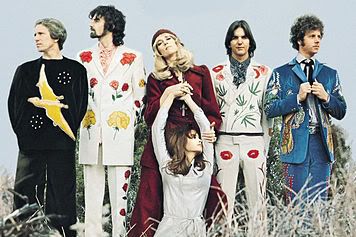
Your Cheatin'’ Heart - Hank Williams
Christine'’s Tune - Flying Burrito Brothers
Dark End Of The Street (actually an R&B tune countrified by Flying Burrito Bros.)
Rock lyrics on the other hand, especially after the psychedelic era, don't involve as much judgment, at least not the kind of judgment we hear in the Christian warnings about sin by the Burritos. Let's take a quick look at the career of Eric Burdon to see this. During the pre-psychedelic mid 60'’s, while in The Animals, Eric sang about fighting for success in a harsh capitalist reality, without faulting himself:
It'’s a hard world to get a break in
All the good things have been taken
But girl there are ways
To make certain things pay
Though I'm dressed in these rags
I'll wear sable some day
But by 1970 Eric was singing lyrics like these with the band War:
This really blew my mind, the fact that me
an overfed, long-haired leaping gnome
should be the star of a
Spill the wine, take that pearl
Despite the fact that I'm an overfed wino myself, I still relate much more to It's My Life than to Spill The Wine. Guess I'm into realism. Plus, the Animals had matching suits. We love matching suits around here.
Thursday, May 25, 2006
Emerald Rats And Purple Clouds

Summertime's here, kiddies, and it's time to take a trip! Ride along with your Uncle Kim. Sure, we can take the limo.

Kim Fowley - The Trip
Yeah!
Tuesday, May 23, 2006
Uber-Onanists

On the surface of it, there are a lot of bad things about “Prodigal Son” by the Amboy Dukes. For starters, you’ve got Ted Nugent -- pre-Tarzan suits, pre-“Wang-Dang Sweet Poontang,” pre-bow-hunter, pre-Damn Yankees (did anyone listen to the recent installment of the Bob Dylan satellite radio show in which he played baseball-themed songs, and, before introducing a song from the Broadway show Damn Yankees, Dylan said “And I don’t mean that band that Ted Nugent started with those guys from Styx”?!!). Then there’s the hard-to-ignore Carlos Santana guitar tone – it’s not looking good. Add to that the extended uber-Onanist drum and organ solos, and, well, it’s damning, frankly. I’ll admit, this song doesn’t need to be 8 minutes and 40 seconds, but few do. What redeems it for me is the totally retardo rubato at the beginning. That and the fact that I have very fond memories of the first time I heard it. We were in van, somewhere near Hampton, Virginia; yes, there was weed, and my friend Chris had made a mixed tape that started with this track. It was also the first time I heard Blind Willie Johnson’s “God Don’t Ever Change,” which came on right after it, and I’ll forever thing of the two songs together. It’s one of the beauties of the now-gone mixed-tape era that completely unrelated tunes could get yoked one to the other in your mind – indelible album sequencing.
The Amboy Dukes evidently got their name from a famous book about gangs in Brooklyn. I learned this when I read Pete Hamill’s lame memoir The Drinking Life. Hamill, a bit of a self-satisfied windbag like Nugent, was also inspired by the book.
Maybe I should go to postasecret.com for this but, I actually sort of like that Damn Yankees tune. You’ve got to watch the video – the dumb sunglasses, vests with nothing underneath, the bad bangs, the sleeveless T-shirts, the Nuge, the totally unrelated Bonnie and Clyde storyline. Matthew Barney couldn’t do this shit.
And, after you do that, I’ve got something else for you – it’s so volatile I can’t even say what it is, just click.
I know it’s wrong, but I’m okay with that.
Ok. To atone for that, here's some righteous Blue Cheer off of their second record, OutsideInside. This is big, grave medicine. The sound of the kick drum alone is enough to hurt your kidneys. I honestly can't fathom how this music can be this heavy. It's like some sort Copernican Revolution, you have to reconfigure your understanding of everything to make sense of it.
Blue Cheer -- "Sun Cycles"
Sunday, May 21, 2006
Cycles of Circular Motion

Not too long ago I was feeling sort of expansive at the record shop and I picked up a Steve Miller Band record called Number 5 as well as a copy of Shadowfax’s Dreams of Children. Obviously, this was a big mistake. I had remembered sort of grooving to the faux-world rhythms on the Shadowfax record in high school, but there’s a lot of pinched-sounding soprano sax and fretless bass, the kind that when you hear it you imagine the self-satisfied bass player (who looks like a Department of Environmental Protection soil scientist) sort of puffing out his cheeks and bending his knees a bit as he plays. So, I’m not ready to reconsider Shadowfax. Not yet. And the Steve Miller Band record proved to be the worst extended boogie rock, presaging the Dave Matthews Band in its self-deluded ideas of what’s funky.
Every time I start to totally write off SMB though I’m reminded of a time I was at Sluggo’s in Pensacola, Florida (not sure if still exists, it was one of the best rock clubs in the country, run by really cool characters who made Pensacola -- with its mix of rabid anti-abortionists and jarheads, vestigial sunny Florida vacation vortex and the weird decrepit bayou culture of the panhandle which makes the place more like New Orleans than Tampa –- seem like a cultural capitol. Pensacola is a busy shipping port and I once played a game of pool with a Russian sailor at Sluggo’s, he couldn’t really speak English, and he may have been looking for a prostitute, it wasn’t clear, but I passed on an offer to go and hang out on his ship with him, which could have ended in a powerful vodka drunk and/or my entry into white slavery). Anway, on a bathroom stall wall at Sluggo’s someone had written:
You treat me like I was your ocean
You swim in my blood when it's warm
My cycles of circular motion
Protect you and keep you from harm
It was one of those sleep-deprived, hung-over-soon-to-be-drunk moments. And it seemed brilliant (ironic) at the time. Steve Miller, perhaps more than anyone, conjures the 8-track tape era for me. Columbia Record Club deals where you get 10 for a penny or something. Bob Welch, Elton John, ELO, Boston, Fleetwood Mac. That practically does it. Well, like Fleetwood Mac and ELO at least, there was a pre-mega success Steve Miller Band. He tried to do his part for the psychedelic army.
It was while flipping through the book “I Want to Take You Higher” – a big coffee-table deal about the psychedelic era that I saw a mention of early SMB. A track called “Song For Our Ancestors” of his second record, Sailor, was included in the book’s “Top 100 Psychedelic Songs” list (#41). “Song of Our Ancestors” is pretty cool and admirably atmospheric, but I prefer the next track, “Dear Mary.” Yes, it’s a rip-off of both “Whiter Shade of Pale” and “Penny Lane,” which doesn’t bode well. And yes, Boz Scaggs is involved. It occurs to me that, if you had never heard "The Joker," "Fly Like an Eagle," "Jungle Love" and "Big Ol' Jet Airliner," they would actually sound great. Like "Brown Eyed Girl," "Born on the Bayou" and "Sweet Home Alabama" and most Motown hits, these songs have been ruined by too much use. They're like some Leonardo Da Vinci manuscript that was exhibited in a bright gallery space until the light-sensitive material basically disappeared. We can't hear them anymore.

As a come down off of that, here’s some Paul Pena. Much of this record is a lot like Band of Gypsies-era Hendrix or even solo Buddy Miles with a hint of B-grade Shuggie Otis, the Meters or maybe Sly and the Family Stone. Coincidentally, the same day that I picked up Sailor, I also scored a copy of Paul Pena’s first record. Pena, who passed away last year, was the subject of the excellent documentary Genghis Blues, about his embrace of Tuvan throat-singing and a trip the blind musician made to Tuva to enter in a music competition. In the movie, it’s mentioned that Pena wrote “Big Ol’ Jet Airliner,” which Steve Miller later had a hit with. I assumed it was on this record, but evidently it was from an unfinished or at least unreleased second record. Here's a sort of extended soul gospel vamp called "The River." It's not without its chaff, but the bombast of a choir is always its own reward. A spoken-word interlude worthy of Baby Huey is also worth listening for.
Steve Miller Band -- "Dear Mary"
Paul Pena - "The River"
Sunday, May 14, 2006
Those That Refuse It Are Few

The Perm and the Skullet has a bunch of excellent Johnny Cash/Bob Dylan outtakes from the Nashville Skyline sessions. You’ll want to go hear these. Among the tracks is "Old Mountain Dew," a rendition of a tune credited to Bascom Lamar Lunsford.
BLL, as some of you will know, was from Western North Carolina, Asheville way. I remember taking a sort of ethnic/folk music class at Warren Wilson College where we learned "Swannanoa Town" – another tune by Lunsford. Most people know him through the incredible "I Wish I Was a Mole in the Ground" as heard on the Anthology of American Folk Music. Lunsford is one of those huge figures in American old time music. His story gives the lie to many of the popular ideas about old-time musicians in the south.
He wasn’t some hick with a spooky surreal apocalyptic vision sprouted from the hardships of farm living and a steady diet of Sunday sermons, though that would be cool, too. Lunsford, like A.P. Carter, if I’m not mistaken, worked briefly as a traveling fruit tree salesman. Like Carter, Lunsford’s travels around the countryside provided him with a chance to seek out, gather and collect old songs. He was an untrained musicologist who kept track of stories about the old songs and paid close attention to who played what, and what instrumental styles were common in what regions. Lunsford was also a lawyer, and you can hear on the recordings that he made for the Library of Congress that he was erudite and spoke with a cultured air. He wore sharp suits and a cool-o eyeglasses. He could have passed for a Bauhaus architect. Lunsford also started a regional folk music and mountain culture festival.
Here are a few of my favorite tracks from the Library of Congress sessions. Like the Carter Family, BLL performed a mix of old tunes that had their roots in Scotch-Irish traditional music, Elizabethan balladry, African-American blues, Cival War era parlor songs, and whatever else the folks in Buncombe County were inclined to play for one another when they gathered for some music. Here is "The Mermaid Song" (with a special nod to Dewey Dell), "In the Shadow of the Pines," and "Swannanoa Tunnel." If you’ve ever been to Swannanoa, it’s sort of startling to find such a speck on the map showing up in a song.
Somewhere on the disc he says that he’s recorded something like 300 songs or so for the library. I’d love to hear them all.
Bascom Lamar Lunsford - "The Mermaid Song"
Bascom Lamar Lunsford - "In the Shadows of the Pines"
Bascom Lamar Lunsford - "Swannanoa Tunnel"
There’s a Buffy St. Marie version of a few BLL tunes, I may have to transfer from vinyl and inflict on you all. Stay tuned.
Saturday, May 13, 2006
A Brief Footnote Regarding The Haze

This is just a quick one to add to Mr. P's post about Lee Hazlewood. It's from my vinyl copy of Dean Martin's Greatest Hits, Vol. 1, which I picked up in a thrift store about 11 years ago in Chico, California. The composer is Lee Hazlewood.
Dean Martin-Houston
Enjoy the Dino.
All Samples Cleared:


I remember once seeing the eclectic jazz clarinetist Don Byron on MTV. He was performing with rapper Biz Markie at the Knitting Factory, I think. Whoever it was doing the interview made some comment about Byron having recorded the music of Duke Ellington, Raymond Scott, Lester Young, having played klezmer and whatever else, implying that working with Biz was somehow not in keeping with Byron’s past. To which Byron said he put Biz Markie up there with Stravinsky.
You may remember back in the ‘90s that Biz had one of his record I Need A Haircut basically recalled because he had illegally used a sample of English singer Gilbert O’Sullivan’s “Along Again, Naturally” in a song that the Biz, perhaps unwisely called “Alone Again.”
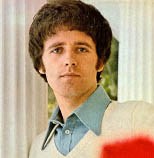
I Need A Haircut is my favorite Biz record. The song “Romeo an Juliet,” what I bet is a sample lifted from the Nino Rota soundtrack to the Zeffirelli film, encourages anyone who’s not familiar with the story of the two star-crossed lovers to go see the movie (It’s much better than the Dire Straits version). It also includes “I Told You,” which makes excellent use of a Donovan sample from the song “Get Thy Bearings” off of The Hurdy Gurdy Man.

Biz Markie - “Alone Again”
Biz Markie - “Romeo and Juliet”
Biz Markie - “I Told You”
Donovan - "Get Thy Bearings”
Igor Stravinsky - “Third Tableau” from Les Noce (The Wedding),
performed by Pokrovsky Ensemble
Friday, May 12, 2006
You Can Be Beautiful Too

A few years back I wrote a small piece about overrated and underrated artists. I was feeling particularly contrarian and I went on about how Gram Parsons wasn’t really as great as everyone wanted to believe – sure he wrote several near-perfect songs, but because of his self-destruction and early demise he never realized his potential. I had recently interviewed Chris Hillman and he was clearly a bit tired of the Saint Gram thing. Hillman seemed to feel that the worship of GP was a perfect example of enshrined hippie excess.
Around the office a few people made fun of me because they had never heard of Gram Parsons (so how could he be overrated?). Taking an easy shot, I also wrote about how lame and bloated most of Eric Clapton’s music is. I expected hate mail for that one. But none came.
For the underrated section, one of the groups I picked was Nazareth. The other was the Bee Gees.
I was basically saying that the early Bee Gees were as good as the Beatles, and that their disco era success had sort of sucked attention away from all the lovely early stuff. A few weeks later, we got a hand-written letter thanking us for championing the oft-neglected Bee Gees, and yes they were geniuses and pop visionaries. People have strong feelings about the Bee Gees. There’s a now-defunct web site that was devoted to people’s poetry about how the Bee Gees music had changed their lives.
Jefferson Airplane don’t have one of them I bet.
Here are two from the brothers’ wonderful Odessa. The Bee Gees knew how to drop a seafaring riff now and again, and a little military or technological history (see "Trafalgar" and "Edison") wasn’t off limits either. Here they seem to be celebrating a certain kind of domesticity ("Marley Purt") and offering a little Celebrity Make-Over tips to the young ladies.
Send us a poem if it changes your life.
"Marley Purt Drive" – the Bee Gees
"Melody Fair" – the Bee Gees
Wednesday, May 10, 2006
Swamp Music
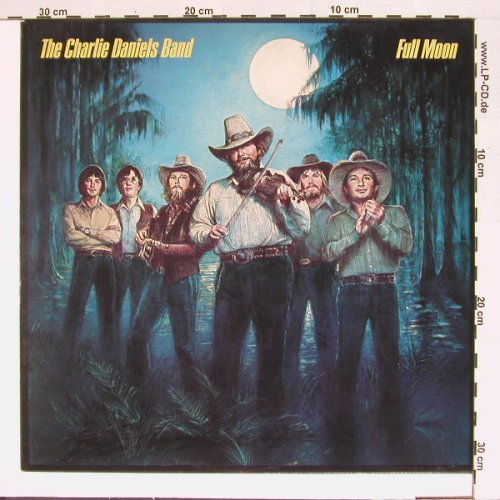
This is just going to have to be one of my would-be high-concept posts that ends up still-born, half-assed. But that’s cool. I was going to do a series of swamp-theme songs, ideally swamp songs involving murders. This was mainly just an excuse to foist Warrant’s "Uncle Tom’s Cabin" on anyone daring enough to go there with me. But then, no, when I think about "Uncle Tom’s Cabin," I’m not even totally sure there was actually a swamp involved, though the video seems swampy in my memory. And when I think about "Uncle Tom’s Cabin" I’m reminded of my other high-concept- sure-to-be-half-realized about doing something on songs that misappropriate famous pieces of literature (preferably American lit.) for rock use. Uncle Tom’s Cabin, as you know, is an anti-slavery novel by Harriet Beacher Stowe. Warrant’s "Uncle Tom’s Cabin" is a song about, I don’t know, corrupt cops and murder. Get the idea? From there I could only really come up with one other one: Metallica’s "For Whom the Bell Tolls," which I’m pretty sure is unrelated to the Hemingway book. There must be more. "Mody Dick" sort of makes the cut, but we really need one more solid to run with the theme. I’m sure it will come.
So that’s why you’re not listening to Warrant right now.
To the matter at hand. Let me just advise all of you Charlies Daniels doubters out there. Go get your copy of My Morning Jacket’s It Still Moves and pick just about any track off of it. Or pretend you’re listening to the Drive-By Truckers. How much difference is there? The other, less pleasant, connection is to the Edgar Winter Band. "Wooley Swamp" actually shares some DNA with "Frankenstein." And so there it is – Charlie Daniels Band perched at the intersection between wanky bloated blues-boogie albino art rock and southern-fried jingo jams, dixie dreggs.
"Legend of the Woolie Swamp" – Charlie Daniels Band
And to clear the swamp muck off your palate, Swamp Dogg and Duke Ellington.
"Total Destruction of Your Minds" – Swamp Dogg
"Chloe (Song of the Swamp)" – Duke Ellington and his orchestra
Tuesday, May 09, 2006
Satanic Airways
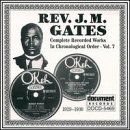
When he died in the 1940s, the Rev. J.M.. Gates had what was described as the largest-ever funeral of anyone in Atlanta’s sizeable African-American community. It was only when MLK was killed in the 60s that the record was broken. It’s said that among old-time and race music record collectors in the 50s and 60s, Harry Smith types, that J.M. Gates records were sort of like the chaff that you had to sift through in order to find the real odd gems. Everyone had Gates records. It’s hard to fathom now, but his recordings – sermons, theological skits and rough-and-raw group singing – were some of the best selling 78s for the labels that released them. I once interviewed Chris Strachwitz, founder of Arhoolie Records, and I remember talking with him about recordings of preachers. When I mentioned that I liked Rev. J.M. Gates, Strachwitz was kind of dismissive, equating it with top 40, which seems pretty unlikely when you listen to him. But it's sort of true.
If I'm not mistaken, Gates was "discovered" by Polk Brockman, who also made some of the very first, if not the first, old time and country recordings. In the 20s and 30s, record labels were mystified by the black market, but they realized a big seller when they had one, and they just stuck with what worked, and as a result, you can hear multiple versions of Gates’ signature "Death’s Black Train" among his complete recordings, since Gates had more recording sessions than material. As a matter of fact, in his autobiography Malcolm X refers to recollections of listening to recordings of "Death's Black Train," undoubtedly one of the Gates versions. Part of the appeal must have been that you could get a jolt of sanctity without having to get dressed up and go all the way to church.
Blues scholars often point to Robert Johnson and certain other players as being among the first generation of artists who were learning as much from listening to recordings as they were by hanging out and picking up riffs by watching other players. It's the point at which local styles exploded and could go national. Suddenly you had guys from Georgia or Chicago playing a blues style that was very specific to a small area in the Mississippi Delta. The 100th Monkey phenomenon, only without the mystery. Jazz dudes will go on at length about listening to Coleman Hawkins' solo on "Body and Solo," picking it apart, marveling at it - something you couldn't do before the days of the record. I've always speculated about the extent to which Gates' popular recordings affected the sermonizing and testifying styles of preachers all over the country.
I love Gates' little froggy croak and the seemingly off-the-cuff slapstick banter he gets going with his "congregation" (a crew of three or four regular characters who would moan, offer well-placed rhythmic assent or shout "sing it!" and "well!" as needed, often repeating the last word of Gates' phrase for emphasis -- I particularly enjoy when one of the deacons gets all worked up in "The Flood of Alabama" after Gates delivers a line about the prisons being overcrowded and the congregation yells out "overcrowded!"). More than that though, I especially dig his almost universal suspicion. You name it and Gates' is not down with it. Wigs, bad. Chain stores, bad. Corn liquor, very bad. But more than anything, Gates distrusts rapid transport, and he sees it as a metaphor for the devil's ways -- he'll give you something quick and convenient, but he'll steal your soul. Gates has tracks railing against automobiles. And you don't want to get him started on flying machines.
Gates was big seller. But loads of other preachers ended up on records, trying to connect with glory while positioned in front of equipment with a technician standing there telling them when they've run out of time. You've got three minutes.
"I've Got a Ride to the Tree of Life" -- Sister Sallie Sanders
"Liar" Rev Isaiah Shelton
"I Am the Living Bread" - Sister Gertrude Morgan
"Devil in a Flying Machine" -- Rev. J. M.Gates
"Will the Coffin Be Your Santa Claus?" -- Rev. J.M. Gates
"I Wish I Could Sing" - Bongo Joe (sort of a secular preacher, on Arhoolie)
Monday, May 08, 2006
Swedish Haze
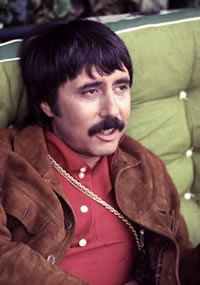
OK. I’ve been postponing this one in hopes of finding my Dino, Desi and Billy record to add to the mix. But, after rummaging through two boxes of neglected vinyl stored away in the guest room, I’ve decided that I must have tossed it or lost it. The theme is Lee Hazlewood. Mustache man. Producer. Music scout. Song-writer. Singer. Hazlewood produced Dino, Desi and Billy, but we can do without it. There are enough other doozies to cook through without Hazelwood’s foray into the world of the proto boy band.
He wrote “These Boots Are Made For Walking.” LH also signed and produced Gram Parson’s pre-country project The International Submarine Band. He had big success with the twang-irrific sounds of Duane Eddy, the Guitar Man. And LH also put out the music of the mysterious Arthur, whose full name was Arthur Lee Harper (not to be confused with the Love frontman). The Haze Master also penned a book about his relations with the Sinatra Family. You can buy it on his web site.
There’s plenty of kitsch value on many of these recordings, but LH is a brilliant producer and songwriter. There’s backwards guitar to rival the Beatles and Hendrix on “Sand,” one of many duets with Nancy. After parting ways with Nancy, Hazlewood moved, where else?, to Sweden. Hence the record Swedish Cowboy which includes the so-silly-it’s-almost-creepy free-love comedown of “Easy and Me.” Hazlewood’s croaky bottomless baritone has an accidental chocolaty quality to it. Some people mention James Earl Jones, but there's also a bit of Fred Flintstone in there too. Understanding Lee Hazlewood is difficult. He's part hokey huckster, and part hipster, sort of like if they had cast Jack Klugman to play in the hippie/cop/detectiveTV series based on Easy Rider.
He was never afraid of overdoing it with production. Or with liner notes, as I've mentioned in the earlier post on Arthur, where Hazlewood gets all oxymoronic and synesthesiac -- "a mind that listens to pictures ... a man who will someday be a child again."
LH has plenty of people championing him. On a 2002 tour of England, Jarvis Cocker and Friends were the openers. A tribute album includes Lambchop and Evan Dando.
Nancy Sinatra - "The City Never Sleeps At Night"
Lee Hazlewood - "Easy and Me"
Lee Hazlewood -- "Run, Boy, Run"
The International Submarine Band -- "Sum Up Broke"
Arthur - To come, perhaps.
Sunday, May 07, 2006
The Moral Rise And Musical Decline Of The Beastie Boys
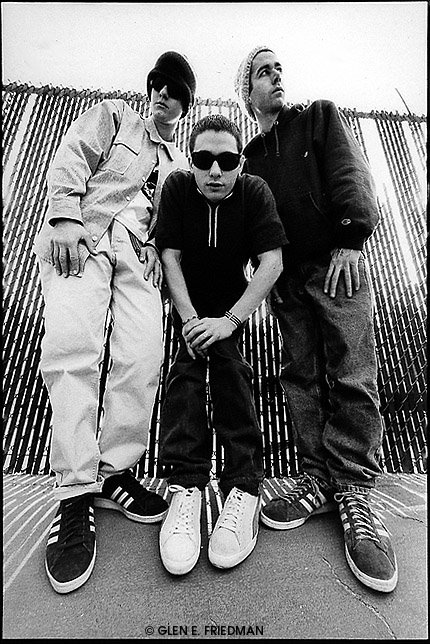
An inverse relationship is a mathematical relationship in which one variable decreases as another rises. For example, there is an inverse relationship between education and unemployment. That is to say that as public education increases, the rate of unemployment decreases. What I submit to you today is this: As the Beastie Boys experienced an increase in morality, they experienced a decrease in quality musical output. So there is an inverse relationship between their morality and their music. Morality is defined as dealing with what is right and what is wrong. So in 1986, when the Beastie Boys released Licensed To Ill, they expressed a low morality in the eyes of many people as they were wrong to revel in the following: binge drinking, pornography, smoking cigarettes, robbing people of their jewelry, taking drugs, shooting people and using women just for sex or household chores.
It was also an incredibly good album. Producer Rick Rubin and the Beasties made the perfect blend of classic rock and hip hop.
I was in high school when this album came out, and I remember thinking the Beastie Boys were our Sex Pistols of the 80‚’s. Like the Pistols, the Beasties toured the South, much to the distress of the Red Staters. I remember reading in the local newspaper that there was a lot of controversy about the tour, which included a huge inflatable cock and lots of sprayed beer. It was some real Malcolm McLaren-style marketing genius to send the Boys to places like Corpus Christi, TX, with a huge bouncing cock and cans of Budweiser, playing this new urban music and advocating all types of gonzo behavior.
So then the Beasties calmed down a little and made the great album Paul’s Boutique in 1989. They still talked about guns, stealing and drugs, but they seemed to get some distance from the pure advocacy of these things by using more pop culture references. So the track High Plains Drifter becomes more like the movie it name checks, where the rappers can take on the persona of a bad guy in a film and not come off like they're bragging about what they do in the real world. Also, the overt sexism is done away with, and it‚’s replaced by a more pleasant fascination and celebration of women.
Then Check Your Head came out in 1992. For me this is their best album, and their last great album. This was the pivot point, where the music was still great, but it also reflected the Buddhist beliefs of Adam Yauch. Here the Beasties meditate and wish for peace between the races in a very stony mix. Somebody said this is the album where they stopped drinking cheap beer and started smoking expensive weed.
Ill Communication came around in 1994. You’ll hear some great tracks on this one, but it seems to run too long. On the upside it sounds like a sequel to Check Your Head. The morality increases here, with songs about destroying handguns, respecting women and respecting the environment. Around this time Adam Yauch writes in Grand Royal magazine that he doesn’t smoke weed anymore.
Then in 1998 Hello Nasty was released. They tried. There’s a good track or two, but mostly it’s too long. Lefty gave me his copy, as he didn‚’t want to deal with the record. I’ve listened to it a few times. I think it’s around this time that the Beasties try to convince Prodigy not to play ‚“Smack My Bitch Up” at a benefit show. Prodigy refuses. A few years later, right after 9/11, the Beasties go on MTV to tell people to calm down and not retaliate against Middle Eastern people on the street. At this point the Beasties are now activists for peace and understanding, willing to use their celebrity status for the good of humankind. It’s been many years since they’ve made a great record.
Then in 2004 To The 5 Boroughs comes out. Another decent try. This time, more minimal, more old school. But aside from a pretty good single, the record just doesn’t work. Even their longtime advocates at Spin magazine are mocking them by this point. I remember opening Spin and seeing a photo of Mike D on stage pointing two index fingers out to the crowd. The caption reads: ‚“Mike D points to the two people who liked To The 5 Boroughs.‚” Ouch.
What this all means I don't know exactly. Good intentions often lead to bad music, but I still haven’t given up on the Boys. At least they didn‚’t write We Are The World.
Beastie Boys - High Plains Drifter
Beastie Boys - Something's Got To Give
Beastie Boys - Sure Shot
Tuesday, May 02, 2006
The Dearest Land Outside of Heaven
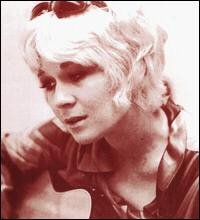
Sammi Smith, who died last year at the age of 61, is known primarily for her definitive version of the Kris Kristofferson classic “Help Me Make It Through The Night.” In their book Heartaches By the Number: Country Music’s 500 Greatest Singles, the writers Bill Friskics-Warren and David Cantwell rank Smith’s rendition of it as the number one country single of all time. What’s strange, then, is that Smith only places two other songs in their top 500. In a genre where artists often cranked out records, more than one a year, Smith maybe wasn’t quite as prolific, consistent or solid as some of her peers. And though she was a part of the Outlaw movement, she certainly never reached the same level of celebrity as other country greats like Patsy Cline, Loretta Lynn or Tammy Wynette. What Sammi Smith could do was to fuse a some sultry soul with all the down-and-out heartache. “Kentucky” came in at number 275 out of 500. Here she’s aided by some studio cats with Muscle Shoals pedigrees. Aside from being one of the great state-title songs, “Kentucky” is sort of like a cross between “Me and Bobby McGee” and Bread’s “Guitar Man” – wandering from town to town, only singing in crappy bars instead of hitchhiking and wearing bandanas and shit. It probably has more in common with Dusty in Memphis than with Coal Miner’s Daughter.

I’ll take this opportunity to share some other good songs about The Hospitality State. The Louvins tune is actually a cover of a Blue Sky Boys song. Oddly enough, the Louvins version shows up on their record Tragic Songs of Real Life. I’m not sure what the tragedy is here.
Sammi Smith – “Kentucky”
The Louvin Brothers – “Kentucky”
My Morning Jacket – “Nashville to Kentucky”
Subscribe to:
Posts (Atom)