Wednesday, September 06, 2006

I'm OK/You're OK


Just about every British rocker of note has, at one time or another, fatally romanticized life in rural America, whether that means idealizing gritty blues joints or getting all cornpone bucolic about life in the country. That’s how you get Mick Jagger’s lame southern accent --"I’m down in Virginia with your cousin Lou" (though some suspect he was just trying to compete with Gram Parsons for Keef’s affection). Or Elton John’s "Country Comfort" (I cherish the thought of Elton and Bernie Taupin chipping in to help some Granny mending her barn.). As with most things, the Kinks had a little more sense. When they went country, they did it via London's bombed-out blue-collar outer fringes.

Muswell Hillbillies is generally pegged as either the beginning of a long slow decline for the Kinks, or maybe as the last gasp of semi-good stuff from the gang. From there it was more music hall nostalgia, brass-heavy silly concept albums and live filler. It wasn't long before Ray Davies was putting beer cans on his head on stage and announcing that he was fucking sick of it all. He'd had it up to there. People often cite "20th Century Man" and "Alcohol" as the songs of interest from Muswell, but I've always loved "Oklahoma USA." It's got a beautiful chorus, but what's great about it is the weird self-aware displaced longing for a Hollywood version of country life in America. It's all Rogers and Hammerstein-induced. It's got the dreamy tinsel town obsession that would show up in "Celluloid Heroes," but instead of getting maudlin about vanished fame, the pathos is soaked up by the sad sacks who trudge through life fantasizing about living in a movie. I've never really known what Ray Davies might mean by the line "If life's for living, what's living for?", but it strikes me as horribly sad all the same.

Ideally I'd be able to offer a version of the Sons of the Pioneers' majestic "The Everlasting Hills of Oklahoma" to go along with this and make it an official OK post.

"Oklahoma USA" -- The Kinks

Monday, September 04, 2006

Marie Provost Did Not Look Her Best

I've become a full-on convert to Nick Lowe's 1978 masterpiece Pure Pop For Now People, an LP that could just as well have been called Pure Pop for Future People. Lowe's ability to meld cheeky irony and effervescent melodies was well ahead of its time. The aim of his wit is true: When David Bowie came out with the album Low in 1977, Lowe put out an EP the same year called Bowi. He also sang a song making fun of the Bay City Rollers in the style of the Bay City Rollers. His friend Elvis Costello borrowed a lot from his sensibility, especially how he inhabits all kinds of pop forms mainly to tell jokes and spin literate yarns. But you can tell he just loves pop, too. It's a pre-Ween schematic.
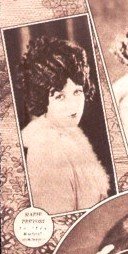
All of which is to direct you to "Marie Provost," a song about a silent screen star gone to seed (see photo, left) who overdoses on quaaludes in her apartment and is later discovered half-eaten by her pet dachshund. Try turning that tale into a power pop hook! And yet just listen to the opening and feel the sensation. It never felt so good to chuckle so blackly.

Marie Provost - Nick Lowe

From the previous post, see also:

Tonight - Nick Lowe

Friday, September 01, 2006

The Ballad of Billy Parham

This summer, when I wasn't reading Cormac McCarthy novels, I was flipping through LPs in the musty records shops of upstate New York. What happened is I started dreaming up a soundtrack for some amalgamated film interpretation of Blood Meridian, All the Pretty Horses, The Crossing and No Country For Old Men. The only real guiding thoughts were border-themed imagery, maybe some laconic, slow-drip mood music for the image of a horsebacked rider slumped on a blood-red horizon, crushed by the existential largeness of the sky, appearing and disappearing in the heat vapors. Tejas. Guns. Death. Blood oaths. Long, hot, empty travel and wandering weirdos in burnt-out adobe villages. And, of course, Mexico. As time went on, I developed more liberal interpretations of what exactly this Cormac-inspired film might be and what music I could use for it. You could consider them suggested tunes for whatever the Coen Brothers might be cooking up for No Country for Old Men. Or perhaps we play them like mini-music videos over lush and dramatic static shots between scenes, a la Lars Von Trier's Breaking the Waves.

For starters, I like the idea of coopting the theme music from a previous Western soundtrack. Cormac lifts Faulkner, we lift Sam Peckinpah's Pat Garrett & Billy the Kid. The tambourine gives us the opening shot of distant spurs on a widescreen desert.

Main Theme (Billy) - Bob Dylan

This is where our rangy 16-year-old protagonist is leaving his home in Tennessee, setting out on his Mexico quest. What's both great and stupid about Charlie Daniels is encapsulated in this line: We were both so happy just being together, like a possum in the woods. Think about that. "We" were a "possum." And, of course, a "possum in the woods" is "happy being together." Huh? (Wait, maybe he's the "possum" and she's the "woods"? Ew.)

Franklin Limestone - Charlie Daniels Band


Our protaganist--I like Billy Parham, from The Crossing--is already getting homesick. So he remembers his favorite Elton John song. Except, he hears it in his head as Rod Stewart. And Ron Wood starts singing this limey-sounding harmony at minute 2:38. Also, for some reason, it sounds like it was recorded on a wax cylinder. Maybe it's the heat.

"Country Comforts" - Rod Stewart


After a few days, he's out on the long, hot plains, heading across "Tejas," the name of this ZZ Top album, circa '76. What I love about this is the sloooow, tear-drop slide solo over the frantic riffage that just kind of gets at something true about Texas: mellow and easy on top, speed-freaky and fucked up under neath.

"Pan Am Highway Blues" - ZZ Top


The synth riff on this B.W. Stevenson song is shocking and misguided in many ways, but it's also perfect for when Billy finds himself in a funky 80s music-video-style retro-futuristic Star Wars cantina scene that our pomo director has conjured up. Kind of like Sophia Coppola using 80s New Wave music for a movie about Marie Antoinette. I love the line, I'll be down at the station sipping coffee at the book rack. The back of the "Lost Feeling" LP shows the pages of Shakespeare's "Twelfth Night," with a pocket watch lying on them. Like G.W., perhaps fellow Texan B.W. had recently read some "Shakespeares."

"Down to the Station" - B.W. Stevenson

Rick Danko. He's kind of what you become at the end of a McCarthy novel: all burnt out from killing and drinking, having spent too many long, freezing nights by a desert fire with some creepy ex-priest speaking in tongues while poking the embers under the stars. This is from his 1977 solo album. Danko decided to spell "New Mexicoe" with an E. I guess that's the mescalin talking (or spelling).

"New Mexicoe" - Rick Danko


I used to listen to the Cowboy Junkies "WHITES OFF EARTH NOW!!" back in high school, so I was delighted to find the album again this summer. (Remember when everyone in college hated white people?) Here, Billy is extremely paranoid that some corrupt Mexican coppers are on his trail. Having crossed the border, he just saved a young Mexican girl from some violent manhandling and now he's trying to escape with her into the darkness by being real. Real. Quiet. Listen. (Yeah, I know it's a Springsteen song, but don't think about New Jersey.)

"State Trooper" - Cowboy Junkies

Billy's repressed romantic feelings are intimated but never articulated. He's too laconic and gentlemanly for that. The next day, he drops the young Mexican girl off in an encampment of wash women, where he eats some beans on tortillas before heading out. He says some kind words to her in Spanish and rides into the valley, south and west.

"Baby Please Don't Go" - Cowboy Junkies

This next song plays immediately after a hideous, ultraviolent murder scene in which Billy has witnessed 19 Comanches get scalped and an unfortunate Mexican railroad worker get his eyeballs sucked out by a psychotic Civil War soldier gone AWOL. Now the band of mercenary killers wants to party. Imagine this song playing over slo-mo images of scary-ass dudes shooting guns in the air and puking. You only use Nick Lowe for irony.

"Tonight" - Nick Lowe


After a few more days on the desert, our Billy meets another white man (who hasn't yet left the earth). Dude named Filbert. He's headed down to get a divorce from his shrewish wife, who is on his trail. He sings a song by firelight and the shadows flicker around his pocked cheeks (he looks vaguely like Burt Bacharach). A little comic relief.

"Mexican Divorce" - Ry Cooder

A month later, our hero/anti-hero comes across a caravan of freaks and meets another woman, a fishnet-clad circus performer from Juarez who's down on her luck and suggests they tie one on with a jug of Mexican wine. "Live a little, buddy," she says. In Spanish.

"Sip the Wine" - Rick Danko

I've already posted this last song before, but I need it for the movie. Billy is feeling the existential dread of being so long alone and in such a grim land of drifters, killers, lost souls, goons, carnival geeks and whores. After a bunch of really grim, tragic shit has happened--Filbert got his assed handed to him by a band of Apache--Billy has seen too much. He's gone to the ends of the earth looking for solace in a cruel world, ever wondering what happened to that Mexican gal, who came back to nurse him back to health during a long fever dream after he was shot in the stomach by the corrupt sheriff (then she ran off with Rick Danko). He also had to kill the ex-priest, who had tried to scalp him for some ransom money for horses Billy stole that originally belonged to his dad back in Franklin Limestone. Now he's back on his horse. Alone. The sky is crushing his tiny, heat-exhausted figure on a widescreen desert. The credits roll. Cue Bonnie Raitt.

"Too Long at the Fair" - Bonnie Raitt

FIN

Wednesday, August 30, 2006

My (Doomed) Morning Jacket Compilation CD


It can't be done. The dark forces that lie within will thwart your plans to make the perfect compilation CD of My Morning Jacket. What are these dark forces? Sony rootkits? iTunes? Fucked up store-bought CDs?

No. I think it's more than that. I think it's the supernatural MMJ Muse who says, "No, my son. Don't do it. You can't fit all their good songs onto one 80 minute CD. They have too many good songs, too many long songs. Don't even try. If you do try, then I will make sure tracks 11-13 will not rip correctly on your computer, nor play on your mortal car stereo."

That's the way it happened to me. I was inspired by their killer performance on Austin City Limits, and I took a shot at putting together a future greatest hits for MMJ. I put an emphasis on the newer rockers and the shorter acoustic-flavored numbers. I just wanted something that would sound good in the car, something I could share with friends who hadn't been introduced to the brilliance of MMJ.

Here's the song list, re-ripped and ready to roll:

1) Anytime
2) Off The Record
3) Gideon
4) Golden
5) One Big Holiday
6) Mahgeetah
7) X-Mas Curtain
8) Wordless Chorus
9) It Beats 4 U
10) Bermuda Highway
11) How Do You Know
12) Lowdown
13) Come Closer
14) They Ran

I know. The Tennessee Fire has been criminally under-represented, etc, etc. I'll have to get started on Volume II now. Wish me luck.

Sunday, August 27, 2006

Miserablism, Canadian Elements, Acid-Damaged Chinoiserie, Time-Warp Face-Melting, and Italian Cantata Abuse

I’m breaking with the anachronic approach normally followed here. As Sam Beckett said, "No one really knows what an ostrich sees in the sand," or something like that. Anyway, here’s some new, recent and forthcoming stuff. All very good, go buy it.

Fading Trails is the new one by Jason Molina and Magnolia Electric Co. Parts of it were recorded by Steve Albini, if you care about stuff like that. But Molina is a master of miserablism, and even more saturated with despair is Molina’s new solo vinyl-only release Let Me Go, Let Me Go, Let Me Go, from which come "It’s Easier Now" and "Alone With the Owl." It’s a beautiful downer. Like Antony and the Johnsons, this stuff can just make you weep and weep, or at least think about weeping. Molina’s songs are short and to the point, skeletal at times. Here he’s whittled his language down to a bare essence, with moonlight, ocean, owls, wolves and horizons populating the songs, giving them the elemental feel of myth. There’s a bit of the melody of "It’s Easier Now" that reminds me of the Carpenters’ "Superstar."

Richard Buckner is another bleak master. His voice has the craggy wind-blown, water-eroded feel of a barren cliff. The singing reminds me of Richard Thompson a little, there are those same micro-fluctuations of pitch on any given syllable, sort of a George Jones effect, via Jay Farrar. I’ve grown to appreciate the way the drums push the songs almost past the tempo where Buckner’s vocals seem to want to keep it. These are from his latest, Meadow. If I’m not mistaken, I remember reading that the guy spent some time in Alberta, which somehow seems to explain everything. The winds sure do blow lonely out there.

The Archie Bronson Outfit explodes generic expectations pretty successfully. The pow-wow beats, the ecstatic non-verbal vocal refrains, the gritty blues slidework, the generally freaked-out feel and the sort of acid-damaged chinoiserie all make me think of Captain Beefheart. But these guys are from London, they’ve been soaking in their art-school post-punk, too.

And while we’re at it, let’s throw one in from the forthcoming Akron/Family disc. Many bands grasp and grope toward the transcendent, but few actually grab hold of the beyond. Here Akron/Family – the bearded ones, the bird-watchers, the sea-chanty backing outfit -- conjure thrift store vision quests, liberal arts satori, they shed what few inhibitions may have remained, they get their Heidegger on. "Blessing Force" travels through worlds of Dark Star-like cosmic riffage, communal group-singing catharsis, Eno-ish egg-head pure realms, free-jazz face-blasting, hocketting pygmy festivities and into dark tunneling vortexes where matter, space and time warp.

And just to clean out the plumbing, we’ll conclude with a little bit of Ennio Morricone, from the two-CD set Crime and Dissonance that came out earlier this year on Ipecac.

"It's Easier Now" - Jason Molina

"Alone With the Owl" - Jason Molina

"Mile" - Richard Buckner

"Window" - Richard Buckner

"Kink" - The Archie Bronson Outfit

"Cuckoo" - The Archie Bronson Outfit

"Blessing Force" - Akron/Family

"Ricreazone Divertita" from Cuore di Mamma - Ennio Morricone

Thursday, August 17, 2006

Sweet Cheese


It’s by no means scientific, but I’ve conducted a little inquiry, using the limited inventory of my brain, and I’ve concluded that Lou Reed’s "Wild Child" contains the best opening line of any song, ever:

"I was talking to Chuck in his Genghis Khan suit and his wizard’s hat."

I’m open to reconsidering this verdict, if any of you have any other contenders.
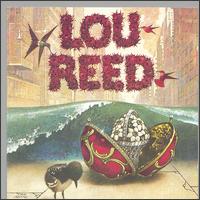
"Wild Child" comes from Lou’s largely disappointing solo debut after the demise of the Velvets. I think Lou holed up in Long Island to work on this one. For evidence of the general wrongheadedness of the record one need only learn that Rick Wakeman and Steve Howe play on it; members of Yes joining members of the Velvet Underground doesn’t make for rock supergroups, it makes for some forbidden depressing chemistry. The record has a number of at-the-time unreleased tunes – "The Ocean," "Lisa Says" and "I Can’t Stand It" – that the VU had already recorded much better versions of. Still, "Wild Child" is a master stroke of early 70s downtown New York late-night sociological reportage, with lines about theater auditions, organic soap, pills, racing cars, suicide and sweet cheese.

"Wild Child" – Lou Reed

Sunday, August 13, 2006

On My Cloud


I wandered lonely as a cloud
That floats on high o'er vales and hills,
When all at once I saw a crowd,
A host, of golden daffodils,
Beside the lake, beneath the trees
Fluttering and dancing in the breeze.

Continuous as the stars that shine
And twinkle on the Milky Way,
They stretched in never-ending line
Along the margin of a bay:
Ten thousand saw I at a glance
Tossing their heads in sprightly dance.

The waves beside them danced, but they
Out-did the sparkling waves in glee: -
A poet could not but be gay
In such a jocund company:
I gazed -and gazed -but little thought
What wealth the show to me had brought.

For oft, when on my couch I lie
In vacant or in pensive mood,
They flash upon that inward eye
Which is the bliss of solitude;
And then my heart with pleasure fills
And dances with the daffodils.

– William Wordsworth


Here are some songs that, as it happens, have a sort of atmospheric, barometric cloud theme running through them. And a few other unrelated tangents are thrown in. Obviously, one could have included "Both Sides Now" and "Off My Cloud" and others, but that's not how we roll.

As Lefty mentioned a while back in his post about Audience, some bands have names that now elude easy detection in the Google Age. Type in “Audience” and, unless you know more about the band – a song, a band member, a record title or label – you’re not likely to have any luck tracking them down in the electro ether. Same with The United States of America, a late-60s avant-psychedelic group of grad students from LA. The band mixed an early ethnomusicological bent with a little John Cage-style uncertainty, electronic experimentation, and some “white collar conservative pointing his plastic finger at me”- variety hippie attitude. The record, recorded in 1967-68 for Columbia, was one of the label’s bigger flops. It was reissued on by Sundazed in 2004 with a bunch of bonus previously unreleased tracks. “Cloud Song” is just beautiful. It’s like futuristic lieder as composed for Woody Allen’s Sleeper. The other USA songs don’t have a cloud theme, but they’re worth a listen, too.

The Clientele are jazzy jangly sleepy English indie rockers. I saw them play in Northampton not too long ago. There may have been a dozen people there. Live, it’s clear that the guitarist has some serious sneaky jazz chops, with all kinds of crazy oddball augmented, nine, seven, diminished and whatever else chord voicings. “House on Fire” is one of the lovelier songs from The Violet Hour, an almost completely beautiful record. It’s hard to think of who to compare them to. Like My Morning Jacket, the Clientele go in for the majestic cathedrals of reverb, but there’s no sour mash. Instead it’s afternoon tea, crisps, some tobacco and perhaps a splash of scotch. At times the Clientele bring to mind early weird stuff by the Kinks. Like “See My Friends” “Strange Effect” and “Fancy.”

“Big Sky,” off of The Kinks are The Village Green Preservation Society, isn’t really about clouds. And it’s not even really about skies. It’s more about an aloof all-knowing god. I always loved the scatter-shot Beefheart-eque drum rolls on this one, the insistent high, one-note drone on the chorus, and the backing vocals.

And one more. “Charm (Over ‘Burundi Cloud’)” from Jon Hassell and Brian Eno’s Possible Musics Fourth World Vol. I.

My laptop doesn't seem to be able to upload pictures to Blogger anymore. That's why I couldn't post cloud paintings by John Constable or a great picture of Chief Red Cloud. Anyone have any suggestions?


“Cloud Song” - The United States of America

“Where Is Yesterday” - The United States of America

“The American Metaphysical Circus” - The United States of America

“House on Fire” The Clientele

“Big Sky” - The Kinks

“Fancy” - The Kinks

“Charm (Over ‘Burundi Cloud’)” – Jon Hassell and Brian Eno

Sunday, August 06, 2006

Beach Music

From Bruce Handy's New York Times review of Catch A Wave, The Rise, Fall and Redemption of the Beach Boys’ Brian Wilson, by Peter Ames Carlin:

But is there really anything “new,” as they say, to say about Wilson and the Beach Boys? Not really, at least on the evidence here — don’t go looking for revisionist theories about Al Jardine being the group’s real genius — though Carlin seems to have spoken to everyone close to Wilson who’s still alive, and some who aren’t. He has also dug up some illuminating new documents and recordings, transcripts of family squabbles, druggy parties and such, that flesh out the story more fully than earlier tellings did.

Well .... not so fast Mr. Handy. I'm not gonna go out on any limbs about Al Jardin, or Mike Love, but on listening to my double CD of Sunflower and Surf's Up I was surprised to realize that a few of my favorite tunes were by Carl or Dennis Wilson or maybe even Bruce Johnston. I had always approached these post-Smiley Smile records by more or less just listening to the tracks by Brian Wilson, but I'm learning now that that was a short-sighted approach. I know, serious Beach Boys fanatics have probably been through all this. But it took me a long time. The band had better luck with their next record, Surf's Up, which featured a few tracks from the abandoned Smile album. Bruce Johnston's "Disney Girls" and Carl's "Feel Flows" are from that one. [You can see Johnston perform "Disney Girls" solo on piano on the second volume of the Old Grey Whistle Test DVDs (far-inferior to the first). I don't understand why the BBC doesn't just released the entire series of this show instead of making questionable anthologizing decisions.]

We learn from Keith Badman's exhaustive and comprehensive The Beach Boys, The Definiteive Dairy of America's Greatest Band on Stage and in the Studio, that Sunflower was the first Beach Boys record on which everyone shared production duties. After having initially been rejected by their record label in February 1970, it was reworked and eventually released in August, but Sunflower went on to be the worst-selling Beach Boys record to date. We also learn that during this time Mike Love, who had been following the instructions of the Maharishi Mahesh Yogi, had grown thin, weak and delusional from an extreme fasting regime (you'll notice that the awful "Student Demonstration Time" from Surf's Up is not inclulded as an example of the BB's unsung genius). As a result, Love had skipped out on a few performances, and Brian Wilson rejoined the band, briefly, for the first steady stage appearances with them since 1964 and the famous breakdown.

Surf's Up did far better than Sunflower, in terms both of sales and critical response, but it's a record about which the Beach Boys had some considerable regrets. In the 1990s, Brian Wilson said it was a "piece of shit."

I learned from Mojo that the surviving members of the Beach Boys put their famous differences and often litigious tendencies aside to gather this summer in celebration of the 40th anniversary of the release of Pet Sounds.When asked if the band had buried its hatchets, long-suffering but still plainly evil and gross Mike Love, a man who obviously hasn't benefited enough from all the meditation and fasting, pointed to his back and said "The hatchets are all buried here."

"Forever" - Beach Boys


"Disney Girls" - Beach Boys


"Feel Flows" - Beach Boys

Sunday, July 23, 2006

Learning to Love the Bomb

If you can, try to recall the time, 20-something years ago. Before hip-hop was the dominant pop cultural force. Before Do the Right Thing. Before Yo! MTV Raps! Before the Beastie Boys. Before LL Cool J had a video. Before Run DMC’s Raising Hell. The direction of rap hadn’t been cemented. The Fat Boys and beat boxing were still where it was at. It was a moment, 1984 or so, when black music in America might have taken a drastically different turn. Instead of tough, street-minded, New York-centric MCs. There was an instant when go-go music -- a percussion-heavy, call-and-response party-chant music out of Washington DC -- had a chance at becoming the definining black good-time music. And there was no bigger go-go band than Trouble Funk.

I remember hearing Trouble Funk’s “Drop the Bomb” on WPEG in Charlotte, North Carolina. I must have been in 8th grade or something, and the first line, with the words “Drop the bomb on the white boy crew,” had actually almost frightened me. I didn’t know then about the bomb as metaphor for earth-shaking grooves. I just thought it was a threat of annihilation. But, even then, it sounded pretty damn good. This might be a song about obliterating me and my kind, but it was hard not to like it.

"Drop the bomb on the white boy crew ... White boy crew now whatcha gonna do?"

A few years earlier I had witnessed what you’d have to call a mini race riot on a bus on the way to our elementary school (we were bused across town from our largely white suburb to Marie G. Davis, an elementary school sandwiched between a large public housing project and a textile mill). Racial tensions had been brewing on the bus (#426) for a while. There was a newly opened, mostly black, small housing project not far from our neighborhood, and so our bus was theoretically integrated. But not really. About a third of the bus was black students from the housing project. They sat in the front, near the black bus driver, probably a high school student. And two thirds of the bus was white kids from the neighborhood. I can’t really remember how it got to the boiling point, but tensions basically erupted one morning when the driver told the kids on the bus to “kick that white boy’s ass” over some comment. It was certainly provoked, because we all had been expecting a fight. I had even brought a knife, a dull little jack knife, to school in anticipation of hostilities. But when a crowd, six or seven maybe, of black kids stormed back to our end of the bus and started whooping on the boy, I didn’t have the nerve to do anything with my little knife. And they really did beat his ass. When the little blast of violent energy passed, Tom Flack, that was his name, stood up, and he had a strange grey puncture wound under his eye, the skin around which had begun to puff up. Someone had stabbed him in the face with a pencil. It really was frightening. I think I may have cried when I was called to the principal’s office to recount the incident.

A year earlier, in fifth grade, I remember we used to bring in music for Friday afternoons. For the last 45 minutes of the day we'd play tunes on the dinky, brown, school-issue turntables. My friends and I brough in Led Zeppelin, Black Sabbath, Jethro Tull and Frank Zappa (we had older brothers) and I remember some of the black kids brought in Sugarhill Gang. I think back on it is a valuable cultural exchange.

But when I heard Trouble Funk, it was just irrefutably funky, with laser-beam bass and zapping effects, heavy heavy percussion grooves, with what sound like Remo Roto-toms approximating some timbales, horns kick in, and the crowd is just going ape-shit and you can tell.

Trouble Funk and go-go music were largely subsumed by rap, which was more aggressive, drum-machine driven and boastful. But when I moved to Japan in 1985 I realized that go-go was huge in Tokyo. Soon I was hearing Trouble Funk samples showing up in Beastie Boys tunes.

"Drop the Bomb" is probably TF's pinnacle, but they had some other golden moments, too. "Pump Me Up," "Let's Get Small" and the Kraftwerkian "Trouble Funk Express" all get the party rocking.

For another alternate percussion-based possible universe, here's the confoundingly funky Timbalada from Brazil. They're not Olodum, the samba group that Paul Simon worked with, but Timbalada famously ripped off a Keith Haring-style body paint look for their cover art, and from the group came Carlinhos Brown, the king of Brazilian samba funk. I used to play the sordu in a samba group at Wesleyan and the bottom would always drop out of the party when we'd get to the little chopped-up slow triplet break after the choruses. It's one of those rare songs whose hook is a drum break.


Trouble Funk -- "Drop the Bomb"

Timbalada -- "Toque Do Timbaleiro"

Saturday, July 15, 2006

The New Animists

It’s good that many of the folks making music today have figured out that sound doesn’t need to be allegorical, one-for-one, realistic in its depiction of the inner state. The kids have tapped into the sonic homeopathic magic. Sometimes quiet is explosive. More than the shrieking, the distortion pedal, the mimed anguish. The big noise can put you to sleep. Could we foresee, in 1994, that free jazz, avant noise, the blues and hippie folk would fuze in some future retro alchemy? No, we couldn’t. Here are two tastes of the new nature-worshiping, Leslie cabinet-spinning animism.

Jackie-O Motherfucker will usually be happy to funnel the unending analog fuzz into your ear. They'll go for the extended wank in a Live at Pompeii or Whitney Biennial insallation mode. But here they get the Native American spirituality out set it to an all-purpose old-time kernal about saddling up a pony. You can feel them conjuring the electicity, pulling weather from the air.

Brightblack Morning Light share the Indian know-how. Main dude's name is Nathan Shineywater, after all. And they've got tunes called "Everybody Daylight," "Fry Bread," "Star Blanket River Child," "All We Have Broken Shines," "Amber Canyon Magik," "Black Feather Wishes Rise," "Come Another Rain Down," and "We Share Our Blanket With the Owl." They perform with a dog on stage. They camp. Black Elk and Chief Seattle must be proud. The thing is, it's like oozing cough-syrup soul-funk. The Fender Rhodes speaks truth. They've got the deep geologic-time patience, waiting until something like minute 6 on one track before trotting out the spongy horns. You'd never think to call this freak folk. But I don't know what you'd come up with instead.

And, because I was driving in the car yesterday listening to Buffy St. Marie's version of Neil Young's "Helpless," and thinking how great it is, I thought I'd add this to my Music of Native Peoples set. I love the Ike-ette style backing vocals, the way she yips and jumps with the melody, the way the song becomes a little more panic-inducing. This comes from her best record, She Used to Wanna Be a Ballerina. She's from Canada. She's backed by Crazy Horse. She was married to Jack Nietsche. And the lettering on the record is done by the same dude who did the lettering for Neil Young's Zuma and Tonight's the Night. So the connection is real.

Finally, something to listen to while you boil your yerba mate and nibble on some quinoa. Some rowdy native music from the mountains of Argentina. This is from a record called Argentina: The Trintonic Music of the North-West on the excellently strange UNESCO collection. Sort of like the Andean version of the Master Musicians of Jajouka.

Jackie-O Motherfucker -- "Hey, Mr. Sky"

Brightblack Morning Light -- "A River Could Be Loved"

Buffy St. Marie -- "Helpless"

Tritonic Music of Argentina's Northwest - "Toque Quebredeno"

- "Contrapunto" (A song for male and female voices)

Sunday, July 09, 2006

Condiment Rock


I’ve never understood why the Latin Playboys are not more famous and more revered than they are. As superband sideprojects, they all had better, or more lucrative things to do, I guess. The Latin Playboys were two dudes from Los Lobos, David Hidalgo and Louie Perez, who teamed up with Tchad Blake and producer Mitchell Froom. It's true, their records weren't entirely coherent or consistent, but that was part of the charm.

The Latin Playboys were masters of the miniature, rarely making a tune over three minutes. They have that lurching, slightly creepy, funny-boot-wearing, hair-slicked-back, Tom Waits, Cuban-Chinese, loco polyglot thing going. They only made two records, both of which have some excellent moments. The music is Tex-Mex roots pastiche threaded with bits of woozy Bollywood synth strings, mambo/funk drum machine patterns, weird Jon Hasselly droning brass, bits of Beck-like mercado-mix, and then at moments it’s like Eric Clapton being blissfully drowned out by the music from a street festival in Juarez, and then they’ll drop in a little Carlos Castenada/Jim Morrison spoken-word vision-questing (you can skip that). It all gets slathered with an admirable layer of retardation.

These are some good ones. The bass line (which is basically all there is) on “Manifold de Amour” is just lovely. “Mustard” seems to be about mustard, one of the better condiments. I love the crippled Congolese guitar line, the clopping drum programming, the sawing fiddle and the flood of mellotron in the middle. “Viva la Raza” is a bonus.

The Latin Playboys – “Manifold de Amour”

The Latin Playboys - “Mustard”

The Latin Playboys - “Viva la Raza”

Wednesday, July 05, 2006

Wind Riders

As I’ve mentioned before, when I told my colleague Alan Bisbort about the old crusty vinyl, record-obsessive, music-dork blog, he was at the office the next week with a stack of musty old LPs that needed a listening to. Among the stash I’ve already posted tunes from the Beau Brummels, Dion, Lindesfarne, Loudon Wainwright III and the Amazing Blondel. But there were so many more oddities and gems that I decided I needed to do a quick clearing of the decks. Here are three more from the Alan Bisbort library.

The Exuma record took a few listens before a worthy tune jumped out at me. And this isn’t really a song. It’s more like a spirit-possession chant/vamp. Exuma is the Obeah Man. The liner notes say this:

“EXUMA – BEYOND THE UNIVERSE – A STAR THAT ONCE LIT MARS. RIDING THE WIND, KISSING THE SAND. WALK IN THE NIGHT WITH THE HOUGAMAN.”

This is gris-gris music, voodoo blues, tourist exotica and hokum all rolled up together. He one ups Dr. John, drops a little Taj Mahal, and even hints at that ecstatic and crazed mystic thing that Cat Stevens sometimes went for. There’s a track on the record called “Junkanoo,” which is an African-derived carnival-type New Year’s street festival in the Bahamas, it’s also a dance from Jamaica with possible ties to stilt and masked dance traditions from Sierra Leone. You can read more about Exuma at AMG.

Next is Pearls Before Swine, which was basically Tom Rapp and whoever joined him. On These Things Too Rapp sings a Dylan song and puts an Auden poem to music. The rhymes on "Man in the Tree" sound a little forced, but Rapp can hold his own next to any contemporary bearded mystic, new energy generation, batik-revivalist.

And then there's McGuinness Flint, third-tier British folk-rock stuff, with just enough Harry Nilsson-ism. This track sounds like some Preservation Act-era Kinks outtake, complete with stumbling lumpy drunk-sounding funereal marching band, undue odd-time sections and lyrics of the I-didn't-have-anything-to-write-about variety. Still, worth a few listens.

Exuma - "Dambala"

Pearls Before Swine - "Man in the Tree"

McGuinness Flint - "Lazy Afternoon"

Sunday, July 02, 2006

The Grinding Water and the Gasping Wind

The internet is really just a device for pursuing one’s desires -- a faster, cheaper and easier way of getting what one wants. But often we don’t really know what we want. Or, rather, we don’t actually want what we want. Or, once we get what we want, we realize that we now want something completely different, something to cleanse our mouths of the lingering taste of the last satisfied longing. The supersession of symptoms. Dante knew all about it. Following your desire could, if all the conditions were right, lead you to the divine, but it was just as likely to get you chained to the burning lake, shouldering boulders for eternity, buried to your chest in molten lead, buffeted by the assailing winds because of an ever-changing heart.

So, if, like me, you ever think that your heart is telling you to go and track down that semi-obscure record of Carl Sandburg singing Flat Rock Ballads. Think on it some more. Or listen to these tracks first.

Sandburg, as you know, was a poet (“The fog comes/on little cat feet”), a Lincoln biographer, and a song-collecting folk archivist (“The American Songbag”). He was also, it turns out, a film critic.
In a recent New York Times review of a new anthology of early American film writing, Clive James said this about the man from Flat Rock:“Sandburg is unreadable today only because of the way he wrote. His prose was bad poetry, like his poetry.”

Durn. That’s cold.

Well, Sandburg was known to pick up a guitar now and again, too (Bob Dylan famously paid a visit to Sandburg at Flat Rock back in 1964 – Sandburg had never heard of Dylan). I had this record, or my friend Chris had this record when we were housemates, and I remember being struck by the weirdness of two tracks – “Eating Goober Peas” and “The Doughnut Man.” (I was surprised to learn when interviewing the former Del Fuego and current children’s music sensation Dan Zanes, who was about to release a record of songs culled from the “American Songbag,”that Zanes had never heard of the “Flat Rock Ballads” record, so I figured it was fairly rare. And a Froogle search proved me right.) I’ve since learned that “Eating Goober Peas” was actually a song allegedly sung by Confederate soldiers during the Civil War (goober peas are peanuts, which served is rations for the troops); the song was also popularized by Burl Ives, and it’s practically like “Row, Row, Row Your Boat” or “Twinkle, Twinkle Little Star” to some people. Whatever, I went to public school.

I used to drive past the exit for Flat Rock on I-26 probably once a month for several years, making trips between Asheville and Charlotte. I’d see the brown state-issued sign for the Carl Sandburg home. But I don’t get to make that trip these days. I decided I had to re-acquire Flat Rock Ballads. So, I got on the internelle and got it. Ten bucks, plus shipping, from a bookstore in Baltimore. As I recall, I parted with the record when I swapped it for a record of Wallace Stevens reading his poems. Or Chris traded, or something. As it turns out, I work in Hartford now, where Stevens lived and worked, and I drive past the places where he walked at lunch time or on his way to the office at the insurance firm.

When I had way too much free time and ample coffee-fueled creative urges, I used to make tape loops of snippets of Stevens reading, and I’d overdub some fake atonal chugging metal riffs played on a de-tuned acoustic guitar, mimicking the phrasing, rhythms and slight changes in pitch from the repeated poetry fragments. It was both a bad and brilliant idea. Kind of funny, kind of interesting and kind of like something an actual insane person would do.

I always loved “The Idea of Order at Key West.” It’s a poem, like many of Stevens’, about the reality of the imagination, of creativity, about how the world we make in our heads, in our songs, is as much a part of the world as the sea and the sun and the sky that inspire us. If you’ve got Audacity, I recommend nabbing a little bit of “It may be that in all her phrases stirred/The grinding water and the gasping wind” and making a loop. It keeps getting better, more darkly musical with each repetition.

I’d been planning to use the theme of “legumes” to unify this whole post. Peanuts are legumes, after all. Beans are legumes. That was to be the logic behind including Charlie Parker doing “Salt Peanuts” and Beans Hambone and El Morrow’s majestically weird “Beans” (also included is “Jimbo Jambo Land” by Shorty Godwin, both from the excellent two-disc set Good For What Ails You, a collection of music from the medicine shows on Old Hat records.) I’m sure there’s a whole record’s worth of legume songs. We’ll leave it to Bob Dylan and the folks at Theme Time Radio to explore.


Carl Sandburg – “Eating Goober Peas”


Carl Sanburg - “The Doughnut Man”


Wallace Stevens – “The Idea of Order at Key West


Beans Hambone and El Morrow - “Beans”


Shorty Godwin - “Jimbo Jambo Land”


Charlie Parker – “Salted Peanuts”

Saturday, July 01, 2006


Giving Good Weight - More Reggae

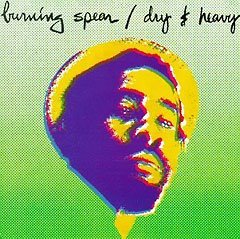
As with most reggae, if you’re not sure what the song’s about, it’s always safe to assume that the subject is weed. That’s how it is with Burning Spear’s "Dry and Heavy." Probably something to do with weighing a bag of dope. Or maybe it’s about the weather. But then there’s a part about "school days." And another line sounds like "some of them have an electric ion." The lyrics really are a Rasta Rorschach – sometimes I think he’s singing something about a "tugboat," too. Who knows what to make of that? It’s all top-secret Marcus Garvey code-talking. It may be so eternally rewarding because of the chronic inscrutability.

Check for the aggressive asymmetric cowbell assault at the beginning, the doughy, extruded horn toots and the outsider-art vocal harmonies. The more I listen to the little snare roll that starts the track the more am I incapacitated by its brilliance.

Burning Spear -- "Dry and Heavy"

The Days of Wine and Vinyl

I sometimes like to pretend that a song recorded 30-odd years ago was actually recorded in the last six months. Given that so many freak folksters and retro-whozits sound so authentically like people you might have heard in 1972, the reverse can also be true, right? For instance: What if Bobby Charles were a 19-year-old indie folkster who posted "Small Town Talk" on MySpace five minutes ago? You'd probably be pretty impressed! You might also believe it. Something about the way the organ pulses and shadows the vocal melody almost sounds like the Beta Band to me.

The musical time-space illusion is doubly interesting considering Bobby Charles wasn't some runaway 60s moonbeam by the time he recorded this. He'd been rocking for 17 years, having penned the golden oldie "See You Later, Alligator," which became a hit for Bill Haley back in '58. But then the groovy times came and Bobby drifted invariably to Woodstock, New York, where he got in with the Band, specifically Rick Danko. Let's just say he spent some time in the hammock out back and whatever wasn't packed in tight when he arrived got packed in nice and tight. "Small Town Talk" was co-written by Danko with Dr. John on the organ and it has all the urgency of a sloth with a bong in its paws. I got this off a Warner Records compilation called The Days of Wine and Vinyl, a showcase of artists on the label and its smaller subsidiaries. This one is from the Bearsville label, which must have been for all the wandering rustics who showed up on Danko's door mat.

From this same comp, you can also try the MySpace mind trick with America's "Head and Heart." Again, the minimilist organ/guitar element gives it a quasi-modern sound, but the vocals are probably too 70s AM sweet and "Horse with No Name"-like to keep up the illusion for long. For some reason, none of the neo-folkies likes to sing quite as prettily as anybody in the 1968 to 1972 period. Why is that? It's like crystalline male harmonies are somehow bogus now. Or maybe just too much effort.

There's a few other gems off this compilation, each of interest for different reasons. I've promised to hold off on any expository blogging on Bonnie Raitt -- that's Dewey Dell territory -- but this tune, "Too Long at the Fair," should be absorbed and appreciated as a teaser to more sweet SoCal country-blues to come. Dewey, do your magic.

"Virginia Plain" is a sensational Roxy Music song, first heard by me on the soundtrack to the wrist-slashingly tragic Lars Von Trier film, Breaking the Waves. The whole thing quivers like a gay jelly fish with Elvis's severed hand inside it. I'm not sure why that image came to mind, but there it is. (Sorry for the sloppy editing at the end, that's 3 seconds of slide guitar by Norman Greenbaum, the "Spirit in the Sky" guy.)

Finally, this early David Bowie song, "Can't Help Thinking About Me," has a peculiar Kinks quality to it, perhaps because of the story-like lyrics, the sad tale of a guy who "blackened the family name." He never says what said name-blackening incident is -- drugs? gayness? playing drug-and-gay-promoting rock music on the Village Green? -- but he's getting booted into the cold, cruel world of glam rocking. You'd never ever mistake a guy who's feeling guilty about thinking about himself with anybody on MySpace, so don't bother pretending this isn't from the 1966.

Friday, June 30, 2006

Pride and Shame


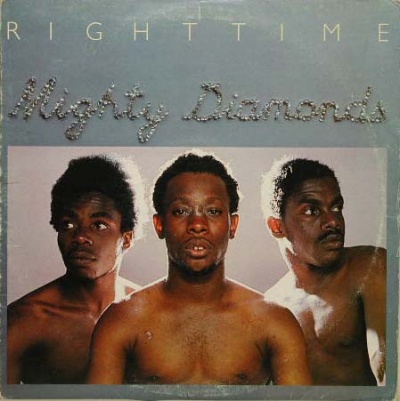
I first heard the reggae vocal trio The Mighty Diamonds on a dub record called Planet Mars Dub, which has some compelling cover art of stereo speakers flying like UFOs through the sky and visiting some red planet Rastafarians -- space travel via ganja rocketry, I guess. A consortium of producers known as The Icebreakers use the Diamonds' sweet harmonic cooing as a just another layer in the sonic palette, which turns out to be a strange and wonderful choice. Listen to "Dub With Garvey," at how they ignore the actual lyrical content and just let odd vocal fragments come echoing through the smokey haze.

And what gorgeous vocal fragments! So I was thrilled last week to find the first Mighty Diamonds LP, Right Time, from 1976. If you loved the soulful zealotry of the first Wailers album, you'll love these guys, all jacked up on Jah and reefer, sweetening every syllable with Motown. On the title track, "Right Time," Robbie Shakespeare's talking bass keeps murmuring subliminal profundity as a counterpoint to all the high harmonies. The blissed-out Biblical prophecies are skunkified by the bottom end; it's the riddim land that was Promised.

The Diamonds are wearing green fatigues and red berets on the back of the album, complete with the requisite army-issued spliff. The apocoalyptic religious stuff is interesting, yes, but the vocals really bloom when they focus on more worldly pursuits, namely girls. "Shame and Pride" gives lead singer Donald "Tabby" Shaw his moment to wax Delphonic about his school yard sweetheart, drawing out some extra honey in the falsetto. I imagine this courtship happening in some underfunded British-run primary school in Kingston where they wore white shirts and ties but no shoes.

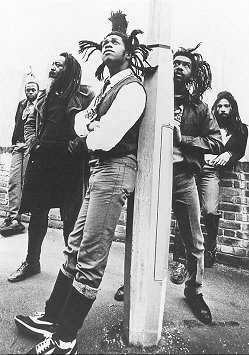
Which reminds me of a little of the outfit worn in this photo. I love the leg warmers! I can never tell if I love Steele Pulse's "Roller Skates" because it's qualitatively good or because I allowed it into my life during an emotionally vulnerable time in high school. The synthesizers must have seemed like a good idea back then, but they weren't. And using one in place of a bass is nearly heretical. That said, the whole storyline of this song is so patently absurd we've already entered a funhouse world in which a rich guy smoking a cigar in a limo decides to pull over and steal a boom box from a Rasta man on roller skates. Even as allegory for oppression, this is just retarded, the kind of crap you'd come up with if you were really, really ... high. But I want to believe the whole is greater than the sum of its parts here. Plus, you can have a lot of fun imagining the early 80s music video for this song as you listen. As you imagineer this thing, I would suggest similar production values to this .38 Special video for "Back Where You Belong."

Alas, I can't not mention "Steppin' Out" . There's some kind of J.C. Penney TV commercial flair to this song that really makes me question my own judgment. Open Sesame, here comes Rastaman! He sounds like he's wearing a Dr. Seuss hat and has gold teeth. What's funny is both of these songs are on the 1984 record called Earth Crisis, with the forbidding cover painting of a world gone mad with Reagan, the Pope and nukes. Merciful Fate could have used this album cover. Well, these guys were able to hold two opposing ideas in their heads at the same time, which is probably why they're still kicking it, hooking up with Damian "Jr. Gong" Marley and playing Bonnaroo.

By the way, let's not forget the hair. Splendid.

Tuesday, June 27, 2006

Pack-It-In Paradigm, Pt. 2: Way of the Hippie

The sun finally came back after three days of intense rain, the creeks and rivers having swelled their banks and washed out nearby route 212 for a spell. Apparently some of the locals were holed up at the Bear Cafe last night till midnight, drinking beers at the bar, waiting for the cops to open up the road again so they could drive home. That's what the aging hippie in the Hawaiian shirt said at the organic food stand this morning, while getting his java and New York Times.

Yes, we finally did it. We packed it in, as we'd hoped we would. For all of June, we've lived far from the employment-industrial complex of New York, near the village of Woodstock, where three long-ago days of rain-drenched hippie music have left in their wake a strip of incense-fumagated tie-dye shops and a smattering of weatherbeaten 60s dudes (now in their 60s) who live in the woods out of backpacks and occasionally stand on the side of 212 mumbling their own mysterious monologues, poking at dead birds with their walking sticks. They just stare at you when you wave.

The neighborhoods tucked back in the woods resemble those in Marin County, little 1920s bungalows with homegrown additions added in the 1970s (retrofitted glass domes, triangular windows), giving them the look of adult tree houses or hippie forts where some long-forgotten acid test or another took place. Christmas lights are popular year-round adornments. It's also what you'd expect, Volvos and overpriced organic food, silver-haired witchy women in purple peasant dresses and Guatamalan vests. But you also meet guys like Bill, our neighbor, a former Manhattanite in his late 50s who left for the rural life eight years ago. Last night he was walking his dog in the rain, smoking a hand-rolled cigaratte and watching our flooded local brook gush and gurgle like a Grand rapid. As we'd stopped to chat from our car, his smile was as warm and welcoming as any you'll find anywhere, his beatific face taking on a vaguely Native-American tincture. "We left and we never looked back," he says, flicking his ash, water drizzling down his matted hair. "Come back soon." He seemed to mean it.

Question: Could time spent in the woods crack our citified veneer and reveal the dirty hippie within? Rigorously-obtained data tells us it can. In the last month, I've barely bathed. I no longer wear underwear. I've grown a passable beard. Our calendars clear as the sky, we just sit here, gazing at the woods, listening to birds, breathing. We read books. We drink wine. We play guitar. We sing:

Gillian Welch's "Summer Evening"

"Paul's Song" by M. Ward

The Louvin Brothers' "The Christian Life"

Bobby D.'s "Oh Sister"

We play Bonnie Prince Billy's "A Beast for Thee" on the car stereo because the guitar part is too hard for me.

At night, we watch the wild smear of stars materialize in the big top overhead. You forget about those in the city -- and I mean totally and completely forget. Here, you breathe them back in like the homiest hometown you've ever returned to. Here's a recording of the babbling brook we hear while lying in the grass looking at them. Imagine fireflies dotting the darkness under the overhanging trees (also: adjust your volume DOWN at first).

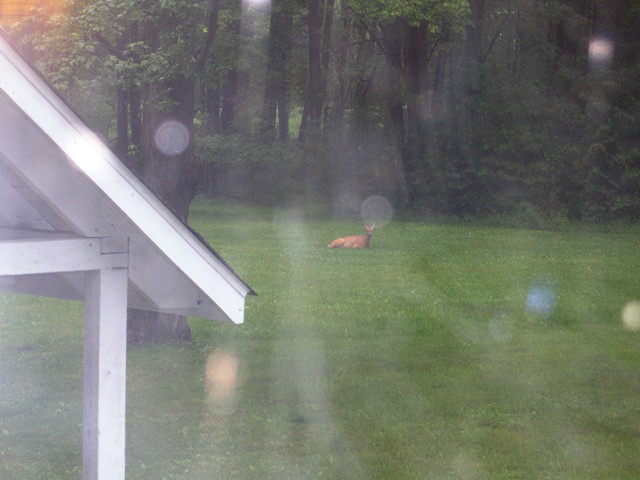
Some days, we drive down remote dirt roads and find bright orange salamanders wriggling in creek beds. We watch the white-tailed deer and its spotted fawn nibbling in the back yard, wonder at the excitable finch pecking at our window like it wants to come in, chase the squirrel off the bird feeder every morning. You can sure as hell get used to it. (Above, that's a picture of a sleeping deer on the lawn here, as seen through a spider web in the window.)

We go hiking in the woods, down long, winding trails, where whole primeval ampitheatres of forest open up like mystical, open-air meditation chambers, one after another, one dark and dense, another light and airy, some wet, some dry, endlessly unfolding as you walk and breathe, eventually setting the internal sun dial you forgot you had back to zero: the beginning, the end.

On a Sunday, a young fella hiking back down the trail from Mt. Tremper wearing a bright tie-dye, his eye-lids pink, mouth bent in a stoned grin, tells us he saw a black bear up there "standing not fifteen feet away from me." It ran away, he says, but we do a lot of loud clapping on the way up, for good measure. It starts raining hard on our way down, and we gingerly hop-scotch the wet rocks, our clothes heavy, hair matted, sheets of water pouring off the dark canopies above in a steady, wet roar. When we get to our car, we're waterlogged and primitive, grinning like idiots. We dump our clothes in the trunk and drive home naked. Once there, Dewey Dell starts a crackling fire, I pour a glass of Kentucky bourbon (Bulleit, highly recommended) and I fall asleep reading Cormac McCarthy.

Later, I learn the three guitar chords to "Light Green Leaves" by Little Wings (C-G-Fmajor7) and we sing the interlocking lyrics together.

Light green leaves
(Beneath your windshield wipers whip around)
From the trees
(You comb your hair and walk back into town)
Traffic breathes
(The same breath that I breathe when I'm around)
And it seems
(We best enjoy them before they turn brown).

Light green leaves
(Like feathers on a bird that's standing still)
From the trees
(They flock upon the branches and they wilt)
Never leave
(As long as they're alive when they are found)
And it seems
(They're hanging in the trees but soon fall down).

Light green leaves ...


Tomorrow, it's back to the city, where surely the inner sun dial will crank back to ten and all thing's peaceful and mystified will be sobered by the daily warp and woof of the capital markets. I'll always have Kyle Field to keep me in the mystic loop. And fear not, my fronds, I've also got souvenirs, including a pile of LPs I've picked up in the sticks, some of which can surely summon the old spirit. I've even got an album of Peyote Songs by a peculiar offshoot of the Sioux tribe, recorded live during a mystical psychedelic rite. There's also some early ZZ Top I'm excited to lay on the people. Where there is vinyl, there is hope, I hope. Now I just need my turntable, a razor and a bar of soap.

Sunday, June 25, 2006

Rolling Down Hill


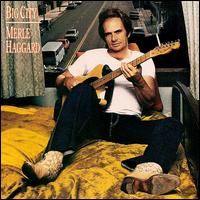
I’ve always been a fan of the Jeremiad. The Golden Ages are long gone. Everything’s in decline. It’s clear. Why not come out and admit it? There’s no one better at bemoaning the state of things than Merle Haggard. And no song encapsulates Merle’s the-world-has-gone-to-hell outlook better than “Are the Good Times Really Over?”

The first time I heard it I was driving my 83 Honda Accord up the mountain toward Asheville, North Carolina on I-26. The car didn’t have a tape deck, and only the AM radio worked. This limited your options. But you’d get some good syndicated oldies stuff – “Hubbard’s Cupboard” from Chicago; they’d play the Association and Herb Alpert and Sinatra and Glen Campbell all together. And every once in a while you’d hear some wonderfully apocalyptic preaching, some good church singing and decent country.

Listen for the ominous, fog-horn low-notes; Merle’s tooth-baring pronunciation of “Chevy” (shivy); the cheap word play; the implication that microwaves, Elvis, the Beatles and Nixon all brought ruin to America.

Seeing the record sleeve on a footrest, my wife said “Did you buy a Warren Beatty record? Because if you did, we’re gonna have to have a talk.”


Merle Haggard – “Are the Good Times Really Over?”

Friday, June 23, 2006

The Manichaean Candidates

From All The King’s Men. Willie Stark, the corrupt (but essentially good) governor is addressing Adam Stanton, the young idealistic patrician doctor.

“You can’t inherit [plain, simple goodness] from anybody. You got to make it, Doc. If you want it. And you got to make it out of badness. Badness. And you know why, Doc?” He raised his bulk up in the broken-down wreck of an overstuffed chair he was in, and leaned, forward, his hands on his knees, elbows cocked out, his head out-thrust and the hair coming down to his eyes, and stared into Adam’s face. “Out of badness,” he repeated. “And you know why? Because there isn’t anything else to make it out of.”

I heeeeaared that.

Here are two bands that took the badness and made good.

It’s not exactly overwhelming praise to say that a record reminds you of the Grateful Dead’s “Blues For Allah,” an album that marked the Dead’s studio slide into delusional disco, symphonic frippery, distended suites and a generally soggy sound. Still, that’s what the Court and Spark’s “Hearts” reminds me of. There are the same meandering baked quasi-fusionistic soundtrack-worthy instrumentals. But, like “Blues For Allah” (and way more frequently) occasional moments of brilliance force you to stop shaking your head in bemused derision. The Court and Spark are songwriters of the MFA school; there are clever narrative nuggets, odd bits of dialogue, and a general feeling of smarts at work. “Let’s Get High” is a good example. Check out the sort of subverted reggae of the keyboard pulse and the Jacques Cousteau guitar effects. I also love that you can always count on the weed heads to know when and when not to use the accusative case.

And then there’s Priestess. Entirely unrelated except that I think both of their records came out in the past month or so. And somehow, too, they transmute an essential wrong (pop metal) into good. After listening to the new Wolfmother, Ladyhawk and this, a coworker commented that there was some sort of “White Goddess” thing going on with bands these days. Priestess is from Montreal and they have got persuasively catchy and explosive pop-metal choruses. They make me think of the Darkness, minus the codpieces, the bad teeth and the irony. “Two Kids” won me over because there’s a slight “River’s Edge” and “Uncle Tom’s Cabin” factor to it. The singer can do Diamond Dave and the band can do Motorhead.


The Court and Spark – “Let’s Get High”

The Court and Spark on MySpace


Priestess – “Two Kids”

Priestess on MySpace

Tuesday, June 13, 2006

The Real vs. the Possible, Part 1: The Other Neil


Neil Young is a player who has recently made his impression felt once again, in a familiar though not ineffective manner. “I’m as predictable as a Holiday Inn” was a favorite quote from his 2005 Time interview. In the meantime, I’ve been fleshing out my collection with recordings I had missed for one reason or another. Though the heated fight to get Reprise Records to release Time Fades Away as a CD rages on, the 'used bin' at a major online dealer was admittedly a good place to get some of my other cavities filled (several months ago, after a few clicks, I caught up with 6 or 7 awesome N.Y. discs for about $45 all told).

Though I haven’t bothered to track it down, Neil supposedly once appeared on a National Lampoon list of “Ten People Dolphins are Definitely Smarter Than.” This collegiate jab notwithstanding, (and as milk-and-cookies as it sounds) musically I often feel like the Neil version of a kindergarten platitude: everything I needed to know about music I learned from Neil Young. How to rock, how to love, how one may indeed stretch limited technique to create grand expressions, that country music is cool, that it’s o.k. to change your mind about things, and so much more.

There are a lot of ostensibly independent-minded hippie geeks out there that share my general sentiment for the Old Man, but who have imposed a literal, historical set of expectations on their idol. This divide came to my attention when I caught comments on a popular Neil fan blog to the effect that the album Prairie Wind was “Neil Young Lite.” Sad for me to think I have anything emotionally-in-common with the Crusties that just want another Zuma, another Tonight’s the Night, another After the Goldrush, basically another bit of the collective wax that has fixed The True Neil into his proper place in the heavens. What would be the point for the living artist or the active listener? Granted, Neil can be counted on to strike the rock’n’roll anvil every 5 years or so—if only because it feels so damn good. But wouldn’t you be similarly compelled if you had a band like Crazy Horse?

When you’re twelve, the morse code rock of “Cowgirl in the Sand” and “Cinnamon Girl” are enough. A true musical archetype is a difficult thing to form, especially in a world cluttered with mere entertainment, and Neil managed to achieve one at a tender age. But my admiration over the long haul of witnessing his meandering and varied career has more to do with Neil’s ability to blindly lunge into new or atypical territory with no intention of answering to an existing body of work (remember this was the guy David Geffen sued for $1M for producing ‘uncharacteristic material’ in the mid-80s).

While many artists struggle with a dichotomy between the “reality” (either really real or simply subscribed to) of their own sensibilities and the other possibilities they see and imagine, Neil is able to bring some of these roads-not-taken back to us as listenable artifacts without losing a perceptible artistic self in the process. The contrast between Neil and pal Bob Dylan in this regard is stark, in that the latter has, by his own covert admissions, spent the same 40 years striving to really become the artistic personage he only imagined or projected during his years of creative adolescence.

Some of the Canadian's 'possibilities' can first come across as mediocre ideas, or even weak performances. But give Mr. Disappointment (from 2002's Are You Passionate?) half a dozen listens in different settings or states of mind. The session, for those unfamiliar, teams Neil up with old pals Booker T and Duck Dunn (of MG's fame) to do a fried-out R & B record that works like a plate of Memphis ribs and a couple of beers. This bizarre take on the hallowed subgenre of spoken lyric songs and the overall texture of the mix form a singular musical place that starts out kind of cornball, to say the least. The fumbling guitar lines between verses say all they need to (perhaps: that in life’s travails, some of us are disappointed, some gratified), and there’s something about the voice of Disappointment that reminds me a little of Tricky Dick himself (another legendary Neil Young spiritual nemesis), a resemblance helping to drive home a bittersweet feeling that would be hard to convey on a less intuitive level.

From another place entirely comes Misfits, a tune which the original Rolling Stone review of 1985’s Old Ways called “as strange as a meteor falling on the farm.” I guess the Crusties might get away with saying this song is simply another parable ala “After the Goldrush” or “Ride My Llama,” but yes, that’s Waylon Jennings on BVs, and probably the only song on any purportedly ‘country’ album ever recorded that mentions either a space station or Mohammad Ali (word to Mr. Poncho for the boxing riffs, although I'm not sure if there's a genuine sports metaphor here). I keep trying to imagine a song stylist that could make a living delivering tunes of this sort, one after another (I am thinking here of the Johnny Cash interview on NPR’s Fresh Air in which Cash explained “I’m not a singer, I’m a song stylist”). Roy Orbison may have been the only rocker to have actually given it a fighting chance in his own more elegant style. But "Misfits" is a masterpiece of a genre that doesn’t exist to my knowledge, other than in the minds of the believers. Gotta love the strings. For a moment, the possible prevails over the known facts—Crosby, Stills and who?

My last example was actually released as a promotional CD single for the 1996 album Broken Arrow, and definitely falls into the lower-than-porpoise intelligence category. I am trying to imagine the DJ intro: "Neil and those Crazy Horse boys are really setting the airwaves on fire with this one, a hoppin' little number called This Town!" Ponytailed, paunchy, and strangely preadolescent, the track evokes a sense of place that I feel I can personally can relate to, living in an asphalt-dominated ‘New South’ city, but only paints around the edges of a discernable picture. This could be a garage band’s first recording but, as it happens, comes here from a 30-year veteran and Rock Hall of Famer. A younger man might care to give a few more concrete details . . .

The lesson of Neil Young in these and other instances is that sincerity in the pursuit can take an artist a long way toward realizing possibilities beyond the creative visage set forth in hallmark moments. Whether it is agility of mind, faith in the subconscious, or barrels of homegrown doobage, something is present that allows the seeker to forget himself long enough to make work that reaches toward an as-yet-undefined strain of self.

Meanwhile, the position of many critics and fans takes as given that we all know who The Real Neil is by the moments that forged the legend in the first place. Yet with the pins in different spots, the map could change entirely. In art and life, ‘the real’ is sometimes simply a collection of that series or set of possibilities we repeatedly prefer over others. Our moments of forgetting these preferences may be, for some of us, our few fleeting glimpses of true freedom.
Saturday, June 10, 2006

I Did Wot I 'Ad Ta Do!


It’s not a good idea to blog about work. But let’s say for the sake of argument that if I recently quit my job of 7 years I might be feeling a little reflective. I might be relieved not to have to look at the big piles of work on my desk. I might miss the camaraderie. I might be proud of the fact that I walked in the door expecting a 3 week data entry gig as a temp and I walked out with a new career in hand. I might be happy my new job pays better. If I did leave my job, I might offer you these songs on the topic of leavings and endings:

Before They Make Me Run – Steve Earle/Supersuckers

My Way – Sid Vicious

Summerland – Everclear

Please Don’t Talk About Me When I’m Gone – Abbey Lincoln

Goodbye.

Wednesday, June 07, 2006

Leopold Bloom's Skittish Approach

Cemetery tunes are ornery to execute, and often aren’t as difficult to digest as they should be, but even a cursory listen to Sunn O)))’s "Candlegoat” from their 2005 release, Black One, should do the death trick for us nicely. Lyrics from Mayhem are quoted as a summons: Mayhem's singer Euronymous was killed in 1993 by Varg Vikernes of Burzum. Low-end manifestations in this piece are likely to invoke uneasy funereal postures and the incoherence of mortality. At the least they’ll inspire intestinal loosening. The gaseous intro to “Candlegoat” is faux ambient when sonic waves begin to alter the chemistry of the listening space and black wooly worms as long as hairbrushes appear outside the door. If you find yourself taking the ritual seriously, make sure your loved ones are out of town and any hatchets are locked away in the garage or woodshed. However, in actual swine life, you know these guys would be fun to eat corn dogs with while watching Barry Lyndon, and this is probably superb music to fly a small engine plane to as you soar above a fried desert landscape, hollering into the wind the law of Austin Osman Spare, looking for “that party” at a Caliph’s palace. Choronzon awaits.

Next we encounter the devilish Serbian trumpets of Boban Marković Orkestar doing "Vlasinka", from 2000’s Srce Cigansko (Heart of Gypsy). I think the underlying thump juice on this tune is as unbelievably organ shifting as Sunn O))), but swarthy fuckers getting ready to embark on a midnight vodka run (deer blades in belts) while their gals pile out of the house onto the porch to watch them go, waving silk handkerchiefs, is the Shiznit. Don’t drink too much coffee!

This cut will definitely inspire grafts of wood needed to sculpt human stumps, and it refuses to allow a handhold to escape the cliffs of sedentary thought...from 1930-1933, Harry Partch recorded the text from Shigeyoshi Obata: The Works of Li Po, the Chinese Poet, and who knows how many celestial trains he had to ride before he finished. As a composer, Partch catapulted microtonal branches after early emanations (also laden with the Book of Psalms). “A Dream” is taken from The Seventeen Lyrics of Li Po, released in 1995 on Tzadik, and was recorded on February 29, 1932. All is One on the climb to the mountains of the sky: “How can I stoop obsequiously and serve the Mighty Ones? It stifles my soul.” Shadoobie. I often pander to the slopes of my raising on the Appalachian starvation diet.

“For Today I Am a Boy” is from Antony and the Johnsons’ 2005 album I Am a Bird Now and suffices for the song we knew we needed when life was blessed with goodness and there was nowhere to turn but the skies, and mortal rains didn’t come like we thought they should. What is delicate is in us all and favors no one: Molly.

Hasil Adkins is the maestro of rocking thighs, and we only need to sample one of his early grumplets to ascertain how jelly things can go. For summertime moves, “Teeny Weenie Waddy Kiss” is from his mid-50s LP Out to Hunch and will get any Southern girl you know to confess belief in some ulterior and baneful type of ‘crunk’—just don’t get her too privy to his tunes about cut-off heads. A good buddy of mine always tells a story about Hasil waiting out in his car until it was his time to go on stage, so stacked up on the winds of fate that nothing mattered to him. With patience be blessed.

While we thumb back through Ulysses (June 16!), in the elder regions there is this scrap of mental porridge (Psychic TV): “Base Metal (remix).” Let us cable Leopold the Jew as we thunkingstock our days. We can be all cock-a-hoop about our modern craze for sound. And then there’s also Pollard’s way, the fever of the routine, our snake that hides: “How’s My Drinking.” If we weren’t guided somehow who would forgive us anyway? What is the word of days that might transmogrify our beings? Feeling, I tell you.

And finally we reach the end of this garble wheel, the black action that we started, but with a warrior’s amplifier set in our hearts. High on Fire recorded Blessed Black Wings very yesterday but I have poured over “Brothers in the Wind.” As it pertains to our burnt norbs, the energy is palpable as a battleaxe turd. For lost brothers we are now able, through an axis of perpetual slaughter, to contact and beat them to death with our lamb love...on and on and on and on. Played in decibels reserved for an evening of blue inebriation, it’s almost summer. Ain't James Joyce coming for some golf shirts, sumbitch? Tighten up.

Tuesday, June 06, 2006

Sweet Scientists

Where would we be without the sporting metaphor? No photo finish, no fumbles, no hitting one out of the park, no playing against the clock, no stiff-arming. The appreciation of competive sports is -- similar to the appreciation of cigars, fly fishing, internal combustion engines, and Civil War history -- some sort of deeply male activity. And there's probably no sport more thoroughly fouled up with testosterone stink than boxing. As it happens, boxing also seems to be where we get the most sporting metaphors -- against the ropes, saved by the bell, sucker punch, below the belt, down for the count, and, of course, the knockout.

David Remnick has written a couple of excellent pieces on boxing for the New Yorker. I was reading the Mike Tyson piece from Reporting, Remnick's new book of collected writings from the magazine. In it he mentions that during his prison time Tyson had become something of a history buff. Hannibal was one of the figures Tyson took an interest in. "He rode elephants through Cartilage," Tyson told Remnick. There's also a great explanation by one of Tyson's trainers of the whole Roman, bread and circus component of boxing.

"People are full of shit. They want to see something dark," Tyson's former trainer Teddy Atlas told Remnick. "People want to feel close to it and in on it, but, of course, only from the distance of their suburban homes. They want to have the benfeit of comfort m security, safety, respect, and at the same time the privilege of watching something out of contril - even promote it being out of control -- as long as we ca be secure the we're not accountable for it. With Tyson, the dark thing was always the aniticipation that someone was going to get knocked out. ... But we wanted to believe that the monster was also a nice kid. We wanted to believe that Mike Tyson was an American story: the kid who grows up in the horrible ghetto and the converts that dark power into a good cause, into boxing. But then the story takes a turn. The dark side overwhelms him. He's cynical, he's out of control. And now the story is even better. It's like a double feature now, like you're getting Heidi and Godzilla at the same time."

He's right. We want to see some motherfuckers thrown to the lions. We want blood to flow. We think of life as combat and struggle. Destructive, explosive violence -- even better if it's controlled in a ring -- somehow confirms our ideas about the nature of things. But brute force isn't always the way to win -- poetry, finesse and endurence all come into play. I guess the same is true with rock and pop: volatile emotions are let loose -- briefly, for, say, 2 minutes and 45 seconds -- and then resolved, harnessed, put back in the bottle. Distortion, electricity, operatic singing, martial drum beats, it's all a kind of chaos that gets controlled by form. The compositional emulation of the male orgasm, set to wax.

Taking inspiration from Bob Dylan's Theme Time Radio show, which you can hear at White Man Stew, I've put together a little thematic sampling of pugilistic musical favorites.

I think it was Greil Marcus who famously asked "What is this shit?" about Dylan's monumentally offputting Self Portrait record, from which the following track comes. Obviously, including Dylan's transcendantly horrendous version of the Paul Simon song "The Boxer" serves two purposes: It justifies not including the Simon and Garfunkle version and it also allows for exclusion of Dylan's most famous boxing song, "The Hurricane," a great song, but one that you can hear elsewhere, occasionally on classic rock radio or even better, in the scene in Dazed in Confused where Mathew McConoughey's character delivers the famous lines "high school girls -- I love 'em -- I keep getting older, and they keep staying the same age."

Dylan's version of "The Boxer" is really a marvel -- you can almost see the executives at Columbia Records listening to this stuff as their heads smolder and then finally explode. Dylan has never been very good at harmonizing -- listen to some of his stuff with Joan Baez (not entirely his fault) or listen to "Girl From the North Country". Here, he ups the ante by harmonizing with himself. One of his vocal tracks loosely follows the original melody while the other wanders, darts and ducks, maddeningly. It's almost like he's just pissing in the wind and calling everyone over to take a look at his soaked trousers. Then again, there's the other possibility that
it's some sort of veiled put down of Paul Simon. Unlikely, I know, but I remember when Lefty and I saw the two on a double bill at Madison Square Garden in the summer of 2000; though they sort of honored each other a bit, from the stage Dylan seemed to exude a contempt.

Obviously, a batch of boxing music probably should include the theme music from Rocky (but you all know that one), and I thought about putting the Stones "One Hit to the Body" -- from Dirty Work, the final frontier of Stones appreciation -- but I figured that was just an assault/love song, of which there are many. Next is "The Upset," by Paul Kelly, from the masterful Numero Group's masterful Eccentric Soul series which does some deep excavation of obscure regional soul labels and oddball vintage vanity vinyl pressings.

I've already foisted some of the Rev. J.M. Gates here before. This is a sermon/rant about the Brown Bomber. Tunes about Joe Louis are a part of their own subgenre of boxing tunes. Louis was so monumental a figure in the 1940s that many blues and jazz singers sang about him (he was among the most famous black men of the decade). Rounder Records released a compilation devoted to songs about Joe Louis in 2001. What I love about this track is the response of the congregation. Every time Gates pauses, one of his Deacons says "That's right!" It's like clockwork. It might sound funny, but it's also very much an extention of something that you read about regarding the jelis or griots or West Africa. When jelis speak there's often someone on hand who says the word "namu" (which means "truth") after each small phrase. The person even has a name which translates to "the one who says namu." The namu sayer has a crucial position, because it's an affirmation of the power of sacred speech. Somewhere, I have a great example of a "namu sayer"on a recording of a jeli singing along with some Guinean drumming. Fittingly, the rhythm is one of the many that are a part of the family of rhythms known as "dununba" -- or "the dance of the strong men." ("Konowulen II," featured here, is a dununba, though not the one with a "namu sayer," though some of the same principles of call and response are evident, and it kicks ample ass). Dununbas were traditionally performed as a part of ritualized violence in the form of a dance where men would dance in a circle and lash each other's backs as a means of demonstrating endurance and resolving conflict. Namu.

Bob Dylan - "The Boxer"

Paul Kelly -- "The Upset"

Rev. J.M. Gates -- "Joe Louis' Wrist and His Fist"

Famadou Konate -- "Konowulen II"

A Quick One, For Satan


Happy 06-06-06 everybody!

Supersuckers - Born With A Tail

Sunday, June 04, 2006

Fight the Power


It was easy to like the Dixie Chicks even before they got vilified by Red State America for being ashamed of shrubya Bush. Now that 75 percent of the country is also ashamed of the POTUS, maybe it’s not so bold for the Chicks to make a record that’s basically one big "fuck you" to country music conservatives and Bush. Still, of all the Neil Youngs, Bruce Springsteens, Dan Berns and Steven Colberts out there fighting the power, the DC’s are the ones who aren’t preaching to the choir (It hurts a little to hear them rip Lubbock, Texas a new one). That said, their latest is thoroughly cushioned with bland-o-country-rock pop powder puffs, and they now have much more in common with Sheryl Crow and Tom Petty than they do with Reba McEntire and Toby Keith, but there are a couple righteous radio mega singles. I’m particularly fond of "Voice Inside My Head," which isn’t really about the Bush-bashing incident (but it does employ fake sitar – take that!, Hot New Country), and which somehow manages, improbable as it is, to sound like Aimee Mann and Wilson Phillips.
"Voice Inside My Head" – The Dixie Chicks

Saturday, June 03, 2006

Crossing Over


Country, as you know, is all about cheating. Few songs approach the subject of infidelity with such a legalistic interpretation as "Don’t Let Me Cross Over," done here by Jerry Lee Lewis and his sister Linda Gail Lewis. Jerry Lee adds a nice gospel touch on the piano, which seems to fit with the inverted sacred imagery of the song. From the title you might guess that this song has something to do with reaching that distant shore, passing on, crossing the great divide, going to the roundup in the sky, dying, but it’s actually about getting the most out of being unfaithful without being punished for breaking the rules, milking a little something on the side without getting caught. It’s "love’s cheating line" that they don’t want to cross. The paradise of intemperate passion is just on the other side of the line. One step closer would be "heaven divine," but the lovers are trying to exercise some restraint. You get the feeling they may have already undone a few buttons though.

"Don’t Let Me Cross Over" – Jerry Lee Lewis and Linda Gail Lewis